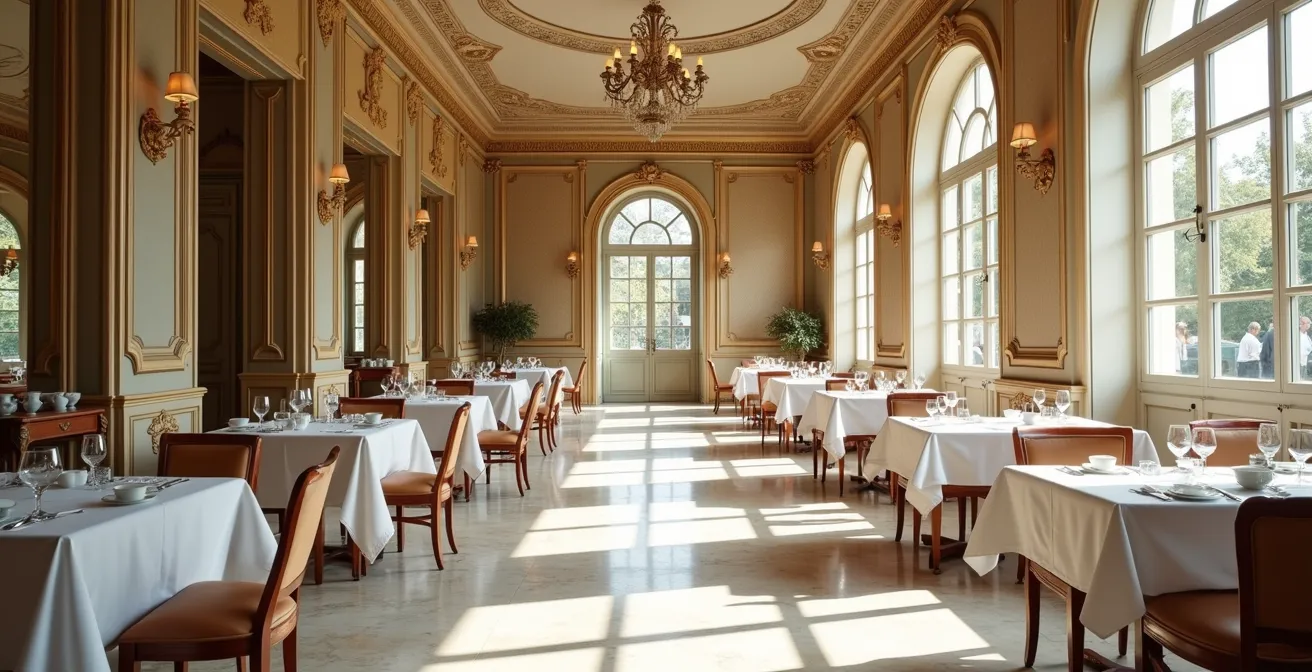
The ultimate luxury in Paris isn’t the pastry, but your time; most famous tea rooms fail the ‘Return on Time Invested’ test when approached without a strategy.
- Iconic queues for Angelina or Cédric Grolet can be “hacked” using pre-orders or strategic timing, drastically improving their value.
- High-quality alternatives exist, offering a superior atmosphere with no wait, a concept we’ll call “Atmosphere Arbitrage.”
Recommendation: Prioritize experiences that require advance booking (like the Ritz) over those that demand street queuing, or seek out the city’s brilliant, lesser-known gems for a more relaxing break.
The scene is a Parisian cliché: a fine mist coats the Haussmannian buildings, and a determined line of people snakes down the Rue de Rivoli, umbrellas bobbing like a field of black tulips. They are waiting for Angelina. Waiting for that legendary hot chocolate and the iconic Mont-Blanc pastry. For a solo traveler or a couple seeking a cozy, historic refuge from the drizzle, the question is immediate and sharp: is this experience worth sacrificing an hour of a precious day in Paris? Is this a wise investment of time?
The standard travel guide will tell you “yes.” It will speak of Belle Époque splendor, of Coco Chanel’s favorite table, and of pastries as art. But these guides often neglect the most crucial currency of modern travel: your time and your patience. They don’t calculate the emotional cost of a 45-minute queue in the cold, or the subtle pressure to vacate your table once you’re finally seated. They fail to apply a critical metric to the luxury experience: the Return on Time Invested (ROTI).
This guide breaks from that tradition. We will not simply describe the pastries; we will dissect the entire experience through the lens of a luxury café reviewer specializing in wait-time ROI. The true question is not whether Angelina’s Mont-Blanc is good—it is—but whether its goodness outweighs the logistical friction of obtaining it. What if the key to a perfect Parisian tea break wasn’t about enduring the most famous queues, but about strategically avoiding them? What if there were ways to “hack” the system or, even better, find places that offer 90% of the historic charm for 10% of the hassle?
We will analyze the city’s most sought-after tea experiences, from the legendary to the hyper-modern. We’ll explore queue-hacking strategies, evaluate the atmosphere as a key component of value, and uncover hidden alternatives that deliver a superior ROTI. This is your strategic manual for enjoying Parisian patisserie without paying the price of your time.
Summary: A Strategic Guide to Paris’s Most Coveted Tea Rooms
- The Hidden Tea Salon in the Petit Palais: How to Skip the Line?
- Mont-Blanc Pastry: Why Is This Specific Dessert a Must-Order at Angelina?
- Laptops Prohibited: Which Tea Rooms Ban Computers on Weekends?
- Mariage Frères: How to Choose a Tea Blend Among 500 Options?
- Tea Time at Le Meurice: How Far in Advance Must You Reserve for Cédric Grolet?
- Samaritaine vs Galeries Lafayette: Which Renovated Dome Offers the Best Modern Experience?
- Le Proust at the Ritz: How Many Weeks in Advance for the Madeleines?
- Is the 2-Hour Queue for Cédric Grolet’s Fruits Really Worth the Taste?
The Hidden Tea Salon in the Petit Palais: How to Skip the Line?
For the traveler deterred by the queues of Angelina, the concept of “Atmosphere Arbitrage” is your most powerful tool. This means finding an environment of equal or greater beauty with a fraction of the wait. The prime example is the garden café inside the Petit Palais. While thousands line up for famous branding, this hidden gem offers a stunning Belle Époque setting, serene atmosphere, and, crucially, no dedicated queue for the café itself. The ROTI here is exceptionally high.
The strategic advantage is built into the museum’s structure. Unlike many Parisian institutions, access to the museum’s permanent collections and its central garden is completely free. A visit here is a masterclass in efficiency: you gain a cultural experience and a peaceful café break in a single, queue-free move. The café, Le Jardin du Petit Palais, is nestled in a lush, enclosed garden surrounded by exquisite mosaics and colonnades—a tranquil oasis that feels a world away from the city’s hustle.
To access this sanctuary, simply walk through the main entrance of the Petit Palais. There is no ticket required to enter the main hall and proceed directly to the garden café. The best times to visit are weekday afternoons, after the lunchtime rush, when you can almost guarantee a peaceful table. This is the ultimate queue-hack: finding a superior experience that is hiding in plain sight, simply because it lacks the same level of global branding. It’s a choice that rewards the savvy traveler over the trend-follower.
Mont-Blanc Pastry: Why Is This Specific Dessert a Must-Order at Angelina?
To understand the queue, you must first understand the pilgrimage. The line outside Angelina is not just for any pastry; for many, it is specifically for the Mont-Blanc. This dessert is not merely a menu item; it is a piece of culinary history and the institution’s very identity. The reason this specific pastry commands such devotion lies in a combination of unique flavor, textural mastery, and an unwavering commitment to its original form.
The Mont-Blanc is an architectural feat of pastry: a crisp meringue base, a light whipped cream center, and the signature “vermicelli” of sweet chestnut purée piped on top. According to Angelina, the recipe was created in the early 20th century and has remained unchanged, a fact that transforms each bite into a taste of history. This consistency is a powerful draw in a rapidly changing world. The sheer scale of its popularity is a compelling force; knowing that Angelina sells over 2,500 units every day in France creates a potent sense of social proof. It suggests a flavour experience so exceptional that thousands are willing to seek it out daily.
This dessert is the core of Angelina’s “Pastry Pilgrimage.” It’s the reason the ROTI calculation becomes so personal. Are you there for a generic “nice pastry,” or are you there for *this specific, historical artifact*? If it’s the latter, the wait time can feel more like a necessary rite of passage than a frustrating delay.
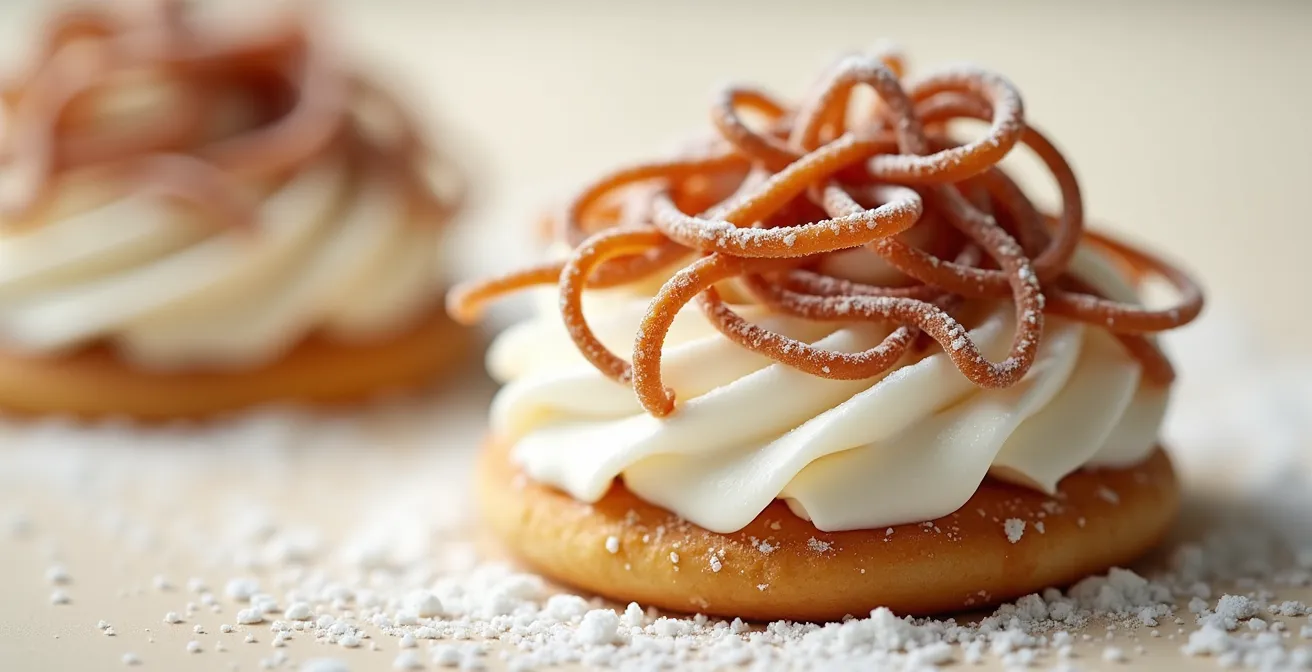
As the image reveals, the appeal is deeply textural. The intricate strands of chestnut cream, the hidden whipped cream, and the crunchy meringue base create a complex experience that is both rich and surprisingly light. It’s a multi-sensory delight that, for its devotees, justifies its iconic status and the wait it commands.
Laptops Prohibited: Which Tea Rooms Ban Computers on Weekends?
In the quest for a positive Return on Time Invested, the quality of the atmosphere is as important as the quality of the cake. A key, and often controversial, factor in preserving this atmosphere is the policy regarding laptops. For the solo traveler or couple seeking a historic, disconnected break, a “no laptop” rule isn’t a restriction; it’s a feature. It signals a commitment to a specific type of experience: one centered on conversation, contemplation, and savoring the moment.
Traditional Parisian tea salons like Angelina are not co-working spaces; they are temples of Belle Époque elegance. Enforcing a laptop-free policy, especially during peak weekend hours, is a deliberate act of cultural preservation. It ensures the ambiance remains one of hushed conversation and the clinking of silverware, rather than the clicking of keyboards. This policy protects the investment of every guest who came seeking an escape from the modern world. It guarantees that your view will be of art nouveau details and elaborate pastries, not the back of someone’s screen.
This isn’t a universal rule, but it is a common philosophy among the city’s most historic establishments. Understanding these unwritten rules is key to choosing the right spot for your mood. A quick comparison highlights the different approaches.
| Tea Room | Weekend Policy | Atmosphere |
|---|---|---|
| Angelina | No laptops during peak hours | Belle Époque elegance |
| Ladurée | Discouraged on weekends | Historic refinement |
| Mariage Frères | Reading encouraged | Contemplative |
As the table shows, while policies vary, the underlying goal is the same: to curate an atmosphere. For the traveler weary of digital noise, choosing a salon that actively discourages laptops is a powerful way to ensure a high-quality, immersive experience. It’s a guarantee that the “time” part of your ROTI will be spent in a truly relaxing and authentic environment.
Mariage Frères: How to Choose a Tea Blend Among 500 Options?
If Angelina represents the pastry pilgrimage, Mariage Frères is the temple of tea. Here, the challenge isn’t a physical queue but a cognitive one: how does one navigate a menu with over 500 tea blends without feeling overwhelmed? This is a different kind of investment—not of time standing still, but of mental energy in making a choice. A successful visit here requires a strategy to turn potential paralysis into a delightful exploration.
The key is to engage with the staff and the environment. The “Tea Masters” in their white linen suits are not just servers; they are guides. The most effective strategy is to bypass the menu initially and communicate your desires. Approaching them with a simple phrase like, “I’m looking for something floral” (Je cherche quelque chose de fleuri) or “smoky” (fumé) allows them to immediately narrow the vast universe of choice to a few select options. They will often bring the large black canisters to your table, allowing you to smell the dry leaves—a crucial and highly recommended step in the selection process.
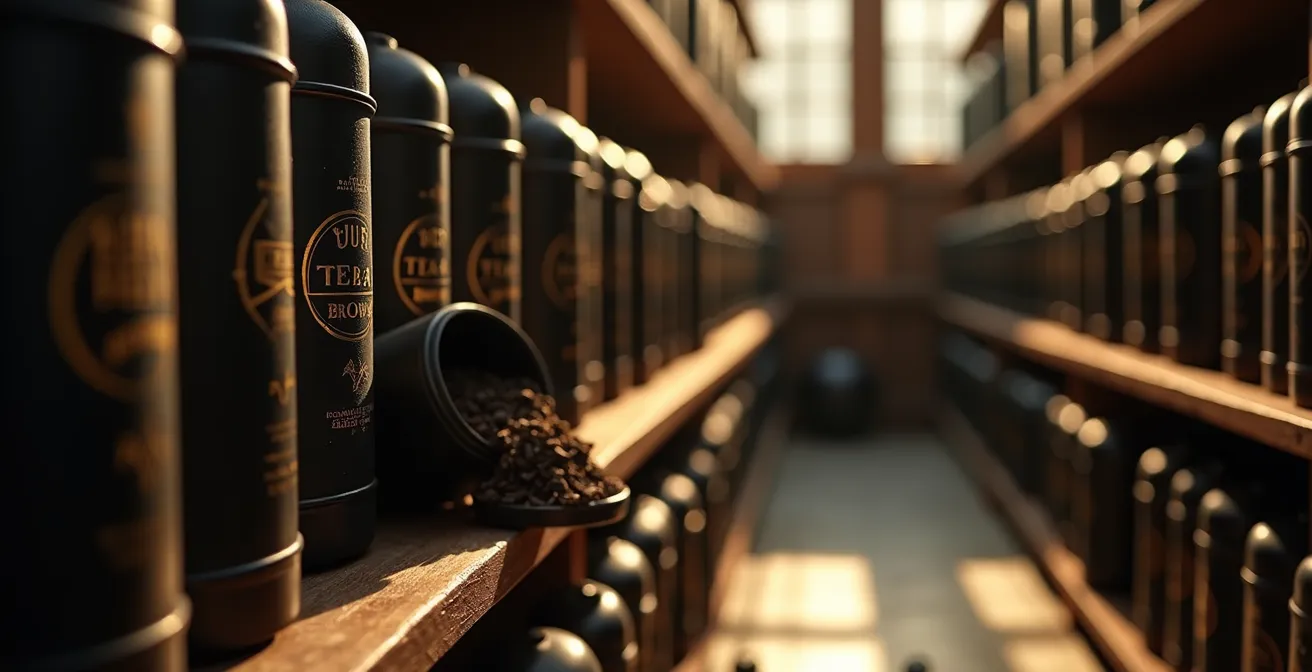
The environment itself is part of the experience. The colonial-era decor, with walls lined by hundreds of identical tea canisters, is designed to evoke a sense of history and discovery. To maximize your experience, consider context. On a rainy afternoon, the famous Marco Polo blend with its notes of red fruit and caramel is a classic comfort. For a post-museum energy boost, the zesty and refreshing Thé sur le Nil is an excellent choice. And for a truly historic feel, the Chandernagor blend, with its mix of spices, evokes the old French trading posts in India.
Ultimately, choosing a tea at Mariage Frères is less about finding the “best” one and more about enjoying the ritual of discovery. By trusting the experts and your own senses, you transform a daunting task into a memorable part of your Parisian journey.
Tea Time at Le Meurice: How Far in Advance Must You Reserve for Cédric Grolet?
If there’s one name that rivals the historic pull of Angelina, it’s the modern magic of Cédric Grolet. His hyper-realistic fruit and flower pastries have made him a global phenomenon. But accessing his creations at the opulent Le Meurice hotel requires a complete shift in strategy from queuing to meticulous planning. This is the realm of the reservation, and the ROTI is calculated not in minutes spent on the pavement, but in weeks of foresight.
Securing a coveted spot for the afternoon tea at Restaurant Le Dalí, where Grolet’s pastries are the star, is a competitive sport. For the discerning traveler, this is a far better investment than queuing. The planning happens on your own time, from the comfort of your home. A key piece of data for any strategist is knowing when the game starts: reservations typically open exactly 90 days before your desired date, often at 10 AM Paris time. Being ready at that precise moment is the “work” required.
However, there is a brilliant queue-hack for the solo traveler or couple who may have missed the 90-day window. The adjacent Bar 228, a historic, library-like sanctuary once frequented by Salvador Dalí, often allows guests to order Grolet’s pastries à la carte, without a formal tea-time reservation. This is a prime example of strategic maneuvering. By sacrificing the full, multi-course tea experience, you can still access the star attraction in an equally luxurious setting, often with little to no wait. It’s a trade-off that dramatically increases the ROTI for those whose primary goal is to taste the famous pastries in a sublime environment.
Samaritaine vs Galeries Lafayette: Which Renovated Dome Offers the Best Modern Experience?
Beyond the traditional tea salon, Paris offers grand department stores with stunningly renovated historic domes that provide a modern take on the “Atmosphere Arbitrage” concept. For a solo traveler, these can be fantastic spots for a quick, scenic break without the formality or cost of a palace hotel. The two main contenders are the classic Galeries Lafayette and the newly reimagined La Samaritaine.
Galeries Lafayette boasts one of Paris’s most famous free views. Its rooftop terrace on the 9th floor offers a breathtaking panorama of the city, with the Opéra Garnier and the Eiffel Tower in clear sight. The experience is democratic and straightforward: access is free, and you can simply enjoy the view or grab a snack from a nearby vendor. For a quick solo break, especially on a weekday morning, the value is immense. The tea or coffee options are found within the store’s “Gourmet” food hall, offering a more bustling, market-like feel.
La Samaritaine, reopened after a lengthy and lavish renovation, offers a different, more curated experience. Its blend of Art Nouveau and Art Deco architecture is a spectacle in itself. The rooftop access is via the “Voyage” restaurant and bar, making it slightly less accessible for a view-only visit, but the various cafés scattered throughout the building are chic and design-forward. It feels less crowded and more exclusive than Galeries Lafayette, making it ideal for a late afternoon pause when other places are at their busiest. As the Paris Tourism Office notes about such high-vantage points, the “rooftop terrace offers one of the best free panoramic views of Paris, perfect for a quiet solo moment.”
The choice between them depends on your priority: for the best, most accessible panoramic view, Galeries Lafayette wins. For a more stylish, less-trafficked architectural immersion, Samaritaine is the superior choice.
| Feature | Galeries Lafayette | Samaritaine |
|---|---|---|
| Free View Access | Yes, 9th floor terrace | Yes, Voyage restaurant/bar terrace |
| Architectural Style | Art Nouveau (1912) | Art Nouveau & Art Deco blend |
| Best Time for Solo Visit | Weekday mornings | Late afternoons |
| Tea Options | Galeries Gourmet food hall | Multiple café options |
Le Proust at the Ritz: How Many Weeks in Advance for the Madeleines?
At the highest end of the spectrum, the tea experience transcends a simple break and becomes a form of immersive historical theater. The Salon Proust at the Ritz Paris is the ultimate example. Here, the ROTI is not measured in minutes or even hours, but in the quality and memorability of the experience. This isn’t a place you stumble into; it’s a destination you plan for, and the investment is financial and logistical, not physical queuing.
The “Goûter à la Française” at Salon Proust is an homage to the childhood memories of Marcel Proust, centered around the iconic madeleine. The experience is pure theater: you are seated in a magnificent, wood-paneled library, served on bespoke porcelain, and presented with a selection of exquisitely crafted “goûters d’antan” (pastries of yesteryear). The atmosphere is hushed, elegant, and deeply transportive. This is not a “tea room”; it is an entry into a bygone era.
Securing a place in this narrative requires foresight. For a solo traveler or couple, the booking strategy is crucial. It is wise to book at least two to three weeks in advance for a weekday slot. Interestingly, for single reservations, calling the hotel directly is often more effective than using online booking systems, as they can sometimes fit a solo diner into an otherwise fully booked room. Flexibility with dates is your greatest asset. The cost is significant, but it should be framed as a cultural investment, comparable to a ticket for the opera or a ballet. You are paying for a two-hour performance where you are both the audience and the guest of honor.
Your Action Plan: Booking Strategy for Solo Diners at Le Proust
- Plan ahead: Book 2-3 weeks in advance for weekday slots for the best availability.
- Use the phone: Call the Ritz directly for single reservations; it can be more effective than online portals.
- Be flexible: Have a few potential dates in mind, as solo spots are easier to accommodate on less popular days (e.g., Tuesday-Thursday).
- Choose your time: The best times for a tranquil solo experience are typically mid-afternoon on weekdays.
- Reframe the cost: Consider the 2-hour experience as a cultural investment, similar to a theater ticket, to properly evaluate its unique value.
Key takeaways
- The “Return on Time Invested” (ROTI) is the most critical metric for evaluating a Parisian tea room; a long queue can negate the value of even the best pastry.
- Employ “Atmosphere Arbitrage” by choosing stunning but lesser-known locations like the Petit Palais café to get the Belle Époque vibe without the wait.
- Master “Queue-Hacking” for high-demand spots like Cédric Grolet by using Click & Collect systems or visiting alternative locations like hotel bars to bypass the main line.
Is the 2-Hour Queue for Cédric Grolet’s Fruits Really Worth the Taste?
We arrive at the ultimate test of Return on Time Invested: the takeaway boutique of Cédric Grolet Opéra. Here, there are no reservations, only the raw, unfiltered reality of the queue. Is a pastry, no matter how beautiful, worth a two-hour wait on a Parisian sidewalk? The answer depends entirely on your personal ROTI calculation and your willingness to strategize.
First, let’s establish the data. The wait time is significant: a traveler reported that after 45 minutes of waiting (which locals told me was actually pretty good) on a weekday, it could easily stretch to over two hours on a weekend. This is a substantial time investment. For the solo traveler, this means standing alone, exposed to the elements. The experience is not just the tasting; it’s the entire process, and a miserable queue can sour the taste of even the most divine pastry.
However, the system can be hacked. Cédric Grolet’s team is aware of the queue issue and has implemented a crucial tool: the Click & Collect system. As their support site confirms, a dedicated priority and mandatory queue is in place for Click & Collect orders. This is the single most important piece of information for any strategic visitor. By ordering online in advance, you effectively skip the multi-hour “on-site order” queue and join a much shorter, faster-moving line. This single action can transform a 2-hour ordeal into a 15-minute pickup, catapulting the ROTI from abysmal to excellent.
For those who choose the traditional queue, survival depends on preparation. Arriving before opening, bringing entertainment, and being prepared for Paris weather are essential. But the wisest choice is to treat the acquisition of these pastries as a logistical challenge to be solved with technology, not with brute-force endurance.
Checklist: Your Queue Survival Guide for Cédric Grolet
- Prioritize Click & Collect: This is the number one rule. Pre-order online to use the priority queue and save hours.
- Arrive Early (If Queuing): For on-site purchases, arrive at least 30 minutes before the 8:30 AM opening on a weekday for the shortest possible wait.
- Pack for the Wait: An umbrella is non-negotiable. A downloaded podcast, audiobook, or portable charger is your best friend.
- Manage Expectations: Even after the store opens, expect a further wait inside as you make your selection. The queue doesn’t end at the door.
- Consider Alternatives: If the queue looks daunting, remember Paris is home to many world-class MOF pâtissiers like Yann Couvreur or Philippe Conticini, who offer incredible creations with much shorter waits.
Armed with this analysis of Return on Time Invested, you can now approach Paris’s patisserie scene not as a passive tourist, but as an informed strategist, ensuring every moment and every euro spent is a delicious return on your investment.