Blog
France captivates travelers with its extraordinary cultural wealth, from world-renowned museums to hidden outdoor sculptures tucked into neighborhood squares. Yet navigating this artistic landscape requires more than enthusiasm—it demands practical knowledge about access, timing, and where to rest between discoveries. Understanding how to experience culture without overspending, secure tickets for high-demand venues, and evaluate accommodations beyond their star ratings transforms a chaotic itinerary into a meaningful journey.
This comprehensive resource addresses three fundamental pillars of French travel: accessing art and culture freely, optimizing your visit to ticketed attractions, and choosing lodging that genuinely meets your needs. Whether you’re drawn to the outdoor sculptures lining Parisian boulevards or planning a timed entry to the Musée d’Orsay, these insights will help you navigate France’s cultural offerings with confidence and clarity.
Discovering Art and Culture Without Spending a Euro
France’s artistic heritage extends far beyond museum walls, offering countless opportunities for cultural enrichment that cost nothing. Recognizing and accessing these free resources requires knowing where to look and understanding the distinction between truly public art and attractions with restricted access.
Public Sculpture and Outdoor Masterpieces
Every French city maintains a collection of outdoor sculptures, ranging from 19th-century commemorative statues to contemporary installations. In Paris alone, over 300 public sculptures populate parks, squares, and street corners. The Jardin du Luxembourg displays works by Rodin and Dalou accessible daily without charge, while Lyon’s Presqu’île district features sculptures integrated into urban planning since the Renaissance. Learning to identify significant works transforms a simple walk into an art education—look for plaques indicating the artist, date, and historical context, typically found at the sculpture’s base or on nearby informational panels.
The key distinction lies between outdoor sculptures in public spaces versus sculpture gardens with controlled access. The Tuileries Garden remains free and open during extended hours, while certain museum sculpture gardens like the Musée Rodin’s outdoor collection require paid entry despite their outdoor setting. Always verify whether a fence, gate, or ticket booth separates you from the artwork.
The Metro as an Underground Gallery
Metropolitan transit systems, particularly in Paris, function as unintentional art spaces. The RATP has commissioned works for stations like Arts et Métiers, where copper paneling creates a submarine atmosphere, or Louvre-Rivoli, which displays replica antiquities from the museum above. These installations require only a standard metro ticket (currently around €2.10) rather than museum admission fees of €15-20. Dedicated cultural travelers often plan routes specifically to experience stations like Abbesses with its art nouveau entrance or Concorde with its tile-work spelling the Declaration of Human Rights.
Understanding this concept reframes your transportation budget as a cultural investment. The time spent between destinations becomes an opportunity rather than dead transit time.
Historic Shop Signs and Architectural Facades
French preservation laws protect historic storefronts and building facades, creating an open-air museum throughout older urban districts. The Marais in Paris preserves 17th and 18th-century architectural details, carved wooden signs, and wrought-iron fixtures that would elsewhere exist only in museums. Lyon’s Presqu’île displays painted murals depicting the city’s silk-weaving heritage on building exteriors. Strasbourg’s Petite France quarter maintains half-timbered facades dating to the 16th century.
Locating these treasures requires slowing your pace and looking upward—most tourists focus at eye level and miss ornamental details above storefronts. Free walking tour maps, available at tourist offices, often mark architecturally significant buildings, though wandering with observant eyes yields equally valuable discoveries.
Timing Your Visit to Free Sculpture Gardens
Public gardens with significant sculpture collections maintain specific opening hours despite being free. The Jardin des Tuileries opens at 7:00 AM year-round, offering early morning access when lighting dramatically enhances bronze and stone works. The Parc de la Villette’s contemporary sculpture installations remain accessible until 1:00 AM in summer months. Seasonal variations affect not just hours but also the experience—deciduous gardens reveal different sculptural views in winter when foliage disappears, while spring flowering creates complementary natural backdrops.
Understanding these patterns helps you maximize free cultural access. An early morning visit to a sculpture garden before museum opening times makes efficient use of limited travel days.
Optimizing Access to Ticketed Cultural Venues
France’s major museums and cultural sites employ sophisticated ticketing systems designed to manage massive visitor demand while preserving the visitor experience. Navigating these systems strategically determines whether you spend your morning admiring Monets or standing in queue.
Understanding Ticketing Release Cycles and High-Demand Events
Major venues like the Louvre, Versailles, and the Musée d’Orsay release timed-entry tickets in waves, typically 60-90 days before the visit date. Tickets for summer weekends often sell out within hours of release, particularly for morning time slots (9:00-11:00 AM). Special exhibitions at venues like the Grand Palais or Fondation Louis Vuitton employ lottery systems for high-demand opening weeks, with standard ticketing beginning only after initial frenzy subsides.
Setting calendar reminders for exactly 90 days before your planned visit and purchasing tickets the moment they release dramatically increases your chances of securing preferred time slots. This approach requires knowing your travel dates well in advance, but the alternative—discovering tickets sold out—leaves you with expensive last-minute guided tours as the only option.
Membership Cards Versus Single-Entry Tickets
The Paris Museum Pass costs approximately €78 for four consecutive days and grants access to over 60 venues, including otherwise-ticketed sculpture gardens. Calculating whether this represents value requires honest assessment of your pace. If you plan to visit the Louvre (€22), Versailles (€20), Musée d’Orsay (€16), and Arc de Triomphe (€13) within four days, the pass breaks even financially. Beyond cost, the pass allows queue-skipping at most venues and eliminates the psychological barrier of “I already paid, so I must see everything”—you can leave when satisfied rather than when exhausted.
Single tickets make more sense for travelers focusing deeply on one or two venues, or those spending more than a week in one location who can visit during off-peak times when queues matter less. The decision hinges on your natural travel rhythm rather than a universal formula.
Evaluating the Crowd-to-Content Ratio
A fundamental travel truth: the quality of a cultural experience depends not just on what you see, but on the conditions in which you see it. The Mona Lisa viewed from 20 meters behind a crowd differs fundamentally from a lesser-known Vermeer viewed alone in a quiet gallery. Understanding this trade-off shapes realistic expectations and smarter choices.
Certain venues—the Louvre’s Denon Wing, Versailles’ Hall of Mirrors, Monet’s Garden in Giverny during iris season—will always contain crowds during normal hours. You cannot eliminate this reality, only decide whether the content justifies the conditions. Meanwhile, exceptional alternatives exist: the Musée Marmottan-Monet holds the world’s largest Monet collection in a mansion setting with fraction of the crowds found at the Musée d’Orsay.
Researching these alternatives requires asking “What do I actually want to see?” rather than “What does everyone say I should see?” The answer might lead you to less-famous venues offering superior experiences.
Finding Alternative Viewing Times and Navigating Venue Constraints
Most major museums offer extended evening hours at least one weekday—the Louvre remains open until 9:45 PM on Wednesdays and Fridays, while the Musée d’Orsay extends to 9:45 PM on Thursdays. These evening slots typically cost the same as daytime entry but attract significantly fewer visitors. Tour groups, which dominate morning hours, rarely extend into evenings, creating calmer conditions.
Understanding specific venue constraints shapes these timing decisions. Versailles’ gardens close earlier than the palace, meaning evening palace visits preclude garden access. The Sainte-Chapelle’s stained glass requires natural light to achieve its famous luminosity, making late-day visits visually disappointing despite smaller crowds. Photography restrictions, audio guide availability, and temporary gallery closures vary by venue and time—checking official websites the day before your visit prevents disappointing surprises.
Evaluating and Choosing Appropriate Accommodation
French lodging operates under different conventions than many travelers expect, and star ratings measure regulatory compliance rather than comfort or value. Understanding what to verify before booking, and what to accept as cultural difference, prevents the disconnect between expectation and reality that sours otherwise successful trips.
Looking Beyond Star Ratings
France’s official hotel classification (one to five stars) primarily evaluates room size, available services, and amenity presence rather than quality, maintenance, or location. A three-star hotel must offer rooms of at least 13.5 square meters, 24-hour reception, and television, but the system doesn’t assess mattress quality, noise insulation, or staff helpfulness. Meanwhile, an unrated chambres d’hôtes (bed and breakfast) might offer superior comfort in a renovated historic building but lacks the service infrastructure required for official classification.
This system explains why travelers sometimes find two-star hotels charming and well-located while certain four-star properties feel impersonal despite abundant amenities. The rating provides a baseline of what exists, not whether it’s well-executed or suitable for your needs.
Critical Verification Points Before Booking
Certain amenities considered standard elsewhere require specific verification in France. Air conditioning remains less universal than in warmer countries—many historic buildings in temperate regions like Normandy or Brittany lack it entirely, while Parisian hotels often have it only in renovated properties or higher-tier rooms. August temperatures in Paris regularly reach 30-35°C (86-95°F), transforming a sixth-floor chambre under the roof into a sleepless experience without climate control.
Bathroom privacy configurations vary widely. “Private bathroom” sometimes means en-suite facilities within your room, but can also indicate a dedicated bathroom in the hallway that only you access with a key. The distinction matters significantly for comfort and convenience. Budget accommodations, particularly in older buildings, may offer shared facilities even when not explicitly stated—directly asking “Is the toilet and shower inside my room?” eliminates ambiguity.
Breakfast value requires separate assessment. French hotels typically charge €8-15 per person for continental breakfast (bread, jam, coffee, juice), and hotel breakfasts rarely match the quality of €4-6 spent at a neighborhood boulangerie for fresh croissants and café au lait. The convenience of not leaving the hotel appeals to some travelers, while others prefer experiencing a local café’s morning rhythm. Calculate the actual value based on what’s included and your morning preferences rather than assuming breakfast represents good value.
Noise Insulation and Building Realities
Older French buildings, particularly in historic centers, often feature thin walls, wooden floors without sound barriers, and windows facing busy streets. These architectural realities stem from construction methods predating modern insulation standards, not from negligence. Even well-maintained properties in the Marais, Latin Quarter, or Lyon’s Vieux-Lyon cannot fully modernize without destroying historic fabric that preservation laws protect.
Reading recent reviews specifically mentioning noise levels provides more useful information than star ratings. Phrases like “street-facing rooms are lively” or “interior courtyard rooms are quieter” signal that you should request specific room positions when booking. Travelers highly sensitive to noise should prioritize newer buildings in residential neighborhoods over historic center locations, accepting longer metro commutes as the trade-off for nighttime silence.
Successful travel in France requires balancing iconic cultural experiences with practical logistics, and understanding that authentic experience sometimes means accepting differences rather than demanding familiarity. The sculpture you discover in a neighborhood square, the museum visited during calm evening hours, and the small hotel where the owner recommends her favorite nearby bistro—these moments define meaningful travel beyond checklist completion. By approaching cultural access strategically and accommodation practically, you create space for the spontaneity and discovery that transform visits into genuine experiences.
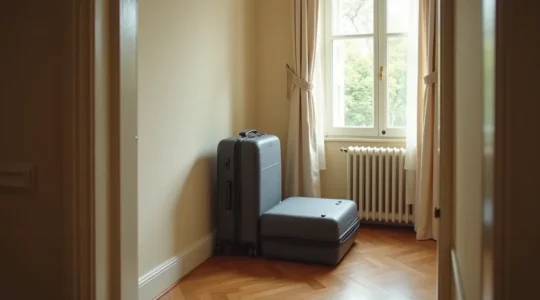
How to Survive a 12m² Hotel Room with Two Large Suitcases?
The frustration with small Parisian hotel rooms stems from a misunderstanding of their design logic, not just their size. Star…
Read more
How to Secure Tickets for Sold-Out Blockbuster Exhibitions in Paris
Seeing “Complet / Sold Out” on a Paris museum’s website isn’t the end of the road; it’s the start of…
Read more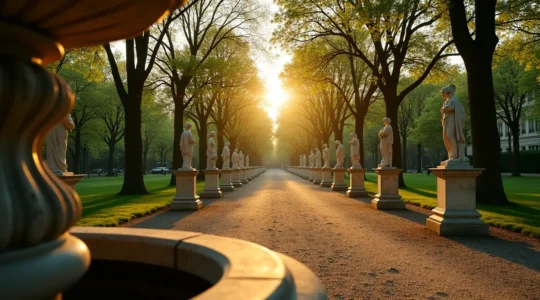
How to Enjoy Paris as an Open-Air Museum Without Spending a Euro?
Thinking you need a hefty budget to experience Parisian art is a common mistake. The truth is, the city itself…
Read more