Discover Paris
Paris presents a fascinating paradox for visitors: it’s simultaneously one of the world’s most documented cities and one of the most challenging to navigate efficiently. Beyond the iconic imagery of the Eiffel Tower and café culture lies a complex urban ecosystem where timing, logistics, and insider knowledge dramatically affect the quality of your experience. The difference between standing in a three-hour queue under the summer sun and walking straight into the Louvre can hinge on decisions made weeks before your arrival.
This resource addresses the practical realities that transform a Paris visit from exhausting to enriching. Whether you’re managing physical limitations, trying to understand the city’s contemporary cultural landscape, or simply wondering if that premium service justifies its cost, the following sections connect strategic planning with on-the-ground execution. The goal is straightforward: equip you with the specific knowledge that typically takes multiple visits to acquire.
Planning Your Visit Around Crowds and Seasons
The French school calendar exerts more influence on Paris tourism patterns than most international visitors realize. Understanding these rhythms allows you to make informed trade-offs between weather preferences and crowd density.
Understanding Peak Times and School Calendars
France operates on a zone-based vacation system, dividing the country into three administrative zones that take holidays on staggered schedules. When the Paris region (Zone C) goes on break, domestic tourism to the capital’s museums and monuments surges noticeably. The spring vacation period, typically spanning two weeks between late March and early May depending on the zone, creates particularly dense conditions at indoor attractions when weather remains unpredictable.
International tourism peaks align predictably with summer months, but many seasoned visitors prefer the shoulder periods of late September through early November or March through early April. During these windows, daylight remains reasonable, major sites operate on full schedules, and the ratio of visitors to available space improves considerably. The trade-off involves accepting occasional rain and shorter days, but modern indoor attractions like the Louvre or Musée d’Orsay become significantly more manageable.
Choosing the Right Ticket Pass
The Paris tourism industry offers multiple pass options, each with distinct value propositions that depend entirely on your travel style. The Paris Museum Pass provides skip-the-line access to over 50 institutions, but its value calculation requires honest assessment of your stamina and interests.
A concrete example: if you plan to visit the Louvre, Versailles, Sainte-Chapelle, and the Arc de Triomphe within four days, the pass pays for itself while saving substantial queue time. However, visitors who prefer immersive, slow-paced museum experiences might visit only two major sites in the same period, making individual ticket purchases more economical. The pass also doesn’t cover special exhibitions, which frequently showcase the most compelling contemporary work at institutions like the Grand Palais or Centre Pompidou.
Mastering the Major Landmarks
Paris’s most famous attractions require specific tactical approaches. Generic advice to “arrive early” overlooks the nuanced logistics that separate smooth visits from frustrating ones.
The Louvre: Entrance Strategy and Navigation
The Louvre’s 98,000 square meters of exhibition space across three wings make comprehensive touring physically impossible in a single day. The famous glass pyramid entrance, while architecturally significant, often presents the longest queues. Visitors holding the Museum Pass or pre-purchased tickets can use the Porte des Lions entrance (when open) or access through the Carrousel du Louvre shopping complex, both offering substantially shorter wait times.
Navigation inside requires advance prioritization. First-time visitors typically gravitate toward the Big Three (Mona Lisa, Venus de Milo, Winged Victory), but this approach concentrates fatigue around the most crowded galleries. A more sustainable strategy involves selecting one or two departmental focuses—perhaps French paintings and Egyptian antiquities—allowing for genuine observation rather than exhausted gallery-walking. The museum’s food options exist but operate at premium prices; many experienced visitors bring water bottles and plan for a proper meal outside the complex.
Physical fatigue accumulates faster than most anticipate. The marble floors, constant standing, and sensory stimulation create cumulative exhaustion. Building in a genuine break after two hours, ideally exiting for fresh air or a proper café stop, allows for meaningful afternoon engagement rather than zombie-like wandering.
Notre-Dame: Current Status and Alternatives
The cathedral’s reconstruction following the fire continues to evolve, with the surrounding area transformed into both construction site and archaeological opportunity. While the interior remains closed to general visitors, the archaeological crypt beneath the forecourt offers fascinating context about Paris’s Roman and medieval foundations, operating independently of the cathedral’s status.
External viewing angles from the Left Bank, particularly from Square René Viviani, provide unobstructed perspectives of the Gothic architecture and ongoing restoration work. The immediate Île de la Cité neighborhood, often rushed through by visitors focused solely on the cathedral, contains exceptional medieval architecture along Rue Chanoinesse and quiet squares that reveal the island’s residential character.
For those seeking spiritual alternatives, Sainte-Chapelle—a ten-minute walk away—offers one of Europe’s most extraordinary stained glass collections in a space that remains fully accessible. Saint-Sulpice, on the Left Bank, provides grand Baroque architecture without the crowds, including Delacroix murals and a functioning organ with regular concerts.
Contemporary Paris Beyond Historic Monuments
Paris’s identity as a museum city sometimes obscures its vibrant contemporary cultural production. The city actively commissions public art, supports private foundations, and integrates modern architecture in ways that create productive tension with its historic fabric.
Modern Architecture and Private Foundations
The Fondation Louis Vuitton in the Bois de Boulogne exemplifies how contemporary architecture can create destinations independent of collections. Frank Gehry’s glass vessel structure attracts architecture enthusiasts even when exhibitions don’t align with personal interests. Similarly, the Fondation Cartier near Montparnasse commissions site-specific installations in Jean Nouvel’s transparent building, creating work that responds directly to Parisian context.
Public reactions to modern interventions remain passionate. The Louvre pyramid, now beloved, initially sparked fierce controversy. More recent additions, like the Philharmonie de Paris or renovations at the Bourse de Commerce, continue generating debate about appropriate relationships between old and new. Engaging with these conversations—reading architectural critiques in local publications or simply observing Parisians’ reactions—adds depth to visual tourism.
Hidden Contemporary Gardens
Beyond the famous Tuileries and Luxembourg Gardens lie lesser-known green spaces that integrate contemporary landscape design. The Promenade Plantée (the elevated park that inspired New York’s High Line) combines industrial heritage with thoughtful planting, offering a unique perspective on eastern Paris neighborhoods. The Jardin Anne-Frank, tucked behind the Marais, provides unexpected tranquility through deliberate minimalist design that contrasts sharply with formal French garden tradition.
Accessibility and Comfort Essentials
Paris’s historic infrastructure creates genuine accessibility challenges, but recent years have brought significant improvements alongside persistent obstacles. Honest assessment helps set realistic expectations.
Major museums now provide wheelchair access and elevator systems, though routes sometimes require circuitous paths through staff areas. The Louvre, Musée d’Orsay, and Centre Pompidou all offer wheelchair loans without advance reservation, available at information desks. However, many smaller museums in historic buildings present unavoidable staircases.
Quiet restroom facilities exist but require local knowledge. Museum restrooms often become crowded and overwhelming, particularly during midday. Department stores like Le Bon Marché or Galeries Lafayette offer superior facilities with less pressure, while major hotels (accessed confidently, as if meeting someone) provide peaceful alternatives. The accessibility app “Jaccede” provides community-sourced information about step-free access, elevator locations, and adapted restroom facilities throughout the city.
Audio guides have evolved beyond simple recorded tours. Many institutions now offer tactile experiences, descriptive audio for visually impaired visitors, and sensory-reduced visiting hours. The Louvre specifically designates certain morning slots for visitors seeking quieter, less stimulating environments. Managing sensory overload requires permission to modify standard touring patterns—shorter visits, frequent breaks, and selective rather than comprehensive approaches.
Evaluating Premium Services and Experiences
Paris’s tourism market offers extensive premium services at equally extensive prices. Return on investment depends heavily on personal values and circumstances.
Private museum access after public hours eliminates crowds but typically costs several hundred euros per person. For photography enthusiasts, serious art students, or those with specific professional interests, the ability to observe major works without obstruction justifies the expense. For general cultural enrichment, the standard visit with strategic timing often provides similar satisfaction.
Private drivers versus public transportation involves trade-offs beyond mere cost. Paris’s metro system efficiently connects major sites, but navigating with mobility challenges, significant luggage, or after exhausting museum days makes private transport appealing. The middle-ground option of occasional taxi use for specific challenging connections often provides the best balance.
Guide tipping culture in France differs from North American norms. Private guides set their fees to reflect their full compensation; additional tips aren’t expected unless service exceeded reasonable professional standards. For group tours, small gratuities (five to ten euros) acknowledge exceptional effort but aren’t obligatory. This contrasts sharply with some tourism markets where tips constitute significant income portions.
Paris rewards both spontaneity and careful planning, often simultaneously. The strategic framework outlined above—understanding crowd patterns, mastering major site logistics, exploring contemporary culture, ensuring comfortable access, and evaluating premium options—creates space for genuine discovery within practical constraints. Your specific interests and limitations should guide which elements receive attention, but awareness of these dimensions transforms logistical challenges into manageable puzzles rather than vacation-derailing frustrations.
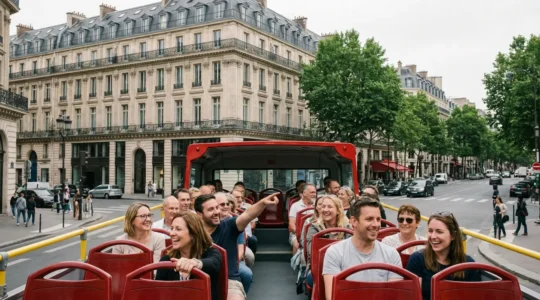
Why choose a sightseeing bus tour during your visit?
Your feet are killing you. It is barely noon, and you have only managed to tick off two landmarks from…
Read more
Is a VIP “Skip the Line” Tour at Versailles Worth the Extra 100€?
The €100 “skip the line” fee at Versailles isn’t a cost; it’s an investment in your most valuable travel asset:…
Read more
A Strategic Guide to Visiting Paris Museums with Knee Pain and Minimal Walking
Visiting Paris’s top museums with mobility challenges is not about finding ramps, but mastering a system of logistical shortcuts that…
Read more
How to Experience the Magic of Notre-Dame While It Is Under Reconstruction?
Visiting Notre-Dame’s perimeter today offers a once-in-a-lifetime historical experience, far more profound than seeing a closed cathedral. Discover 2,000 years…
Read more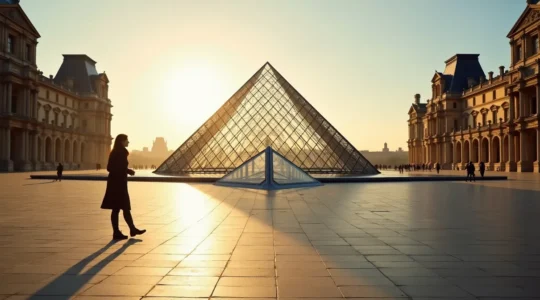
How to See the Mona Lisa in Under 30 Minutes After Entering the Louvre?
The key to seeing the Mona Lisa in under 30 minutes isn’t a secret pass; it’s exploiting the museum’s own…
Read more
Where to Find the Boldest Contemporary Architecture Hiding in Historic Paris
The most significant contemporary architecture in Paris is not just about aesthetics; it’s a high-stakes dialogue between heritage and power,…
Read more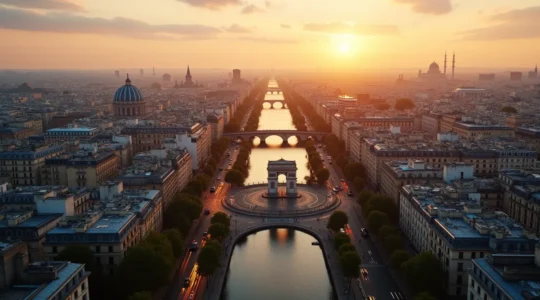
The Strategic Guide: See Paris’s 3 Top Monuments in One Day, Queue-Free
Wasting a Paris trip in queues is a choice, not a necessity. The key is a counter-flow strategy, not a…
Read more