Experience Paris on a daily basis
Experiencing Paris extends far beyond ticking off iconic monuments from a tourist checklist. The city’s true character emerges through daily rhythms—the morning Metro commute, the late afternoon aperitif along the canal, the unspoken rules of café seating, and the gentle navigation of centuries-old cobblestone streets. For visitors seeking to move beyond surface-level tourism, understanding these everyday practices transforms a stay into genuine immersion.
This daily Parisian life operates on subtle codes and practical systems that locals navigate instinctively but newcomers often find mystifying. From decoding the logic of public transport connections to respecting the sacred silence in historic basilicas, from selecting the right sidewalk for your aperitif to timing your Seine boat journey for optimal light—each element contributes to a richer, more authentic experience. The following sections provide the foundational knowledge needed to participate confidently in the city’s daily rituals.
How to Navigate Paris’s Historic Pedestrian Areas
Paris’s historic quarters present unique challenges that modern cities have engineered away. Cobblestone streets, some dating back centuries, create uneven surfaces that demand attention and appropriate footwear. The Marais, Montmartre, and Île de la Cité preserve their original street layouts, meaning narrow passages, sudden inclines, and surfaces that become treacherously slick during rain.
For comfortable exploration, prioritize footwear with excellent grip and ankle support. Smooth-soled fashion shoes, however elegant, become liability on rain-dampened stone. Travelers pushing strollers or using wheelchairs face additional considerations—many historic streets lack curb cuts, and alternative accessible routes often require advance planning. The RATP website provides accessibility maps showing elevator-equipped Metro stations and barrier-free pathways through major districts.
Timing matters significantly. Early morning exploration, before 9 AM, allows you to appreciate preserved streets in relative solitude while avoiding the pedestrian congestion that makes navigation slower and more physically demanding. Routes can be optimized to minimize steep inclines—apps like Citymapper now include elevation profiles that help you identify the gentlest approaches to elevated neighborhoods like Montmartre.
Mastering the Metro and Public Transport Network
The Paris Metro operates as the city’s circulatory system, moving millions daily through over 300 stations interconnected by often labyrinthine tunnels. Efficiency in this system comes from understanding its logic rather than memorizing routes. Each line has a number and color, but more importantly, each direction is designated by its terminus station—mastering this concept eliminates the confusion many newcomers experience.
The Navigo pass remains the most economical option for anyone staying more than three days. Unlike tourist passes that price themselves on potential usage, the Navigo weekly pass covers unlimited travel across all zones at a flat rate. Purchase requires a passport photo and can be completed at any major station ticket office or increasingly at automated terminals.
Connection tunnels form their own micro-geography. Major hubs like Châtelet-Les Halles contain seemingly endless corridors where choosing the correct sortie (exit) can mean the difference between emerging exactly at your destination or several blocks away. Rush hours—particularly 8:30-9:30 AM and 6:00-7:30 PM—transform the Metro into a contact sport. Automated lines like Line 14 offer slightly more breathing room during peak times thanks to their higher frequency.
Understanding Safety and Etiquette
While generally safe, the Metro demands awareness. Keep bags closed and in front of you, particularly on tourist-heavy lines like Line 1. The unspoken etiquette includes standing to the right on escalators, allowing passengers to exit before boarding, and avoiding loud conversations. These aren’t mere politeness—they’re the social lubricant that keeps millions moving efficiently through shared space.
Embracing Sustainable Urban Mobility
Paris has aggressively expanded pedestrian-only zones and cycling infrastructure in recent years, reflecting broader European commitments to reducing urban emissions. Understanding these systems allows visitors to participate in the city’s evolving relationship with sustainable transport.
The Vélib’ Métropole bike-sharing system operates throughout Paris and surrounding communes with over 20,000 bicycles. The mechanical bikes cost less than the electric-assist versions but require more effort on inclines. Registration through the app takes minutes, though the system’s logistics—docking availability, station locations, and the 30-minute swap requirement to avoid extra charges—require brief study before your first ride.
Green corridors like the Coulée Verte René-Dumont (an elevated park built on former rail infrastructure) and the increasingly car-free Seine riverbanks offer pollution-free routes through the city. These spaces serve double duty as transportation corridors and peaceful refuges from urban intensity. Recent pedestrianization around areas like Les Halles and parts of the Marais has created new opportunities for exploration without vehicular concerns.
Adapting to Pollution Restrictions
Air quality alerts occasionally trigger traffic restrictions in central Paris. Understanding the Crit’Air vignette system—which classifies vehicles by emissions—helps explain why certain vehicles are absent during high-pollution days. For visitors, this primarily means enhanced public transport frequency during restriction periods.
Understanding Parisian Café Culture and Rituals
The Parisian café functions as extension of living space, workplace, and social observatory. Unlike coffee shops optimized for rapid turnover, traditional cafés operate on the assumption that ordering a single espresso grants you territorial rights to your table for hours. This isn’t laziness—it’s cultural infrastructure.
Pricing operates on a two-tier system. Drinks consumed at the counter cost significantly less than seated service, with terrace seating commanding premium rates. The menu distinction between un café (espresso), noisette (espresso with milk), and café crème (closer to a latte) matters more than tourists expect—ordering incorrectly signals unfamiliarity.
Remote work etiquette requires reading the room. Classic establishments expect higher table turnover during meal times, while modern cafés openly welcome laptop users. Observable cues include outlet availability and the percentage of patrons already working on devices. Afternoons between 2:30-6:00 PM generally offer the most acceptance for extended occupancy.
Navigating Waiter Interactions
Parisian service style prioritizes professional distance over friendliness. Waiters don’t check on you repeatedly—they assume you’ll signal when needed. Making eye contact and a slight hand raise brings service without the American-style beckoning that feels invasive in French context. The check never arrives unasked; requesting it requires explicit asking: “L’addition, s’il vous plaît.”
Social Observation and Solitude
Cafés legitimize solo activities—reading, people-watching, thinking—in ways that feel awkward in other public spaces. Corner tables provide optimal positioning for this particularly Parisian form of engaged observation. Timing your arrival to capture shifting sunlight across the terrace represents advanced-level café practice, transforming a simple coffee into a choreographed experience.
The Social Art of the Aperitif
The aperitif tradition—that pre-dinner drink shared outdoors—serves as social glue across French culture. In Paris, this manifests along canal edges, in pocket parks, and on riverside quays where locals gather with wine, beer, or simple snacks as daylight fades.
Location selection follows unwritten rules. The Canal Saint-Martin and Seine riverbanks near Pont Neuf are established aperitif zones where gathering is socially normalized. Public drinking laws theoretically prohibit alcohol consumption in certain areas, though enforcement focuses on disruptive behavior rather than peaceful gatherings. Using glasses rather than drinking from bottles and managing waste responsibly keeps you within the boundaries of accepted practice.
Supply procurement is efficient once you understand the system. Small supermarkets (Franprix, Carrefour City) stock wine, beer, and basic snacks. Choosing a rosé from Provence or a simple Bordeaux signals cultural awareness. Classic snacks include saucisson (dry sausage), cheese, olives, and good bread—items that don’t require preparation or refrigeration.
Etiquette and Integration
Joining the aperitif ritual offers genuine integration opportunities. The informal setting lowers social barriers, and sharing space along the canal creates natural conversation openings. Waste management—bringing a bag for your garbage and removing everything you brought—distinguishes respectful participants from tourists leaving mess behind.
Visiting Religious and Cultural Landmarks
Paris’s great basilicas and churches remain active houses of worship, not merely architectural attractions. The Sacré-Cœur Basilica exemplifies this duality—millions visit annually, yet religious services continue throughout the day, requiring visitors to navigate the tension between tourism and sacred space.
Dress codes are enforced more strictly than many visitors expect. Shoulders and knees must be covered; enforcement intensifies during services. Modest scarves or wraps kept in your bag solve most situations. Religious silence isn’t optional—conversations, even whispered, disrupt worshippers and mark you as insensitive.
The physical ascent to Sacré-Cœur involves steep stairs that challenge many visitors. Alternative routes exist for those with mobility limitations, though they require advance research. Timing the dome climb for early morning or late afternoon avoids both crowds and the strongest heat, which can make the enclosed spiral staircase uncomfortable.
Exploring Beyond the Obvious
Most visitors miss the hidden crypts, side chapels, and architectural details that reward slower, more contemplative visits. These spaces often maintain a silence and spiritual atmosphere absent from the main sanctuary crowded with tour groups.
Experiencing the Seine by Private Boat
While public river shuttles offer affordable Seine cruises, private electric boat rentals provide uniquely intimate experiences of Paris’s central waterway. These small vessels, requiring no license, allow you to pilot your own route at your own pace—a floating equivalent of renting a bike versus taking the bus.
Champagne on the Seine has become a popular celebration ritual, combining Paris’s two iconic elements. Suppliers provide cooling systems, though selecting a good bottle requires basic knowledge—Brut varieties suit most palates and pair well with the simple charcuterie that travels best on water.
Route customization allows you to emphasize different aspects—lingering near Île de la Cité for gothic architecture, or cruising the eastern reaches for industrial-chic conversions. Photo timing matters significantly; the golden hour before sunset bathes monuments in ideal light, while evening illumination creates entirely different moods. Cost-sharing among four to six passengers makes these experiences surprisingly affordable when divided.
Experiencing Paris daily rather than touristically requires shifting from attractions to practices, from seeing to participating. These foundational elements—efficient transport navigation, café confidence, respectful landmark visits, and participation in social rituals—transform you from observer to participant, however temporary, in the city’s ongoing life.

The Ultimate Seine River Proposal: A Planner’s Guide to Choosing Between a Private Skipper and a Self-Drive Boat
The secret to a flawless Seine proposal isn’t the location, but mastering the moment: choosing between the absolute privacy of…
Read more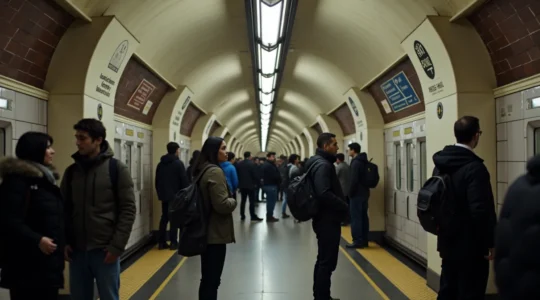
Beyond Pickpockets: A Security Expert’s Guide to Mastering the Paris Transport System
Mastering the Paris transport system’s internal logic is the single most effective way to avoid risk, bypass crowds, and travel…
Read more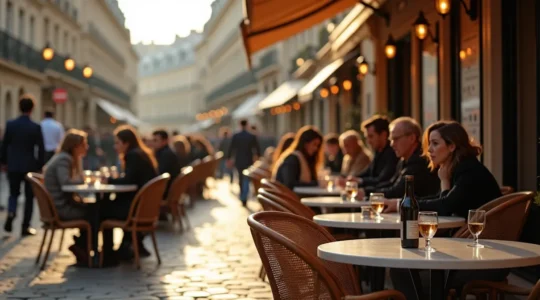
The Art of the Single Coffee: How to Linger on a Parisian Terrace for Hours
Contrary to popular belief, lingering at a Parisian café isn’t about ordering more drinks. It’s about understanding the unspoken social…
Read more
Angelina vs Ladurée: Which Tea Room Justifies the 45-Minute Wait in the Rain?
The ultimate luxury in Paris isn’t the pastry, but your time; most famous tea rooms fail the ‘Return on Time…
Read more
How to Host the Perfect Parisian Apéro on the Quays for Under 15€?
In summary: Choose your spot wisely: Canal Saint-Martin for a ‘bobo’ vibe, or Quai de la Tournelle for stunning views….
Read more
How to Reach the Sacré-Cœur Dome Without Falling for the “String Bracelet” Scam?
The secret to a peaceful Sacré-Cœur visit isn’t confronting scammers; it’s making yourself invisible to them by using tactical avoidance…
Read more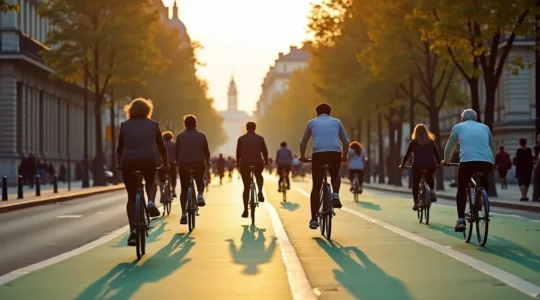
How to Safely Navigate Paris by Bike Using the “Pistes Cyclables”
Feeling intimidated by the idea of cycling in Paris? You’re not alone. The key to safely navigating the city’s bustling…
Read more
Why Your Choice of Shoes Determines the Success of Your Montmartre Visit
The romantic vision of wandering through Paris often clashes with the painful reality of its historic cobblestone streets. As a…
Read more