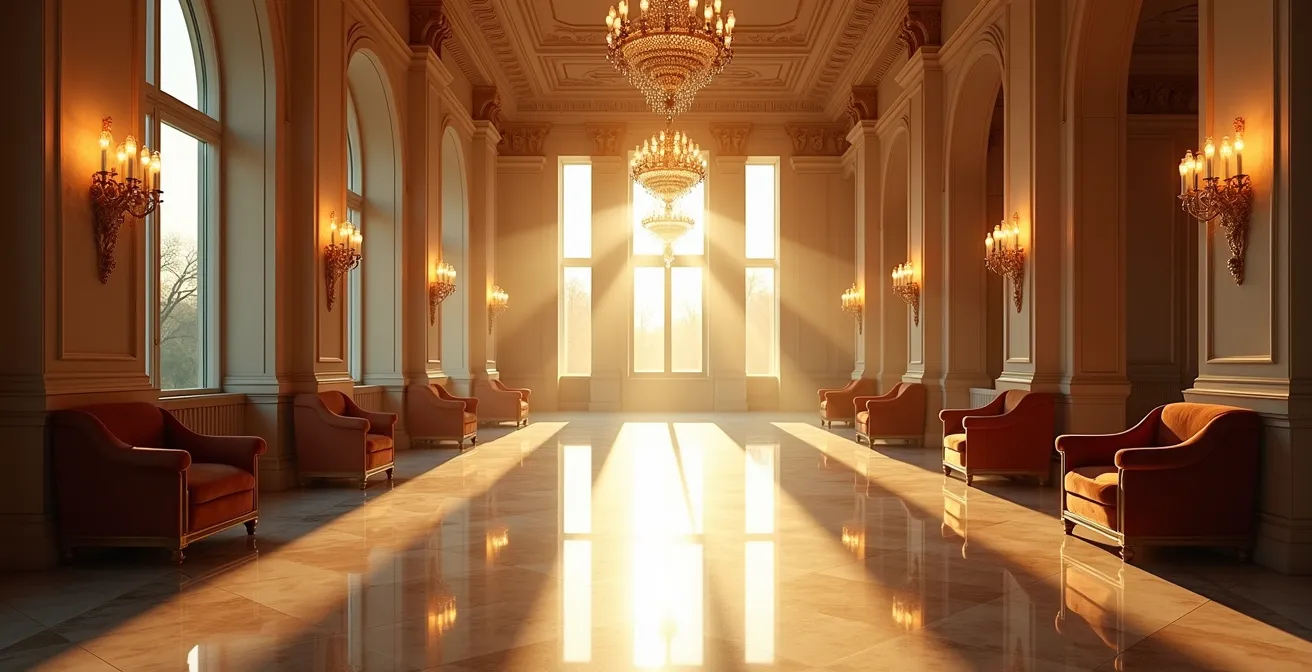
Experiencing the magic of Paris’s Palace hotels like the Ritz or Crillon without a room key is less about budget and more about mastering a set of unwritten rules.
- Strategic timing is everything, from booking sought-after tea times to visiting bars during off-peak hours for a more intimate experience.
- Your attire is your social currency; dressing with intention is not about following strict rules, but about complementing the hotel’s exclusive ecosystem.
- The most coveted experiences, from Michelin-starred meals to spa access, become accessible through smart choices like booking lunch menus or spa treatments.
Recommendation: Shift your mindset from that of a mere consumer to a respectful participant. By understanding and adhering to the unspoken etiquette, you can unlock an authentic taste of the palace lifestyle.
The gilded revolving doors of Paris’s palace hotels—the Ritz, the Crillon, Le Bristol—seem to guard a world apart. For many luxury aficionados, the dream of sinking into a plush armchair in one of these storied establishments feels just out of reach, tethered to a room rate that climbs into the thousands. The common advice is often superficial: “just go for a drink” or “walk through the lobby.” But this approach misses the point entirely and often leaves one feeling more like an awkward intruder than a sophisticated guest. It ignores the subtle dance of etiquette, timing, and presentation that defines the true palace experience.
The truth is, these institutions are more than mere buildings; they are intricate ecosystems with their own codes and rhythms. Gaining access is not about finding a secret back door, but about understanding this ecosystem. What if the key wasn’t simply having enough money, but possessing the right knowledge? The secret to enjoying the palace atmosphere lies not in what you spend, but in how you spend your time, your attention, and your social currency. It’s about knowing that the dress code for the Bar Hemingway is less a rulebook and more a nod to its history, or that securing a table for the famed afternoon tea is a game of strategy, not luck.
This guide acts as your personal concierge, decoding the unwritten rules of Paris’s most exclusive addresses. We will explore how to secure that “impossible” reservation, what you are truly paying for with a 30€ drink, and how to navigate the pinnacle of fine dining without a platinum card. By mastering this insider knowledge, you will move with the confidence and grace of a regular, transforming a fleeting visit into a memorable, authentic luxury experience.
To help you navigate this exclusive world, we have structured this guide to answer your most pressing questions. From the practicalities of booking to the subtleties of etiquette, each section offers a key to unlock a different facet of the palace experience.
Summary: Unlocking the Secrets of Paris’s Palace Hotels
- Le Proust at the Ritz: How Many Weeks in Advance for the Madeleines?
- Dress Code at Bar Hemingway: Will They Refuse You for Wearing Jeans?
- Pool Access: Can Non-Guests Pay to Swim in Palace Pools?
- The 30€ Coke: What Are You Really Paying for in a Palace Lobby?
- Fashion Week: Which Palace Lobby offers the Best Celeb-Spotting?
- Jacket Required: Do You Really Need a Tie for Lunch at Le Pré Catelan?
- The Ritz Entrance: How to Get a Photo Without Annoying the Doormen?
- How to Experience a 3-Star Michelin Restaurant Without Going Bankrupt?
Le Proust at the Ritz: How Many Weeks in Advance for the Madeleines?
The afternoon tea at Salon Proust is one of Paris’s most coveted reservations, and the idea of simply booking a week or two in advance is a charming fantasy. In reality, securing a table is a competitive sport that requires strategic planning. Reservations are released on the first of each month for the entire following month and are often fully booked within minutes. The key is not just knowing when to book, but how to be prepared for the moment they become available.
However, an insider knows that a “fully booked” status online is not always the final word. High-end concierges often hold a few tables, and last-minute cancellations (typically 48 hours prior) can open up slots for those who are persistent enough to call directly. Furthermore, if your heart is set on the Ritz’s pastries but not necessarily the Salon Proust itself, the nearby Bar Vendôme or the Grand Jardin offer a similar menu in a more accessible, and equally chic, setting. For those who can’t secure a spot, it’s worth noting that other palaces offer exceptional, less competitive experiences. For instance, Le Meurice Paris provides a splendid afternoon tea inspired by the artistry of its pastry chef, Cédric Grolet, often without the intense booking battle of the Ritz.
Ultimately, getting into the Salon Proust is a testament to your preparation. It’s about having your account ready, your finger on the button at midnight, and a backup plan in your pocket. This strategic approach is the first lesson in navigating the palace ecosystem: the most rewarding experiences are reserved for those who do their homework.
Dress Code at Bar Hemingway: Will They Refuse You for Wearing Jeans?
The question of wearing jeans to an iconic establishment like the Bar Hemingway at the Ritz is more nuanced than a simple yes or no. While you are unlikely to be turned away for wearing a pair of dark, well-tailored, and un-distressed designer jeans, the real question is not “Can I?” but “Should I?” The dress code at a palace hotel is not a barrier to entry; it is an integral part of the experience itself. You are not just a customer; you are part of the ambiance.
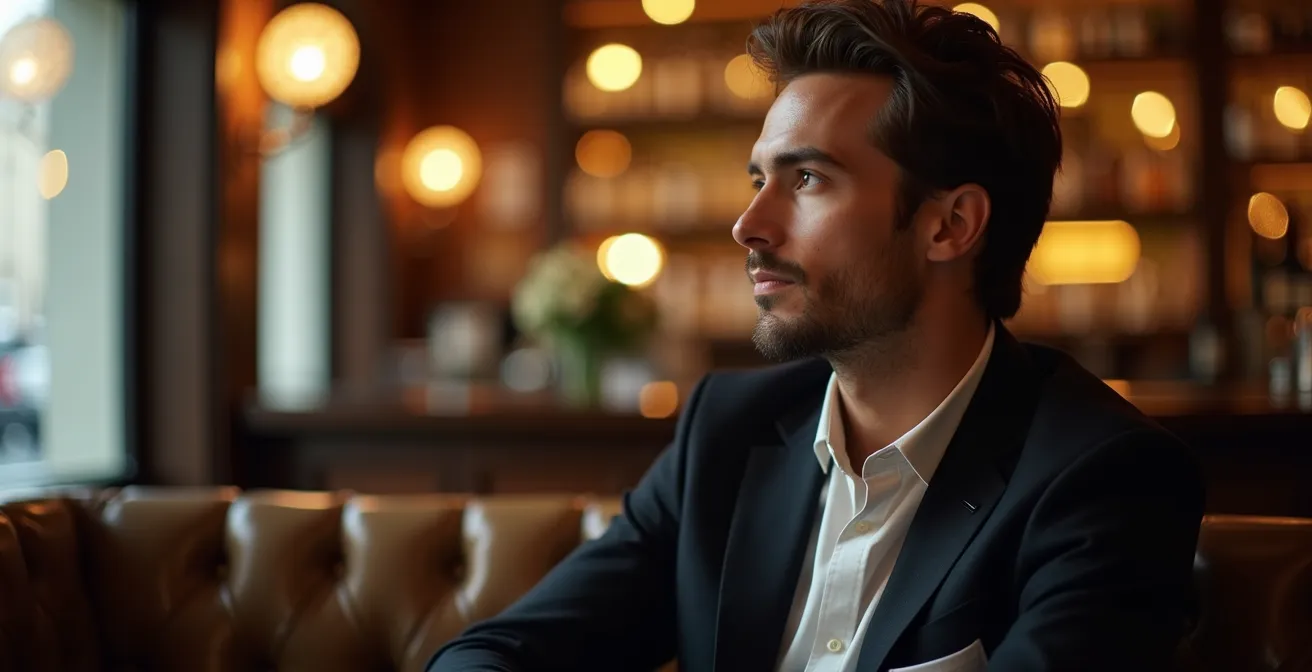
The unofficial rule is “smart casual” with an emphasis on “smart.” This means no sportswear, no shorts, no trainers, and no ripped denim. Think of your attire as a sign of respect for the history of the venue, the professionalism of the staff, and the comfort of the other guests. A crisp blazer, elegant shoes, and impeccable grooming will always be your best assets. As one Paris Palace Hotel Concierge wisely noted in an AFAR Magazine feature:
The goal is to complement the bar’s storied, intimate, and formal atmosphere, not to challenge it.
– Paris Palace Hotel Concierge, AFAR Magazine – Palace Hotels in France
Dressing the part is about social currency. When you feel confident and appropriate in your attire, you move differently, you are treated differently, and you experience the environment on an entirely different level. You cease to be a tourist and become a participant in the timeless elegance of the place.
Pool Access: Can Non-Guests Pay to Swim in Palace Pools?
The fantasy of gliding through the serene, mosaic-tiled pool of a Parisian palace is a powerful one. However, the direct answer to whether a non-guest can simply pay for pool access is, almost universally, no. These pools are considered a private sanctuary for hotel guests, and their exclusivity is a major part of their allure. There is no “day pass” for a swim. But for the savvy individual, there is an elegant and effective workaround: the spa.
Most palace hotels grant access to their wellness facilities, including the pool, to non-guests who book a spa treatment. This is the accepted and proper way to gain entry. Of course, this access comes at a price. For example, the Ritz Club & Spa provides all-day passes that bundle a signature massage with full access to the spa, pool, and fitness areas. Similarly, the Hôtel de Crillon’s spa offers luxurious treatment packages that serve as your ticket to its magnificent swimming facilities. Be prepared, as this strategy represents a significant investment; a qualifying massage or facial can easily run into the hundreds of euros.
This is not a “cheap” way to get in; it is the *correct* way. You are not buying a swim; you are investing in a comprehensive wellness experience of which the pool is a part. It’s a shift in perspective: from seeking a loophole to embracing a legitimate, albeit costly, path to one of the hotel’s most exclusive amenities. It’s the ultimate “treat yourself” moment that grants you several hours of genuine, guilt-free immersion in the palace lifestyle.
The 30€ Coke: What Are You Really Paying for in a Palace Lobby?
The price tag on a simple beverage in a palace hotel lobby often induces sticker shock. But to focus on the drink itself is to miss the entire point. The 30€ Coca-Cola is not about the liquid in the glass; it is your admission fee to an exclusive world. You are not buying a soda; you are purchasing an experience and, most importantly, time. For the price of that one drink, you have bought the right to linger for an hour or two in an exquisitely designed space, surrounded by art, history, and impeccable service.
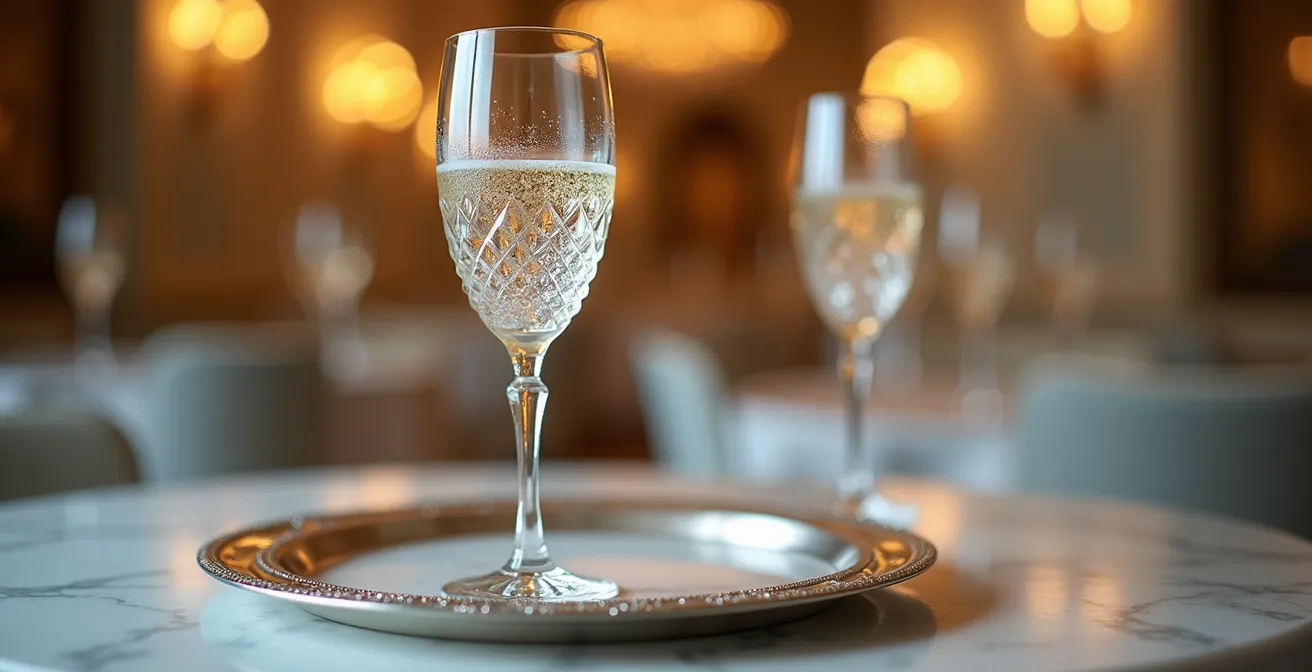
What does that price truly include? It’s a bundle of intangible luxuries. It’s the live pianist softly playing in the corner. It’s the drink being served in heavy crystal glassware on a polished silver tray. It’s the complimentary bowl of high-quality olives or perfectly salted nuts that accompanies it. It’s the discreet, anticipatory service from a staff trained to make you feel like the most important person in the room. Most of all, it’s the unfettered access to an atmosphere—a prime seat for people-watching, a quiet corner for conversation, or a moment of reflection in a setting that cost millions to create and maintain.
Think of it as renting a piece of luxurious real estate for an afternoon. When viewed through this lens, the price becomes a surprisingly reasonable investment in a unique and memorable experience. You are paying for the privilege of belonging, even for a short while, in one of the city’s most beautiful and exclusive living rooms.
Fashion Week: Which Palace Lobby offers the Best Celeb-Spotting?
During Paris Fashion Week, the city’s palace hotels transform into the unofficial headquarters for the global fashion elite. For those hoping to catch a glimpse of a famous editor, model, or designer, simply picking a lobby at random is a recipe for disappointment. Effective celeb-spotting is an art that requires strategic knowledge of the industry’s habits. Different hotels attract different tribes within the fashion ecosystem.
Established icons and top-tier fashion editors often remain loyal to the grand dames of Parisian hospitality. Le Bristol is a known favorite for its garden courtyard, a discreet haven for post-show meetings. The Ritz Paris, with its legendary status and Place Vendôme location, consistently draws classic movie stars and major designers. Newer, more contemporary luxury brands and their celebrity ambassadors might gravitate towards the chic modernity of Cheval Blanc Paris or the Mandarin Oriental. Knowing this allows you to tailor your visit to the type of celebrity you hope to see.
Timing and location within the hotel are also crucial. The morning rush (10-11 AM) near the main entrance is prime time for spotting stars heading out to shows. Late afternoon (3-5 PM) is ideal for a more relaxed sighting in a hotel’s courtyard or bar, as the industry takes a brief pause. The evening sees a different energy, with pre-dinner cocktails drawing a glamorous crowd to bars like Les Ambassadeurs at the Crillon. For a truly strategic approach, consult this insider’s guide. As confirmed by a guide to Paris’s top luxury hotels, each location has its own rhythm.
| Hotel | Best Time | Prime Location | Celebrity Type |
|---|---|---|---|
| Le Bristol | 3-5 PM | Garden Courtyard | Fashion Editors |
| Ritz Paris | 10-11 AM | Place Vendôme Entrance | Classic Stars |
| Crillon | 6-8 PM | Les Ambassadeurs Bar | Business Moguls |
| Peninsula | 4-6 PM | Rooftop Terrace | International Celebrities |
Jacket Required: Do You Really Need a Tie for Lunch at Le Pré Catelan?
Navigating the dress code of a three-Michelin-star restaurant like Le Pré Catelan can be intimidating. The fear of being underdressed is real, but the rules are often more flexible than you might think, especially for lunch service. The key distinction lies between lunch and dinner. As a French gastronomy expert clarifies, the expectation shifts with the time of day.
At lunch, a jacket is strongly recommended but a tie is often optional. For dinner, both are practically mandatory.
– French Gastronomy Expert, France’s Palace Hotels Guide
This single piece of advice is your guide. For a weekday lunch, a well-fitted blazer or sports coat without a tie is generally perfectly acceptable and demonstrates respect for the establishment. Dinner, however, is a more formal affair, and arriving without both a jacket and tie would be a significant faux pas. The most important principle is to never be the one who lowers the tone of the room. Your attire is a non-verbal communication that you understand and appreciate the artistry and effort that goes into a three-star experience.
When in doubt, it is always better to be slightly overdressed than underdressed. Most high-end restaurants discreetly keep a selection of jackets for gentlemen who arrive unprepared, but having to borrow one is a clear sign that you misjudged the occasion. To avoid any uncertainty, a quick, polite phone call ahead of your reservation is the most foolproof strategy.
Action Plan: Navigating a Michelin Restaurant Dress Code
- Confirm Directly: Call ahead and ask specifically: “Is a jacket and tie mandatory for lunch service?” (“La veste et la cravate sont-elles obligatoires pour le déjeuner?”).
- Pack for Formality: Always travel with a versatile blazer and tie. It’s better to have them and not need them than to need them and not have them.
- Know the Safety Net: Be aware that most 3-star restaurants can provide a spare jacket, but aim to never need this service.
- Leverage the Lunch Advantage: Understand that lunch service is consistently more relaxed than dinner, providing a more accessible entry point to fine dining.
- Show Respect: Remember your attire is a sign of respect for the immense effort of the chef, the service staff, and the other diners sharing the experience.
The Ritz Entrance: How to Get a Photo Without Annoying the Doormen?
The iconic entrance of the Ritz on Place Vendôme is a powerful symbol, and wanting to capture that memory is completely understandable. However, the difference between a graceful insider and an obvious tourist lies in how you take that photo. The primary mistake is treating the entrance like a public monument, lingering directly in front of the doors, and obstructing the flow of guests and staff. The doormen are not just there for show; they are managing security, luggage, and the seamless arrival of high-profile guests. Annoying them is the fastest way to feel out of place.
The secret is discretion and respect. Instead of planting yourself front and center, find a vantage point from across the square or to the side. The architecture is magnificent from a distance, and this perspective often yields a better, more complete photograph. If you must be closer, choose an off-peak moment, such as mid-afternoon when arrivals and departures have slowed. The most crucial element of etiquette is to acknowledge the staff. A simple, polite nod and a smile to the doormen before you raise your camera transforms you from an anonymous tourist into a courteous individual. It’s a small gesture that communicates respect and awareness.
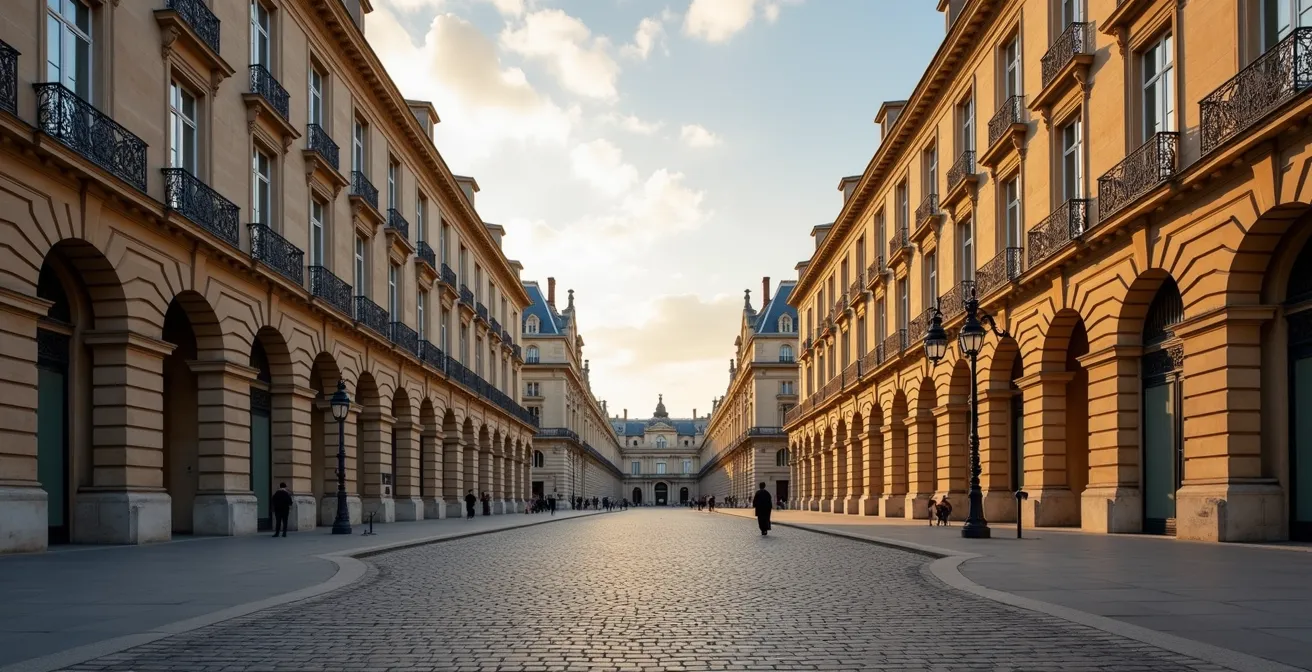
Another insider tip is to use the side entrance on Rue Cambon. It is often less busy and offers a more discreet way to enter the hotel or take a photo without being in the main line of fire. Remember, your goal is to capture a memory without disrupting the hotel’s ecosystem. By acting with grace and self-awareness, you can get your perfect shot while maintaining an air of sophistication.
Key takeaways
- True access to Paris’s palace hotels is gained through mastering unwritten rules of etiquette and strategy, not just by spending money.
- Smart choices, like opting for lunch menus at Michelin-starred restaurants or booking spa treatments for pool access, unlock exclusive experiences affordably.
- Your presentation and demeanor act as your ‘social currency’; dressing to complement the atmosphere is more important than following a strict rulebook.
How to Experience a 3-Star Michelin Restaurant Without Going Bankrupt?
The dream of dining at a three-Michelin-star restaurant within a Parisian palace seems, for most, a financial fantasy. With dinner tasting menus often soaring towards €500 per person, it feels like an unattainable peak of gastronomy. However, the most effective strategy for accessing this world is remarkably simple and universally acknowledged by insiders: book for lunch. The lunch service at these temples of haute cuisine offers a near-identical level of quality, service, and ambiance for a fraction of the cost.
The price difference is not trivial. For example, the typical price difference between lunch and dinner menus at a top-tier Parisian establishment can be staggering, with lunch often priced at €185 versus €490 for dinner. This “Menu Déjeuner” is not a lesser experience; it is a curated, more concise journey through the chef’s philosophy, designed for a clientele that may not have four hours to devote to a meal. You are still getting the exquisitely set table, the flawless service, and the culinary genius that earned the restaurant its stars.
Furthermore, many palaces offer a hierarchy of dining options. A hotel like Le Bristol, for example, features both a three-star and a one-star restaurant, providing different entry points to the same standard of excellence. Other smart strategies include opting for a wine pairing by the glass for only a few courses instead of the full flight, or keeping an eye out for special “discovery” menus during the off-season. By combining these tactics, the pinnacle of French gastronomy moves from the realm of “impossible” to “special occasion,” making the experience an accessible and unforgettable investment in culinary art.
Now that you are equipped with the insider’s knowledge, the final step is to step out with confidence, ready to apply these principles and create your own authentic palace hotel experience.