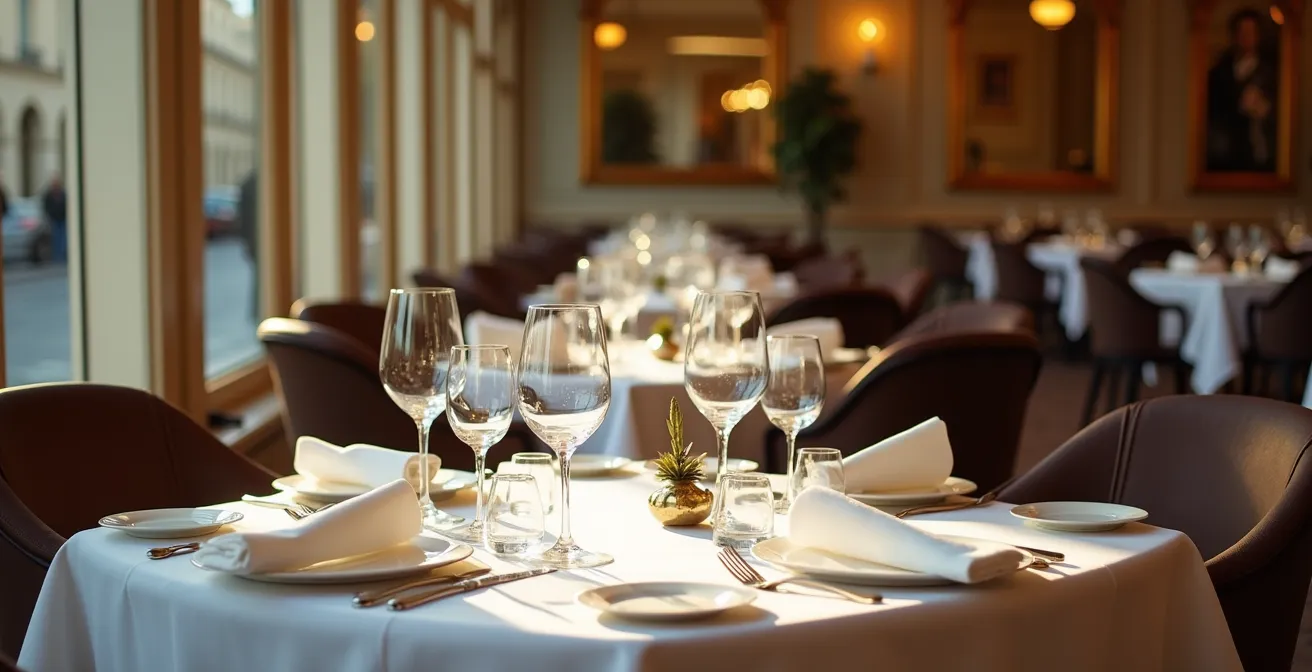
The secret to affordable Michelin dining in France isn’t just finding discounts; it’s about strategically hacking the system to gain maximum luxury value for a minimal entry price.
- The weekday lunch menu, or ‘Menu du Marché’, is not a compromise but a “best-of” selection of a chef’s signature dishes at a fraction of the dinner cost.
- Palace hotels like the Ritz can be experienced through ‘atmosphere hacking’—booking afternoon tea or a cocktail at the bar provides the full ambiance without the cost of a room.
Recommendation: Shift your mindset from “saving money” to “experience arbitrage.” Target a one-star lunch menu for your first foray, or book a famed afternoon tea to get a taste of three-star luxury.
The dream of a Michelin-starred meal in France often conjures images of astronomical bills, month-long waiting lists, and a sense of inaccessible exclusivity. For luxury seekers with a defined budget, the world of Guy Savoy or the gilded halls of the Ritz Paris can seem like a fortress. Many believe the only path is to save for years or settle for a pale imitation. The common advice is predictable: choose a one-star restaurant over a three-star, or book the lunch menu. While not incorrect, this advice barely scratches the surface and misses the point entirely.
These tips treat the experience as a simple transaction—a lesser meal for a lesser price. But what if the goal isn’t just to eat, but to immerse oneself in an atmosphere of unparalleled service and artistry? The true key to unlocking this world without depleting your savings lies not in compromise, but in strategy. It requires a mindset shift from a mere diner to a sophisticated luxury lifestyle hacker. The secret isn’t about what you sacrifice, but about understanding the unwritten rules and hidden entry points that these legendary establishments offer.
This guide will not just tell you to book a lunch deal. It will show you how to decode the system. We will explore the ‘Menu du Marché’ gambit, a strategic choice for tasting a chef’s genius with the freshest ingredients. We’ll decipher dress codes, crack the reservation algorithms for the most sought-after tables, and analyze the real difference in value between one and three stars. Finally, we’ll reveal the art of ‘atmosphere hacking’—how to soak in the opulent ambiance of a palace hotel for the price of a single, perfectly crafted cocktail. This is your playbook for experiencing the pinnacle of French gastronomy, intelligently and unforgettably.
This article provides a complete strategic guide to navigating the world of French high gastronomy on a budget. Below, you will find a summary of the key tactics we will cover, from securing the best value lunch deals to enjoying the atmosphere of legendary palace hotels without booking a room.
Summary: A Strategic Guide to Affordable Michelin Dining in France
- The Lunch Deal: Which Starred Restaurants Offer Menus Under 60€?
- Jacket Required: Do You Really Need a Tie for Lunch at Le Pré Catelan?
- The 3-Month Rule: When Exactly Do You Need to Book for Guy Savoy?
- Tasting Menu Fatigue: Is 9 Courses Too Much for Lunch?
- 1 Star vs 3 Stars: Is the Price Difference Justified by the Food or the Service?
- Le Proust at the Ritz: How Many Weeks in Advance for the Madeleines?
- King’s Private Apartments: What Do You See That Regular Tourists Don’t?
- How to Enjoy the Ritz or Crillon Atmosphere Without Booking a Room?
The Lunch Deal: Which Starred Restaurants Offer Menus Under 60€?
The most widely known “hack” for affordable Michelin dining is the weekday lunch menu, but viewing it as a mere discount is a strategic error. A savvy diner understands this is the ‘Menu du Marché’ gambit. This isn’t a lesser menu; it’s often a chef’s daily masterpiece, crafted from the freshest finds at the local market. It’s a direct line to seasonal, regional excellence. For instance, L’Aspérule in Lyon, run by Chef Marc Duval, offers what is considered France’s cheapest Michelin-starred lunch at an astonishing €28 for three courses, featuring vegetables from an organic market gardener just 2km away.
This strategy is most effective outside the capital. While a one-star lunch in Paris typically starts around €60-€78, regional cities offer incredible value. In Montpellier, it’s common to find surprise four-course lunch menus for €45. The key is to specifically request the ‘Menu du Marché’ or the ‘Menu Bistronomique’ when booking, as they are often unadvertised weekday exclusives. Even in Paris, the value is undeniable. At Frédéric Simonin’s one-star establishment, a chef who honed his skills at Ledoyen and Le Meurice, the lunch menu is a strategic entry point. Offering two courses for €60 or three for €78, it’s a chance to experience the work of a Meilleur Ouvrier de France for a fraction of the evening price. The real value lies in understanding that you’re not getting a “cheaper” meal, but a different, often more spontaneous, expression of the chef’s talent.
Ultimately, the lunch deal is the gateway to this exclusive world, offering a clear answer to the question: is a Michelin lunch worth it? When executed as a strategic choice rather than a compromise, the answer is a resounding yes.
Jacket Required: Do You Really Need a Tie for Lunch at Le Pré Catelan?
Navigating the dress code of a high-end French restaurant can be a source of anxiety, but it’s a code that can be easily cracked. For a lunch service, even at a prestigious three-star like Le Pré Catelan, the rules are more relaxed. The prevailing ethos is ‘chic décontracté’, or smart casual. This means a tie is almost never a requirement for a midday meal. For men, a well-fitted jacket or blazer paired with a crisp shirt and pressed trousers is the gold standard. Even smart, dark jeans can be acceptable if paired with a blazer.
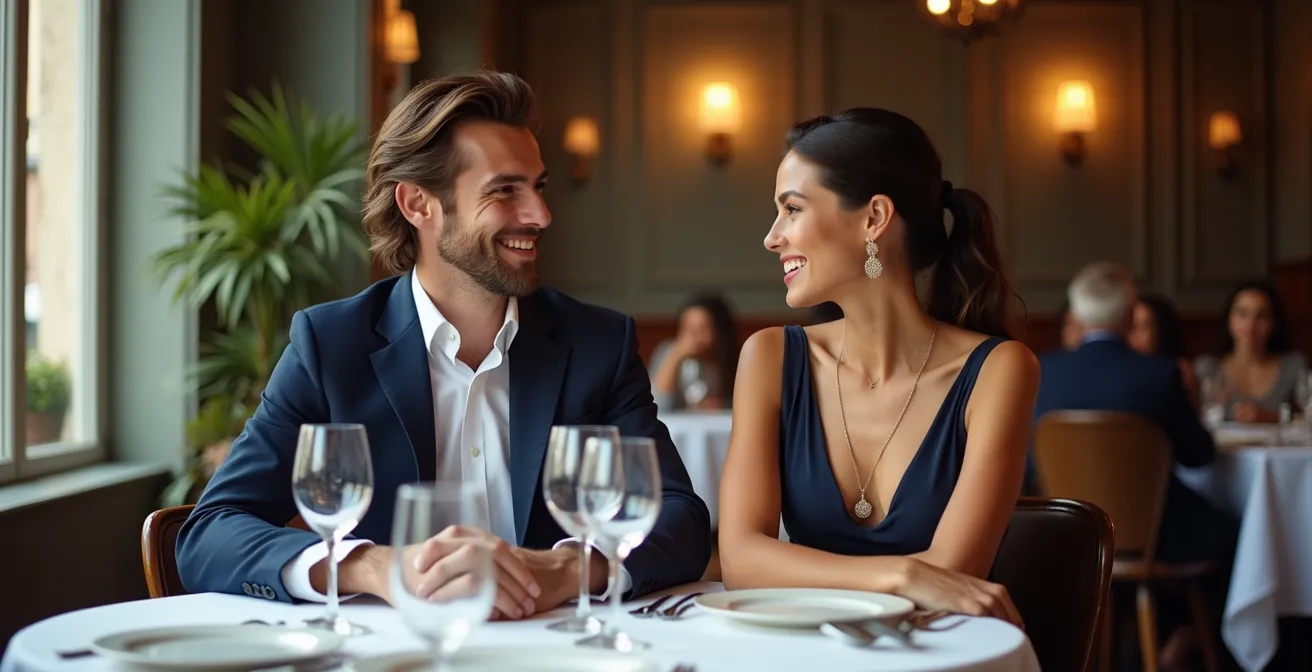
As the image above suggests, the ambiance is one of relaxed elegance. The goal is to show respect for the establishment and the other diners, not to adhere to an archaic, rigid uniform. The term to watch for is ‘tenue correcte exigée’, which is more common for dinner service and explicitly requires more formal attire, making a suit jacket mandatory for men. For women, an elegant dress, a sophisticated pantsuit, or a silk blouse with tailored trousers are all perfect choices. The key is polish and intention. The ultimate accessory hack is to opt for discreet, elegant jewelry that complements the outfit rather than overpowering it. Overly flashy accessories are a common misstep.
In essence, while dinner service demands more formality, casual dress is generally accepted for lunch. The objective is to look put-together and respectful, proving that style is about confidence and sophistication, not just a tie.
The 3-Month Rule: When Exactly Do You Need to Book for Guy Savoy?
Securing a table at a world-renowned restaurant like Guy Savoy or L’Arpège isn’t a matter of luck; it’s about understanding the ‘Reservation Algorithm’. The most critical factor is timing. For top-tier, three-star establishments, especially during peak season (May-September), the ‘3-Month Rule’ is your guiding principle. Most of these elite restaurants open their online booking systems precisely three months in advance, often to the day. For a highly sought-after Saturday dinner, you need to be ready to book the moment reservations go live.
However, the savvy hacker knows how to bend these rules. The algorithm has variables you can exploit. The easiest lever to pull is choosing lunch over dinner, as reservations are significantly easier to secure. The next variable is seasonality. Paris has two periods of opportunity: January and August. In the post-holiday slump of January, tables can often be booked with just a few days’ notice. Similarly, in late August, when Parisians flee the city for their annual vacation, availability magically appears. This ‘August exodus’ is a prime time for visitors to snag a last-minute table at an otherwise impenetrable restaurant.
Finally, don’t underestimate the power of a direct approach. While online systems are efficient, many traditional French restaurants still prioritize relationships. If the online portal shows no availability, call the restaurant directly. A polite inquiry about cancellations can sometimes yield a spot, as these establishments often maintain a private waiting list for discerning callers.
By combining the 3-month rule with seasonal and direct-contact strategies, you transform the daunting task of booking into a manageable, strategic game.
Tasting Menu Fatigue: Is 9 Courses Too Much for Lunch?
The prospect of a multi-hour, nine-course tasting menu at lunchtime can seem daunting, evoking fears of ‘tasting menu fatigue’. Will you be too full to enjoy the final courses? Will the meal drag on for too long? These are valid concerns, but they often stem from a misunderstanding of the experience. The flow of a Michelin-starred meal is a carefully orchestrated performance. As expert diner Megan from Traverse Blog notes in her guide, the pacing is key.
We once sat for a Michelin meal that took over 5 hours. While this may sound arduous to some, the pacing of the courses and wine pairings keeps the meal steadily flowing and with good conversation and company, you’re unlikely to notice how long the meal takes.
– Megan from Traverse Blog, Beginner’s Guide to Michelin Star Restaurants
However, the most effective strategy to avoid fatigue while still experiencing the chef’s vision is to leverage the lunch menu. It’s a mistake to view it as merely a shorter, cheaper option. As a case study in strategic dining, the lunch menu is often a restaurant’s ‘best-of’ compilation.
The Lunch Menu Strategy
Many Michelin restaurants use their lunch offering as a showcase for their most famous or signature dishes. This allows them to feature a stable, crowd-pleasing menu that represents the pinnacle of their work. The dinner menu, by contrast, can then be used for more seasonal or experimental creations. By choosing the lunch tasting menu, diners get a concentrated dose of the restaurant’s identity, often at a significantly lower price, without the commitment of a nine-course marathon.
This approach allows you to taste the dishes that built the restaurant’s reputation, presented with the same artistry and precision as the full dinner experience, but in a more manageable format for a midday meal.
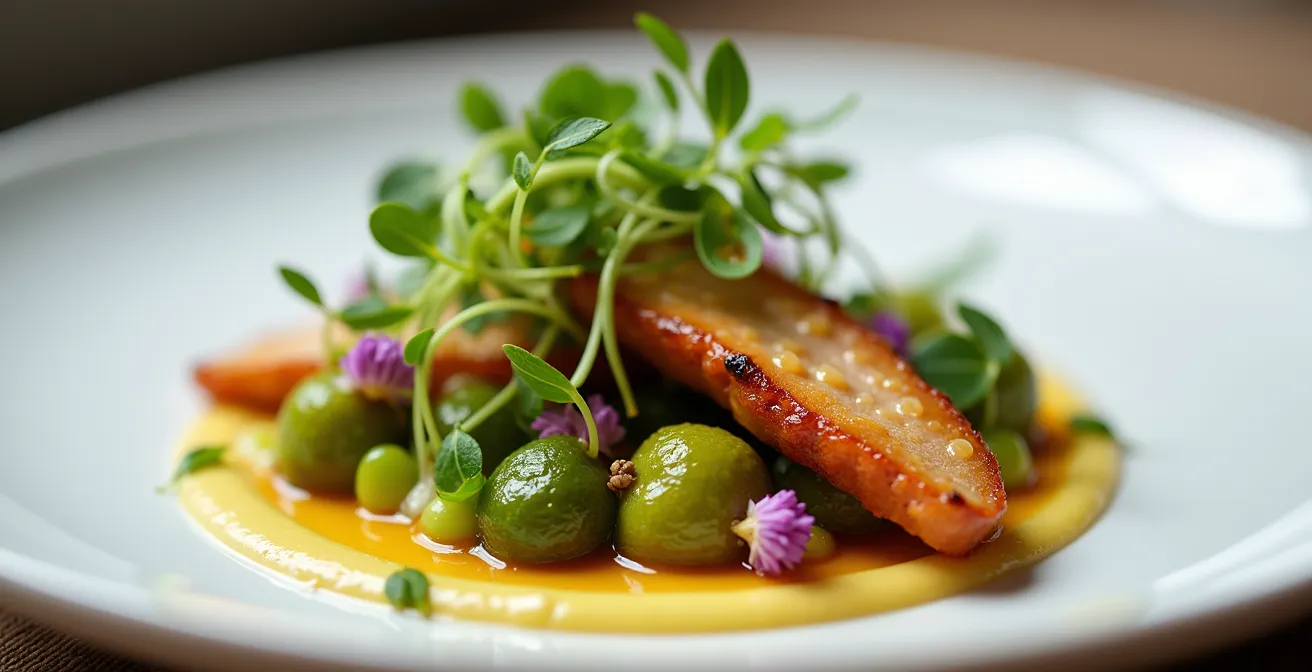
So, is a long tasting menu too much for lunch? Perhaps. But by strategically opting for the “best-of” lunch tasting menu, you get all the reward with none of the risk.
1 Star vs 3 Stars: Is the Price Difference Justified by the Food or the Service?
For the budget-conscious luxury seeker, the central question is one of value. Is a three-star experience truly worth three to four times the price of a one-star? The answer lies not just on the plate, but in the intangible atmosphere and, most importantly, the ‘service delta’. In 2025, Paris is home to a robust 96 one-star restaurants but only 10 three-star establishments. This scarcity is a clue to the difference. A one-star restaurant guarantees excellent cooking. The service is professional and attentive. However, at a three-star restaurant, the service transcends attentiveness and becomes anticipatory. Staff seem to know what you need before you do. It’s a seamless, personalized ballet where every detail is considered.
The price differential reflects this chasm in experience. While a one-star lunch might cost €60-€120, a three-star lunch can easily be €250-€350. The total cost for a three-star dinner for two, including tips for the doorman and cloakroom, can quickly approach €500-€600. This premium pays for a larger staff-to-diner ratio, more luxurious ingredients, and an almost theatrical level of service. The choice between them depends on your goal. If your priority is purely culinary excellence, a one-star restaurant offers phenomenal value. If you seek a once-in-a-lifetime, immersive experience where you are the center of a perfectly orchestrated world, the three-star premium may be justified.
| Aspect | 1-Star Restaurant | 3-Star Restaurant |
|---|---|---|
| Average Price (per person) | €60-120 lunch / €120-200 dinner | €250-350 lunch / €400-600 dinner |
| Service Style | Professional, attentive | Anticipatory, personalized |
| Number in Paris 2025 | 96 restaurants | 10 restaurants |
| Booking Window | 2-4 weeks advance | 2-3 months advance |
| Menu Flexibility | Often à la carte options | Usually tasting menu only |
For a first-time experience, a one-star restaurant is a fantastic and accessible entry point. But for that single, unforgettable meal, understanding that the three-star price buys you a symphony of service, not just food, is key.
Le Proust at the Ritz: How Many Weeks in Advance for the Madeleines?
One of the most elegant forms of ‘atmosphere hacking’ is indulging in afternoon tea at a legendary palace hotel. The Salon Proust at the Ritz Paris offers a quintessential Parisian luxury experience without the commitment of a full meal. Here, for a set price, you can immerse yourself in the opulent library setting, surrounded by first-edition books, and partake in a ritual inspired by Marcel Proust’s famous novel. The centerpiece is the signature madeleine, served warm in a special teacup, an homage to the author’s cherished childhood memory.
Accessing this experience requires some planning. The salon is an intimate and quiet space with limited seating, so reservations are essential. You should aim to book at least a couple of weeks in advance through the official Ritz Paris website, especially if you’re aiming for a weekend slot. The salon is open from 2:30 pm to 6:00 pm, with the last booking available at 5:00 pm. This timing makes it a perfect, civilized interlude between sightseeing and evening plans. It’s a strategic way to enjoy the hotel’s grandeur during daylight hours.
There are two primary options: the ‘Thé à la Française’ and the ‘Thé Royal’, which includes a glass of champagne. According to a recent report, the 2025 prices for these experiences are €105 and €125, respectively. While not inexpensive, this price point is a fraction of a dinner at the hotel’s fine dining restaurant, yet it delivers a full dose of the Ritz’s legendary service and ambiance. Be mindful of the cancellation policy: any changes made within 48 hours of the booking incur a steep €105 per person fee, a testament to the high demand for this coveted experience.
For the price of a mid-range dinner elsewhere, you are granted a few hours of pure, unadulterated palace luxury, complete with a literary and culinary narrative.
King’s Private Apartments: What Do You See That Regular Tourists Don’t?
The ultimate goal for a luxury hacker isn’t just to be in the room, but to get a glimpse behind the curtain. In the world of gastronomy, this translates to experiences that offer a “private quarters” view, metaphorically taking you into the King’s apartments while others tour the main halls. This doesn’t mean sneaking into the kitchen, but strategically choosing experiences designed to offer exclusive access. The most direct way is the chef’s table experience. Many Michelin-starred restaurants have small, intimate tables, often seating just 4-8 guests, situated directly in or with a full view of the kitchen. These allow diners to watch the culinary brigade in action, a mesmerizing ballet of precision and intensity, often with direct interaction from the chef.
The Chef’s Table at L’Oiseau Blanc
At the two-Michelin-starred L’Oiseau Blanc, located atop The Peninsula Paris, the exclusive “Table 22” offers a prime example. This single table provides not only breathtaking views of the Eiffel Tower but also a unique perspective on the open kitchen. Guests here feel part of the action, observing Chef David Bizet’s team up close while enjoying a bespoke menu. This type of experience elevates a meal from a transaction to an immersive event, providing a story to tell that goes far beyond the food itself.
Securing these “behind-the-scenes” views requires a specific set of tactics. It’s about looking beyond the standard dining room reservation and seeking out unique formats that prioritize intimacy and access. The modern trend of open kitchens and counter dining has made this more accessible than ever.
Your Action Plan: Accessing Exclusive Culinary Experiences
- Request counter seating: At many high-end restaurants, especially those with Japanese influences, the counter is the best seat in the house. Yannick Alléno’s L’Abysse au Pavillon Ledoyen, for example, offers just 10 seats for an intimate viewing of the sushi masters at work.
- Book a ‘Salon Particulier’: For groups of 4-6, inquire about private dining rooms. Sometimes these exclusive spaces can be reserved with no significant surcharge per person, offering a private, customized experience.
- Visit a chef’s ‘second’ restaurant: Many famed chefs run more casual bistros that act as laboratories for their ideas. These spots showcase their core philosophy and skill at a much more accessible price point.
- Look for ‘open kitchen’ concepts: When researching restaurants, prioritize those with glass-walled or fully open kitchens. This architectural choice is a statement of transparency and provides built-in entertainment.
- Enroll in a palace hotel cooking class: For the ultimate access, schools like the Ritz Escoffier offer hands-on classes that take you directly inside the hallowed kitchens of a palace hotel.
This approach moves beyond passive consumption and into active participation in the culinary artistry, which is the truest form of luxury.
Key Takeaways
- The lunch menu (‘Menu du Marché’) is your most powerful tool, offering a “best-of” experience at a fraction of the dinner price.
- Palace hotel luxury is accessible through “atmosphere hacking”: book afternoon tea at the Ritz or a cocktail at the Crillon to enjoy the ambiance without the room rate.
- The price gap between one and three stars is largely justified by the “service delta”—the shift from attentive to truly anticipatory, personalized service.
How to Enjoy the Ritz or Crillon Atmosphere Without Booking a Room?
The final and most versatile strategy in the luxury hacker’s playbook is ‘experience arbitrage’: enjoying the priceless atmosphere of a palace hotel for the price of a modest purchase. You don’t need to book a €1,500-a-night suite to feel the magic of the Hôtel de Crillon or the Ritz. These institutions are masters of hospitality, and they extend that welcome to non-resident guests in their public spaces. The key is to enter with confidence and patronize one of their offerings. The most common entry points are the hotel bars and afternoon tea services.
Visiting a legendary bar like the Bar Hemingway at the Ritz is an experience in itself. You are stepping into a piece of literary history. A signature cocktail, while priced at a premium, is your ticket to this exclusive world. The typical price for a cocktail at these Parisian palace bars is around €22-30. For this, you get to soak in the ambiance for an hour or two, receive impeccable service, and enjoy the best people-watching in the city. It is, by far, the highest-value ‘hack’ available. Similarly, the breakfast service can be another clever way to experience a palace setting at a cost lower than lunch or dinner.
Beyond food and drink, other avenues exist. Many palace hotels house world-class spas that offer day passes or access to the pool and facilities with the purchase of a single treatment. Some, like Le Bristol, host public cultural events, such as art exhibitions or jazz nights, that are open to everyone. By seeking out these opportunities, you are not a freeloader; you are a patron, intelligently selecting the experience that offers the highest return on investment in terms of luxury and atmosphere.
Start by planning your ‘mission’: select a legendary hotel bar, book an afternoon tea, and walk in not as a tourist, but as a discerning guest ready to enjoy the experience you’ve cleverly unlocked.