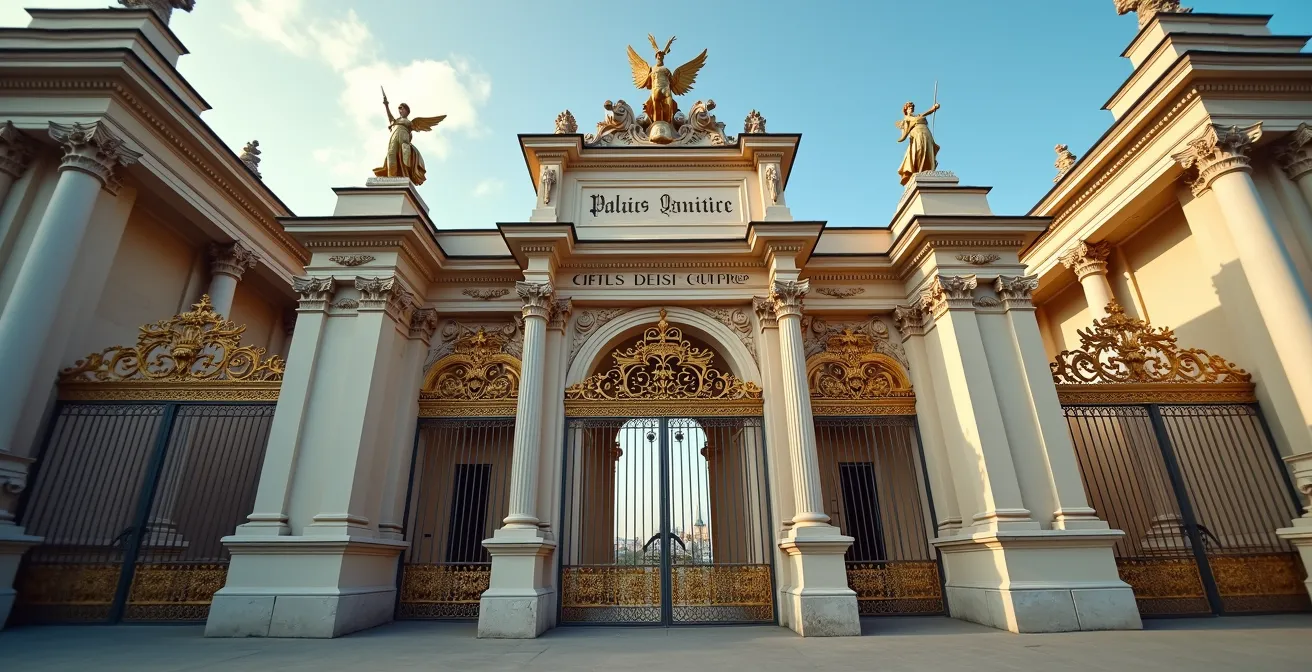
Visiting Paris’s historic core successfully means understanding its dual role as both a tourist magnet and a center of state power.
- Security and official functions are not annoyances but part of the site’s living history; planning for them is a key part of the experience.
- The most rewarding discoveries, like the archeological crypt or a game of pétanque in Place Dauphine, are often found by looking beyond the main attractions.
Recommendation: Arrive with a plan that accounts for operational realities, embrace the historical context of each site, and explore the layers of history that exist just beneath the surface.
The queue stretches from the gilded gates, a testament to the magnetic pull of Paris’s historic heart. Many visitors arrive at the Île de la Cité armed with the standard advice: book tickets online, expect crowds, and prepare to be dazzled. Yet, they often leave with a sense of frustration, having spent more time waiting in security lines than absorbing the history they came to see. They experience these sites as a series of disconnected attractions, missing the intricate web of history, law, and power that defines this island.
But what if the key to a truly profound visit was not to fight against the site’s nature, but to understand it? What if the security checks, the closed-off wings, and the throngs of people were not obstacles, but clues to the island’s true identity as a living monument? This guide adopts the perspective of a historian, revealing how to navigate the Palais de Justice complex and its surroundings not as a mere tourist, but as an informed observer. We will move beyond the superficial to decode the operational realities and historical layers that shape the visitor experience.
By understanding why things are the way they are—from the purpose of an augmented reality tablet in a revolutionary prison to the reason you might find a government building unexpectedly closed—you can craft a more meaningful and efficient visit. This approach transforms potential frustrations into moments of insight, allowing you to appreciate the enduring power of these magnificent structures.
This article provides a detailed framework for exploring the key sites on and around the Île de la Cité. Each section addresses a common question or challenge, offering practical solutions grounded in historical and administrative context to enhance your visit.
Summary: A Practical and Historical Guide to Paris’s Île de la Cité
- Marie-Antoinette’s Cell: Is the Augmented Reality Tablet Worth the Entry Fee?
- Queen Elizabeth II Market: Is It Still Worth It on Sundays with the Bird Market Gone?
- The Security Line: Why You Need to Arrive 30 Minutes Before Your Slot?
- Place Dauphine: The Only Place to Play Pétanque in the Center?
- Point Zéro: Where is the Brass Star That Measures All Distances in France?
- Why the Crypt Archaeologique Is the Best Alternative to Entering the Cathedral?
- The Mistake of Trying to Visit the Palais Royal Columns During State Events
- How to Experience the Magic of Notre-Dame While It Is Under Reconstruction?
Marie-Antoinette’s Cell: Is the Augmented Reality Tablet Worth the Entry Fee?
For the visitor seeking to grasp the historical gravity of the Conciergerie, the “Histopad” augmented reality tablet is not merely an optional extra; it is an essential interpretive tool. It directly addresses the challenge of viewing a space that has been stripped of its original contents over centuries. The tablet single-handedly justifies the entrance fee by digitally repopulating the vast, austere medieval halls with the life and detail that time has erased, transforming an architectural tour into a historical immersion.
The standard ticket, for which the official entry fee is €11.50 (including the Histopad), provides access to what can feel like empty stone chambers. Without context, their significance is diminished. The Histopad bridges this gap by offering 3D reconstructions of the rooms in their original state. By scanning markers, you can visualize the Hall of the Guards as a royal banqueting hall or see the conditions faced by the 4,000 revolutionary prisoners who passed through these walls.
This technology is most powerful when viewing Marie-Antoinette’s cell. The physical space you visit today is an expiatory chapel, constructed in 1815 after Napoleon’s defeat. The original, smaller cell was destroyed, its walls painted dark blue with silver tears and a cenotaph placed where her bed once stood. The Histopad allows you to peel back this 19th-century layer and see a historically accurate recreation of the cell as it appeared in 1793. For the informed observer, this ability to witness the historical layers of a single room makes the tablet indispensable.
Queen Elizabeth II Market: Is It Still Worth It on Sundays with the Bird Market Gone?
Yes, the Marché aux Fleurs et aux Oiseaux Reine Elizabeth II remains a worthwhile Sunday destination, though its character has shifted. The famous bird market (marché aux oiseaux) that once filled the air with birdsong has ceased, a loss for some traditionalists. However, the market has since leaned fully into its identity as a magnificent flower and plant market, offering a vibrant, fragrant, and quintessentially Parisian experience that is especially beautiful on a Sunday morning.
Instead of the cacophony of birds, you will find a serene and colorful oasis. The 19th-century iron pavilions are filled with stalls overflowing with seasonal blooms, exotic orchids, fragrant herbs, and mature citrus trees. It is less a transactional market and more of a botanical promenade, a place to absorb the beauty of nature in the very heart of the city. For travelers and locals alike, it provides a peaceful counterpoint to the monumental architecture surrounding it.
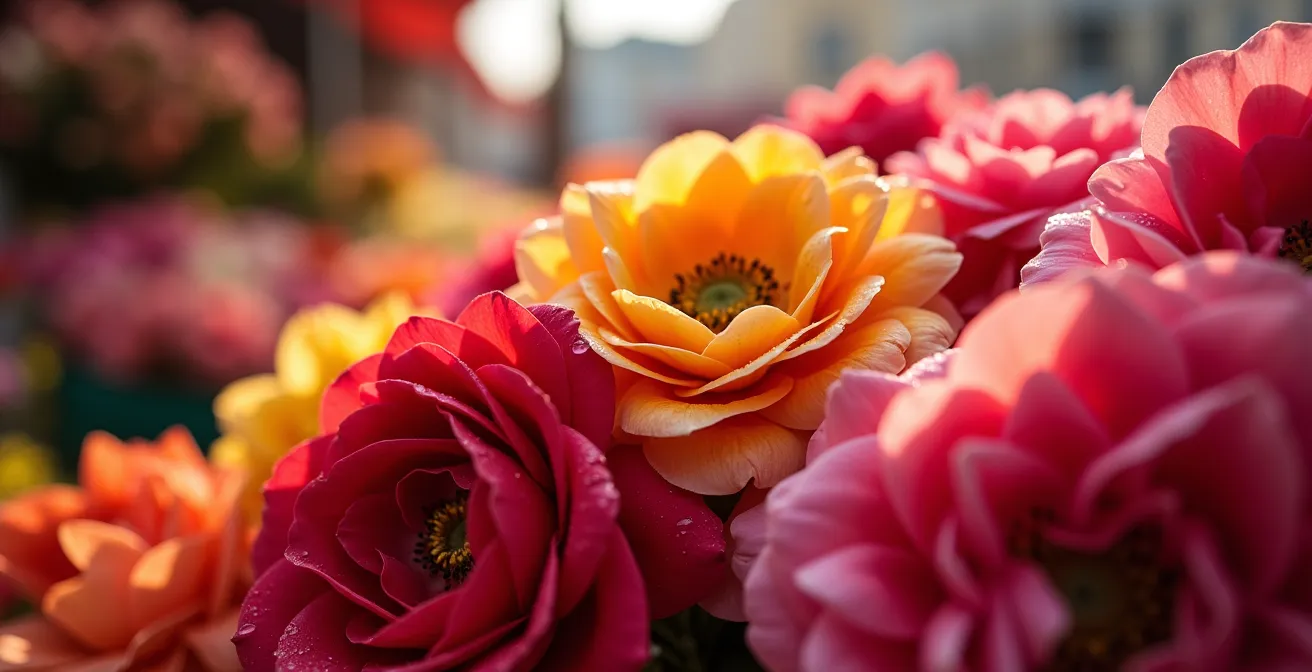
For those who miss the eclectic energy of the old bird and flea market combination, Paris offers numerous other vibrant Sunday markets. Each provides a unique window into local life, far from the main tourist trails. Exploring these alternatives can be a rewarding adventure in itself.
- Marché d’Aligre (12th arr.): Known for its bustling flea market section (brocante) alongside fresh produce.
- Marché des Enfants Rouges (3rd arr.): A historic covered market famous for its diverse international food stalls, perfect for a weekend brunch.
- Marché aux Puces de Saint-Ouen: The ultimate destination for antique and treasure hunting, though it is a much larger and more intense experience.
- Marché Raspail (6th arr.): A chic, fully organic market on Sundays, offering high-quality artisanal products.
The Security Line: Why You Need to Arrive 30 Minutes Before Your Slot?
Arriving at least 30 minutes before your ticketed time for Sainte-Chapelle or the Conciergerie is not a suggestion; it is a strategic necessity. This is due to the operational reality of the site: the public entrance to these monuments is shared with the main entrance to the Palais de Justice, an active and high-security legal complex. Your “skip-the-line” ticket bypasses the ticket-buying queue, but it offers no advantage in the mandatory, and often lengthy, security screening line.
The scale of this operation is immense; the Palais receives approximately 13,000 persons daily, a mix of tourists, lawyers, court staff, and citizens with legal business. This dual function necessitates a robust security protocol, managed by both private security and the official Garde Républicaine or Gendarmes. Visitors must wait in the same initial security queue as those entering Sainte-Chapelle, which is one of Paris’s most popular attractions. This combination creates a significant bottleneck, especially during peak season.
Failing to account for this delay is the most common mistake visitors make. They arrive at their reserved time slot only to find themselves at the back of a 45-minute security line, often resulting in a missed entry. Understanding that you are entering a working government facility, not just a museum, is crucial for setting realistic expectations and planning accordingly. The security process is part of the experience of this living monument.
Checklist: Navigating the Palais de Justice Security
- Time Buffer: Arrive a minimum of 30-45 minutes before your reserved time slot to absorb potential security delays.
- Line Identification: Be aware of two potential lines: one for tourists heading to Sainte-Chapelle/Conciergerie, and a separate, faster line for accredited legal professionals. Ensure you are in the correct one.
- Pre-Screening Preparation: Have your bags ready for the X-ray machine. Remove all metal objects, including belts, keys, and phones, and place them in your coat or bag before you reach the checkpoint to expedite your turn.
- Ticket Reality: Understand that “skip-the-line” tickets bypass the ticket purchase queue inside, not the initial, universal security queue outside.
- Official Presence: Expect a serious security presence. Follow all instructions from the Gendarmes and security staff promptly and politely.
Place Dauphine: The Only Place to Play Pétanque in the Center?
While not the only place, Place Dauphine is arguably the most atmospheric and iconic location to play or watch a game of pétanque in the absolute center of Paris. Tucked away at the western tip of the Île de la Cité, this charming, triangular square offers a uniquely Parisian spectacle: off-duty lawyers and local residents playing boules under the chestnut trees, with the walls of the Palais de Justice as a backdrop. Its intimacy and historical setting make it a superior experience to more crowded, tourist-focused spots.
While other central locations have courts, they each offer a different atmosphere. The choice depends on the experience you seek. Place Dauphine provides a slice of authentic local life, whereas other spots may be more geared towards tourists or serious players.
| Location | Atmosphere | Accessibility | Unique Feature |
|---|---|---|---|
| Place Dauphine | Historic, intimate | Île de la Cité | Legal professionals play here |
| Arènes de Lutèce | Ancient Roman ruins | 5th arr. | Play in a Roman amphitheater |
| Jardin du Luxembourg | Tourist-friendly | 6th arr. | Multiple dedicated courts |
| Bois de Vincennes | Local clubs | 12th arr. | Championship-level courts |
If you wish to join a game at Place Dauphine, observing proper etiquette is key. The best times are weekday evenings after 5 PM or Sunday afternoons. You can purchase an affordable set of boules at a store like Decathlon. To join a game, it is polite to approach a group and ask, “Puis-je me joindre à vous?” (May I join you?). Remember the basic rules: the small target ball, the cochonnet, must be thrown between 6 and 10 meters, and players must throw from within a designated circle. Most importantly, respect the game by waiting your turn and not walking across active playing areas.
Point Zéro: Where is the Brass Star That Measures All Distances in France?
The “Point Zéro des routes de France” is a small, weathered brass star embedded in the cobblestones of the parvis (forecourt) in front of Notre-Dame Cathedral. Often overlooked by the crowds focused on the cathedral’s facade, this modest marker is the geographic heart of the nation. It is the official point from which all road distances to and from Paris are measured. Finding it requires shifting your gaze from the monumental to the minute, about 20 meters from the main entrance.
You can typically locate it by spotting a small cluster of people looking down at the ground. The marker is an octagonal brass plaque set within a stone circle, featuring a compass rose design. Its worn patina is a testament to the millions of feet that have stood upon it. Because of its small size and location on the ground, it is easy to miss, especially with the ongoing reconstruction work on the cathedral, but it remains accessible to the public.
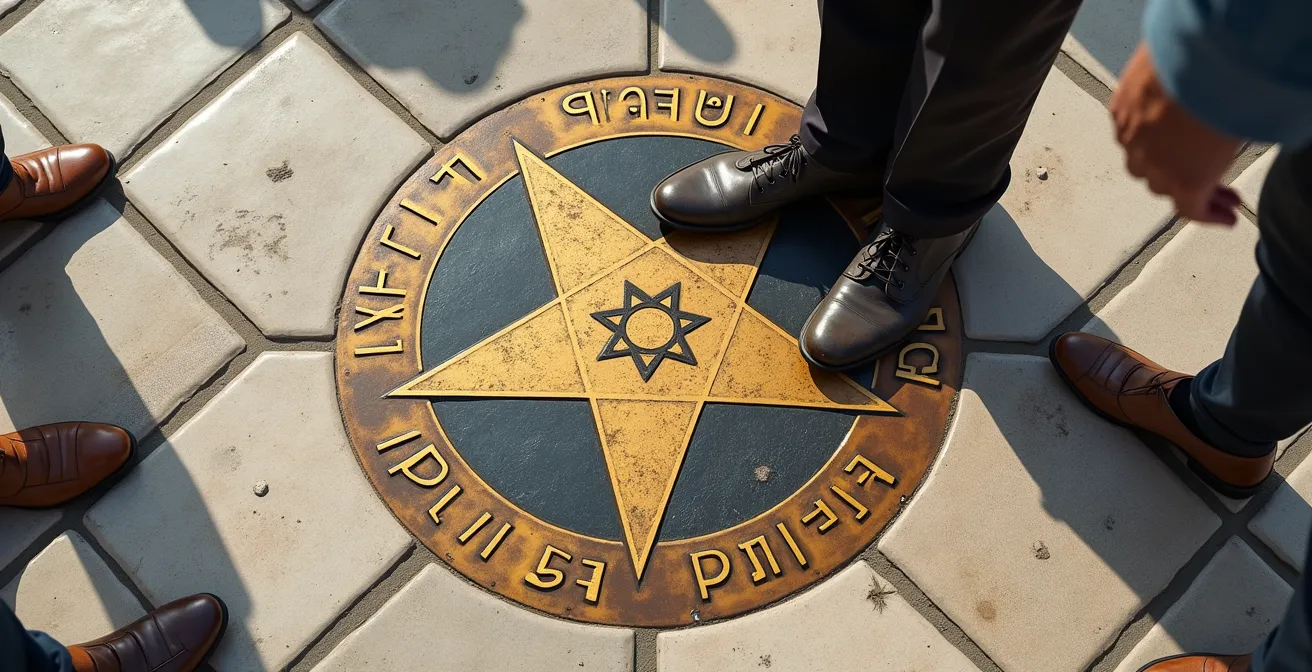
For Parisians and knowing travelers, Point Zéro is more than a surveyor’s mark; it is a place of tradition and superstition. Decoding the site means participating in these small rituals, which connect you to generations of visitors. Visiting early in the morning or late in the evening is the best way to avoid the crowds and have a quiet moment at the star.
- The Wish for Return: The most famous tradition dictates that if you spin on one foot while standing on the star, you are guaranteed to return to Paris one day.
- The Coin and the Wish: Another popular superstition involves leaving a coin on the star while making a wish.
- A Kiss for Love: It is also said that couples who kiss over Point Zéro will enjoy eternal love.
These simple acts transform a piece of geographic trivia into a personal and memorable experience, a small piece of magic at the center of France.
Why the Crypt Archaeologique Is the Best Alternative to Entering the Cathedral?
During Notre-Dame’s reconstruction, the Crypte Archéologique de l’île de la Cité offers the most profound and historically relevant alternative to entering the cathedral itself. While other churches provide spiritual continuity, the crypt offers a literal journey into the foundations upon which Notre-Dame was built. It is not a substitute for the cathedral’s Gothic splendor, but a prequel to its entire history, revealing 2,000 years of urban development that lie directly beneath the forecourt.
The crypt remains fully open and accessible, providing a unique educational experience that connects directly to the cathedral’s story of destruction and rebirth. Inside, you are not looking at models or recreations; you are walking among the actual ruins of Paris’s past. This makes the crypt an essential stop for any informed observer wanting to understand the full scope of the Île de la Cité’s history. It is the perfect embodiment of the concept of historical layers.
The value of the crypt is standalone, offering a journey through time that is fascinating in its own right. Key highlights include:
- Roman Lutetia: Visitors can see the remarkably preserved foundations of the Roman-era public baths, including the hypocaust (underfloor heating system).
- Early Churches: The crypt exposes the foundations of the first Parisian churches that predated Notre-Dame, showing the site’s continuous religious importance.
- Medieval Paris: You can trace the outlines of medieval streets and cellars that were buried to create the grand forecourt we see today.
- Connecting to the Present: Understanding the cycles of demolition and construction that the crypt reveals provides a powerful context for the massive reconstruction project taking place just meters above.
By exploring the crypt, you gain a deeper appreciation for the resilience of the site and the immense historical weight that Notre-Dame carries, making it the most meaningful visit possible while the cathedral is closed.
The Mistake of Trying to Visit the Palais Royal Columns During State Events
A common source of frustration for visitors is arriving at the Palais Royal to see the famous striped columns by Daniel Buren (Les Deux Plateaux), only to find the courtyard unexpectedly closed. This is not a random occurrence but a direct consequence of the building’s primary function. The mistake lies in treating the Palais Royal as a simple public park or art installation, rather than understanding its operational reality as a major center of the French state.
The palace complex is far from being just a historical landmark; it houses two powerful institutions: the Conseil d’État, France’s highest administrative court, and the Ministère de la Culture. As noted by the Paris tourism office, the palace has a long history as a seat of power, and this tradition continues today. Official state events, diplomatic receptions, and high-level government meetings frequently require the closure of the main courtyard (Cour d’Honneur) where the columns are located, often with little public notice.
To avoid disappointment, a savvy traveler must think like an informed observer. It is essential to check for potential closures before your visit, especially on weekdays. While last-minute changes can always happen, a few proactive steps can greatly increase your chances of successful access.
- Check Official Channels: Before heading out, check the official X (formerly Twitter) accounts of the Conseil d’État (@Conseil_Etat) and the Centre des Monuments Nationaux (@leCMN) for any last-minute closure announcements.
- Plan for Mornings: State events are less commonly scheduled on weekday mornings. Planning your visit before noon can be a wise strategy.
- Have a Backup Plan: If the main courtyard is closed, the surrounding Jardin du Palais Royal, with its beautiful gardens and arcades, almost always remains open. As another alternative, the nearby Bibliothèque Nationale de France (Site Richelieu) offers a stunning combination of historic and modern architecture.
This understanding transforms a potential travel mishap into a lesson on the living functions of Paris’s grand historical buildings.
Key Takeaways
- The most iconic sites in Paris’s center are often active government buildings; planning for security and potential closures is part of the visit.
- True insight comes from looking beyond the main attraction to discover underlying historical layers, like in the archeological crypt or Marie-Antoinette’s transformed cell.
- Embracing local culture, whether through a game of pétanque or observing small traditions at Point Zéro, elevates the experience from tourism to travel.
How to Experience the Magic of Notre-Dame While It Is Under Reconstruction?
While the doors of Notre-Dame Cathedral remain closed to the public, its magic has not vanished; it has simply transformed. The key to experiencing its enduring spirit is to shift one’s focus from the inaccessible interior to the vibrant ecosystem of restoration and remembrance that has sprung up around it. The reconstruction site itself has become a compelling open-air museum and a tribute to human ingenuity.
The tall hoardings (palissades) surrounding the site are lined with free, high-quality exhibition panels. These displays explain the intricate restoration process, showcase the skills of the master craftsmen (Compagnons) involved, and tell the story of the cathedral’s history. Beneath the forecourt, the official “Maison du chantier et des métiers” (Project and Crafts House) offers further insights into the monumental task of rebuilding. Engaging with these resources allows you to witness history in the making.
Furthermore, the changed landscape has opened up new and arguably superior viewpoints to appreciate the cathedral’s form. The best way to experience Notre-Dame today is to embrace these new perspectives and related activities.
- The Best Panoramic View: Visit the rooftop terrace of the Institut du Monde Arabe for a breathtaking, unobstructed view of the cathedral’s apse and the newly restored spire.
- Up-Close with the Buttresses: The recently reopened Square Jean XXIII, located behind the cathedral, offers a stunning close-up perspective of the intricate flying buttresses and the choir.
- Spiritual Continuity: To experience the cathedral’s living liturgy, attend a mass at Saint-Germain l’Auxerrois, the church near the Louvre where Notre-Dame’s clergy and services temporarily relocated.
- The View from the River: A boat tour on the Seine provides a unique, moving vantage point of the cathedral’s full profile as it rises above the island.
By embracing these alternatives, a visitor can piece together a powerful and moving experience of Notre-Dame’s resilience and rebirth, finding its magic not in what is lost, but in what is being actively reclaimed.
Armed with this historical and practical knowledge, you are now prepared to explore the heart of Paris. This approach allows you to move beyond the surface, transforming your visit into a discerning and deeply rewarding journey through the living history of France.