In summary:
- Paris’s coolest spots are moving east, but navigating them requires insider knowledge on rules, safety, and pricing.
- Authenticity has a price spectrum: Belleville offers true bargains, while the Marais sells curated vintage at a premium.
- Nightlife hubs like Pigalle have clear “go” and “no-go” zones; knowing the difference is key to a good (and safe) night out.
- The best experiences—from food to parks—are often just a few blocks away from the crowded tourist-centric areas.
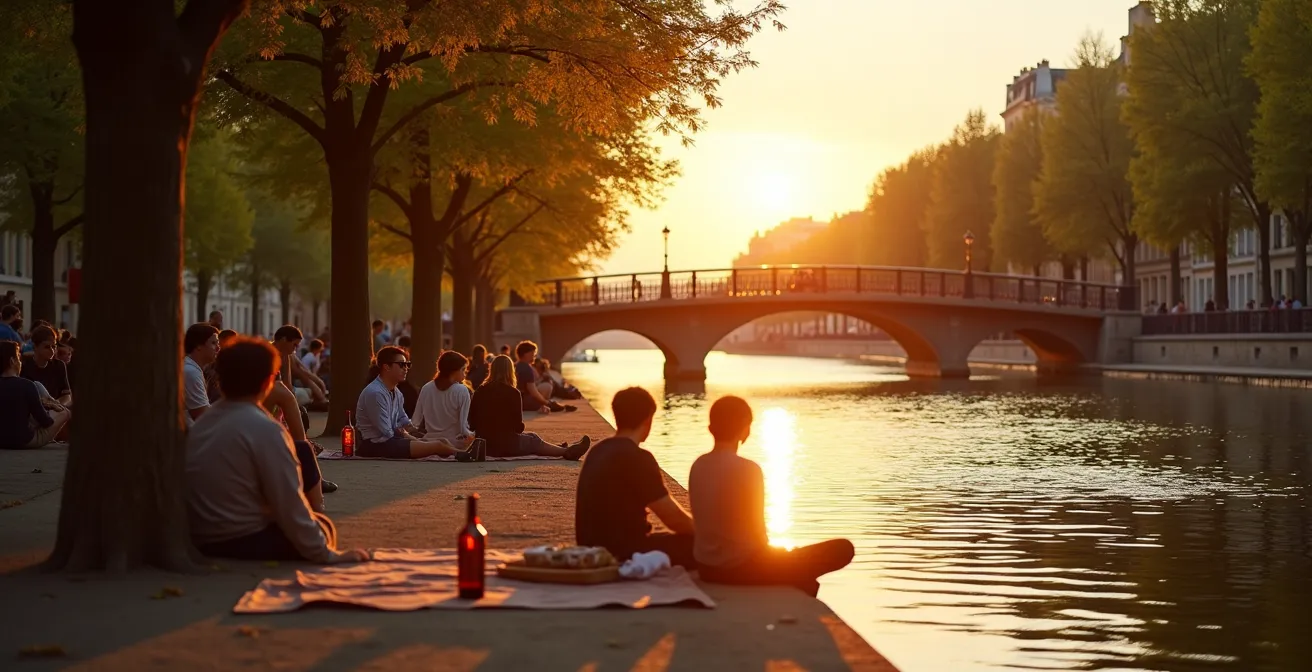
The classic image of Paris is a romantic stroll along the Seine, with Notre Dame and the Eiffel Tower as your backdrop. But for a new generation of travelers, that postcard scene feels more like a museum than a living city. They’re heading east, to the iron footbridges and tree-lined banks of the Canal Saint-Martin. This is where you’ll find young Parisians dangling their legs over the water, sharing a bottle of wine and a pizza. The vibe is undeniably magnetic, a welcome grit compared to the polished center.
Most guides will tell you the Canal is the ‘hipster heart’ of Paris, full of ‘bohemian’ charm. While true on the surface, this cliché misses the crucial point. The Canal and its adjacent neighborhoods like Belleville and Pigalle are a fascinating paradox. They offer a more authentic, affordable, and vibrant culture, but this authenticity comes with its own set of unwritten rules, tourist traps, and safety considerations. It’s a Paris that doesn’t hand you its secrets easily.
This guide is your key to that paradox. We’re moving beyond the generic advice to give you the strategic knowledge you need to experience this side of Paris like a local, not just a visitor. We’ll explore the real rules of picnicking on the canal, decode the thrift store scene, map out the safe and trendy parts of Pigalle’s nightlife, and uncover the city’s best-kept secrets for budget foodies and urban explorers. Forget the old Paris; it’s time to unlock the new one.
For those who prefer a visual introduction, the video below offers a fascinating dive into the hidden history of the canal, revealing the spectacular engineering that lies just beneath the surface of this trendy hotspot.
To help you navigate this essential part of modern Paris, we’ve broken down the key areas of interest. This guide covers everything from local laws and shopping strategies to nightlife safety and foodie havens, ensuring you have all the tools to explore with confidence.
Summary: Your Guide to Navigating Paris’s Trendiest Quarters
- Picnicking on the Canal: What Are the Alcohol Rules You Must Follow?
- Friperies in the Marais vs Belleville: Where to Find Real Bargains?
- Pigalle at Night: Which Streets Are Trendy and Which Are Sleazy?
- The Rue des Rosiers Falafel War: L’As du Fallafel or Mi-Va-Mi?
- 59 Rivoli: Is It Free to Enter This Legalized Art Squat?
- Promenade Plantée vs Petite Ceinture: Which Linear Park Is Best for a Jog?
- Paris Plages: Is the “Beach” Worth Visiting if You Hate Crowds?
- Why Belleville and Ménilmontant Are the Best Areas for Budget Foodies?
Picnicking on the Canal: What Are the Alcohol Rules You Must Follow?
The quintessential Canal Saint-Martin experience is the apéro on its banks. As the sun sets, hundreds of people gather with friends, food, and drinks. It feels spontaneous and wonderfully unregulated, but that’s a deceptive first impression. To avoid a fine and keep the vibe positive, you need to know the rules, which are often a surprise to visitors. The city actively manages public consumption in its most popular spots.
The most important rule concerns alcohol. In response to noise complaints and crowding, there are specific restrictions in place. On the banks of the Canal Saint-Martin, public alcohol consumption is prohibited every day between 4 p.m. and 7 a.m. from May to October. This is precisely when most people want to have their evening picnic, creating a classic Parisian navigational paradox. Police presence can be sporadic, but patrols do happen, and they will ask you to dispose of your drinks.
So, how do you enjoy the evening without breaking the law? You adapt like a local. Here are some smart alternatives:
- Arrive before 4 p.m. for an early apéro and be discreet with non-glass containers later on.
- After the restriction starts, move your group to one of the many licensed bars or péniches (boat bars) along the quays.
- Find a nearby cave à manger, a wine shop where you can legally purchase and drink a bottle on-site.
- Purchase your alcohol from a local épicerie (corner store) before they stop selling it at 10 p.m. for consumption at your private accommodation.
Friperies in the Marais vs Belleville: Where to Find Real Bargains?
Paris is a global capital of vintage fashion, but the term ‘vintage’ can mean very different things depending on the neighborhood. For a young traveler on a budget, understanding the authenticity spectrum is crucial. The battle between the Marais and areas further east like Belleville perfectly illustrates this. The Marais, with its proximity to tourist centers, has largely transformed its second-hand shops into high-end vintage boutiques with curated, trend-focused selections and premium prices.
In contrast, the 11th arrondissement, which includes Belleville and the areas around the Canal, attracts a younger, more local crowd. This is where you’ll find the real friperies—charity-run shops like Emmaüs or Secours Populaire where you can often buy clothes by the kilogram. The finds are less predictable, but the prices are dramatically lower, and the experience feels far more authentic. It’s less about finding a designer label and more about the thrill of the hunt. To make the right choice, you need to audit your own shopping goals.
Your Thrift Shopping Audit: A 5-Step Plan
- Points of Contact: List your target neighborhoods. Are you focusing on the curated boutiques of the Marais or the sprawling charity shops of Belleville and the 11th?
- Collection: Inventory the types of items you’re seeking. Are you looking for a specific vintage designer piece or just unique, affordable clothes to refresh your wardrobe?
- Coherence: Confront your goals with your budget and values. Does a high-priced, commercially-driven boutique align with your trip’s finances, or does a social enterprise with bargain prices feel more appropriate?
- Memorability & Emotion: Assess what kind of shopping experience you want. Do you prefer a polished, museum-like store or the chaotic, treasure-hunt energy of a true friperie?
- Integration Plan: Based on your answers, prioritize your destinations. Dedicate an afternoon to digging through bins in Belleville for true bargains, or schedule a focused hour in the Marais for a specific fashion investment.
To put it in perspective, the difference is stark. A single item in a Marais vintage shop can easily cost what you might pay for several kilograms of clothing in Belleville. This table breaks down the key distinctions to help you decide where to spend your time and money.
| Aspect | Marais Vintage Shops | Belleville Friperies |
|---|---|---|
| Price Range | €30-150 per item | €5-25 per kg |
| Shop Type | Curated vintage boutiques | Emmaüs, Secours Populaire |
| Target Audience | Tourists, fashion enthusiasts | Local community, students |
| Selection Style | Hand-picked, trend-focused | Mixed donations, authentic finds |
| Social Mission | Commercial profit | Charity support, social enterprise |
Pigalle at Night: Which Streets Are Trendy and Which Are Sleazy?
Pigalle has a legendary reputation tied to the Moulin Rouge, neon lights, and a history of vice. For decades, it was a place tourists were warned about. Today, the area is undergoing a dramatic transformation, creating a sharp divide between its sleazy past and its trendy present. Navigating Pigalle at night means knowing exactly which side of the line you’re on, a line that can be as thin as a single street.
The main artery, Boulevard de Clichy, is still dominated by sex shops and tourist-trap venues. Be wary of aggressive promoters offering “free champagne” or entry to shows; these often lead to massively inflated bills and are particularly targeted at solo travelers or small groups. This is the Pigalle to be cautious of. However, just south of this boulevard lies a completely different world. The area known as ‘SoPi’ (South Pigalle) has become one of Paris’s most fashionable districts.
Streets like Rue des Martyrs and Rue Victor Massé are the heart of SoPi. Here, you’ll find world-class artisanal cocktail bars, boutique hotels, and a vibrant, sophisticated crowd. It’s a prime example of the navigational paradox: the city’s edgiest nightlife is just a stone’s throw from its most notorious tourist traps. Your experience depends entirely on which direction you turn. When the night ends, getting home safely is paramount. It’s useful to know that after 1 AM, Noctilien night buses run every 30 minutes, providing a reliable and safe option over a potentially expensive taxi.
The Rue des Rosiers Falafel War: L’As du Fallafel or Mi-Va-Mi?
In the heart of the historic Jewish quarter of the Marais, a delicious and long-standing rivalry plays out every day on the Rue des Rosiers. For anyone seeking one of Paris’s most iconic street food meals, the question is inevitable: L’As du Fallafel or its direct competitor, Mi-Va-Mi? L’As du Fallafel, with its unmistakable green storefront and perennial queue, is the world-famous option, praised by celebrities and featured in countless guidebooks. Their sandwich, packed with crispy falafel, grilled eggplant, and an array of sauces, is legendary.
Right across the street, however, Mi-Va-Mi offers a nearly identical product, often with a much shorter line and for a euro or two less. Locals are fiercely divided, with many swearing that Mi-Va-Mi is just as good, if not better. Trying both is the only way to truly pick a side in this delicious war. A key tip for planning your visit: many establishments in the area, including the falafel shops, observe Shabbat. This means they close early on Friday afternoon and remain closed all day Saturday, a crucial detail many visitors miss.
This micro-rivalry is part of a larger story about where authentic culture is found in Paris. While the Marais has become increasingly commercialized, pockets like Rue des Rosiers retain a powerful local flavor. It’s a sentiment echoed by many observers of the city’s culture. As the Paris Unlocked Editorial Team notes in their Paris Canal Saint-Martin Neighborhood Guide:
The real Paris is shifting eastward.
– Paris Unlocked Editorial Team, Paris Canal Saint-Martin Neighborhood Guide
59 Rivoli: Is It Free to Enter This Legalized Art Squat?
Walking down the hyper-commercial Rue de Rivoli, past global chain stores, you might do a double-take. A six-story Haussmannian building, covered in a riot of colorful, ever-changing art installations, stands in stark defiance of its surroundings. This is 59 Rivoli, a former illegal art squat that has become a celebrated and fully legalized hub of creativity. For any young traveler looking for a dose of raw, contemporary art without the stuffy museum atmosphere, it’s an essential stop.
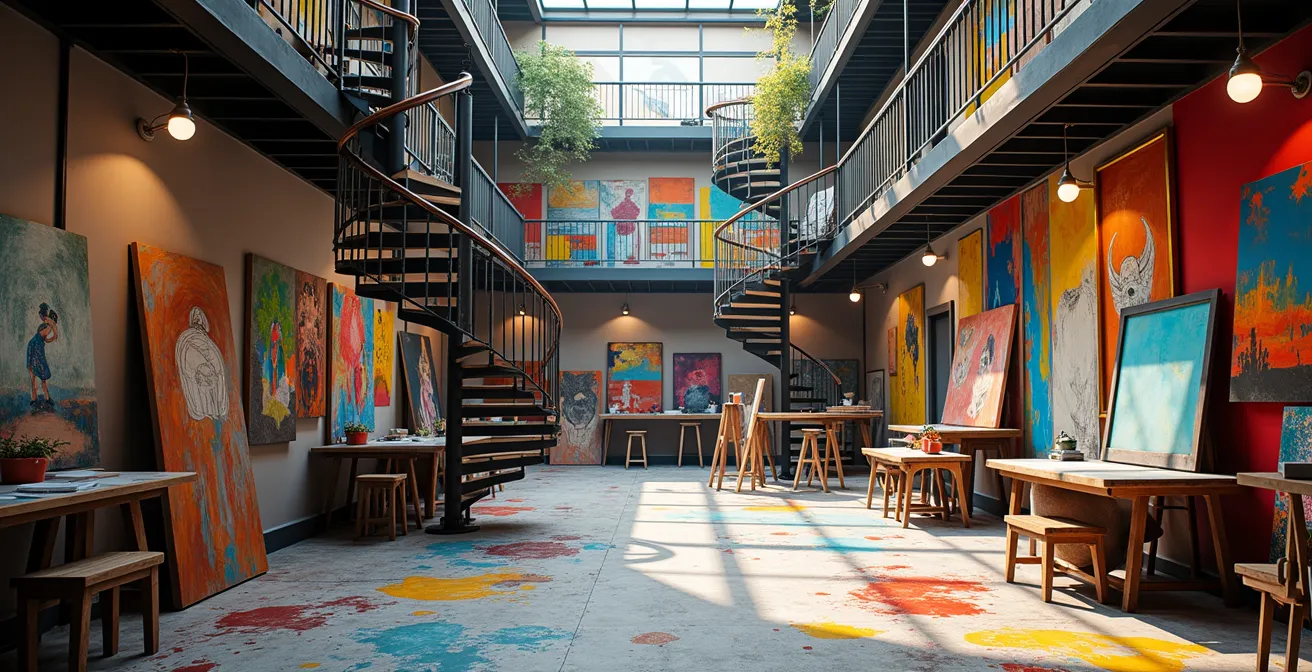
The best part? Yes, entry is completely free. The building operates as a collection of 30 artist studios (15 permanent, 15 temporary) that are open to the public. You can wander up the paint-splattered spiral staircase, peeking into the wonderfully chaotic spaces where artists are actively at work. It’s an intimate and inspiring look into the creative process. While entry is free, a box for ‘participation libre’ (free donation) on the ground floor helps keep the lights on and supports the artists, so bringing a few euros in cash is a great way to show your appreciation.
To get the most out of your visit, keep a few things in mind:
- Visit on a weekday afternoon if you hope to chat with the artists; weekends are much busier with visitors.
- Explore all six floors. The styles and mediums vary dramatically from one studio to the next.
- Check the ground floor for a schedule of evening concerts and events, which are also often free.
- Remember that this is a working space. Always ask for permission before taking close-up photos of artists or their specific works.
Promenade Plantée vs Petite Ceinture: Which Linear Park Is Best for a Jog?
For joggers or anyone looking for a unique green escape, Paris offers two incredible options that repurpose old railway lines into linear parks. The first, the Promenade Plantée (also known as the Coulée Verte), is the world’s first elevated park, inspiring New York’s High Line. It’s a beautifully manicured 4.7 km path that takes you from near the Bastille through tunnels and over viaducts, lined with lush gardens. It’s safe, well-maintained, and popular with locals.
The second option, the Petite Ceinture, offers a completely different experience. This “little belt” is a 32 km railway line that once encircled the city. Abandoned for decades, sections are now being reclaimed as wild, post-industrial parks. The atmosphere here is one of urban exploration and untamed nature. You’ll find graffiti-covered walls, wildflower meadows, and a sense of quiet that’s rare in the city. However, access is more limited, and some sections can feel isolated, making it better suited for daytime exploration.
The choice between them depends entirely on the experience you’re seeking: the polished, elevated garden or the wild, post-industrial frontier. This table breaks down the comparison for a jogger or urban explorer.
| Feature | Promenade Plantée | Petite Ceinture |
|---|---|---|
| Length | 4.7 km continuous | Multiple sections, 3-8 km each |
| Surface | Paved, maintained | Mixed gravel, wild sections |
| Safety for Solo Joggers | High – Well-lit, populated | Variable – Some isolated sections |
| Access Points | Multiple stairs, elevators | Limited official entrances |
| Atmosphere | Manicured gardens | Post-industrial wilderness |
| Best Time | Any time of day | Daylight hours only |
Paris Plages: Is the “Beach” Worth Visiting if You Hate Crowds?
Every summer, the banks of the Seine are transformed into “Paris Plages” (Paris Beaches), complete with sand, deckchairs, and pop-up bars. It’s a hugely popular event, which is precisely the problem for anyone who dislikes crowds. The main location along the Parc Rives de Seine can feel overwhelmingly packed, especially on sunny weekends, turning a relaxing idea into a stressful experience.
But for the savvy traveler, there’s a much better alternative. The key is to follow the water northeast from the Canal Saint-Martin. The Paris Plages event extends to the Bassin de la Villette, Paris’s largest artificial lake. Here, you’ll find the same beach atmosphere and amenities, but with a fraction of the tourists. Best of all, the Bassin de la Villette features actual designated swimming areas, allowing you to take a dip in clean, filtered canal water—something you can’t do in the Seine. Further along the Canal de l’Ourcq, you’ll find local pop-up bars (guinguettes) that maintain the summer vibe in a much more relaxed, local setting.
Strategic timing is also crucial for a crowd-free experience. If you do want to see the main Seine location, follow these tips:
- Visit before 11 a.m. to enjoy the peaceful morning atmosphere.
- Go on a weekday evening after 8 p.m. for beautiful sunset views without the daytime throngs.
- Prioritize the Bassin de la Villette location over the Parc Rives de Seine for a more spacious and authentic experience.
- Avoid the entire event on weekends during the peak season of July and August if you can.
Key Takeaways
- Navigate the Rules: The most authentic Parisian experiences, like an apéro on the canal, come with unwritten rules. Knowing them is the difference between a local and a tourist.
- Authenticity Has a Price: True bargains are found in community-focused friperies in the east, while “curated vintage” in central districts often means tourist-level pricing.
- The Best Spots Are a Block Away: In areas like Pigalle and along the Seine, the most rewarding, less crowded, and safer spots are often just around the corner from the main tourist drag.
Why Belleville and Ménilmontant Are the Best Areas for Budget Foodies?
For young travelers, eating well in Paris on a budget can seem like an impossible challenge. A simple lunch menu in a central arrondissement can easily set you back €20. The solution lies in heading east to the vibrant, working-class neighborhoods of Belleville and Ménilmontant. Here, the food is not only incredible but also significantly more affordable, with local restaurant pricing confirmed to be 30-50% cheaper than in central Paris.
This isn’t just a random price difference; it’s a direct result of the neighborhood’s history. Belleville has long been a landing point for immigrant communities from North Africa, West Africa, and Southeast Asia. This has created an unparalleled culinary melting pot. The Marché de Belleville, held on Tuesday and Friday mornings, is the epicenter of this value-driven culture. You can grab a spicy merguez sandwich for €4, a delicious Vietnamese banh mi for €5, or a full, hearty plate from a West African stand for under €8.
This is where you find food made by and for the local community, not performative cuisine for tourists. The streets are lined with affordable and authentic canteens, bakeries, and markets that reflect the area’s diverse population. For a foodie on a budget, Belleville and Ménilmontant aren’t just an alternative; they are the destination. They prove that the most flavorful and memorable meals in Paris are often the ones that are most deeply connected to its living, multicultural identity.
Now you have the map to a different Paris—one that’s messier, more dynamic, and infinitely more rewarding than the one on the postcards. It’s time to go explore beyond the monuments and find your own city within the city.
Frequently Asked Questions about Paris’s Alternative Culture
Why are the falafel shops closed on Saturday?
Most establishments in the Jewish quarter, including the famous falafel spots on Rue des Rosiers, observe Shabbat. This religious observance means they close early on Friday afternoon and remain closed for the entire day on Saturday.
What’s the price difference between L’As du Fallafel and Mi-Va-Mi?
L’As du Fallafel, the more famous option, typically charges around €8-10 for their classic falafel sandwich. Competing shops like Mi-Va-Mi, located just across the street, often offer a very similar product for a lower price, usually in the €6-8 range.
What other Jewish specialties can I find on Rue des Rosiers?
Beyond falafel, Rue des Rosiers and the surrounding Marais neighborhood are rich with Ashkenazi culinary traditions. You can find delicious pastries like apple strudel and poppy seed babka, pastrami sandwiches, and traditional bagels at iconic bakeries like Sacha Finkelsztajn.