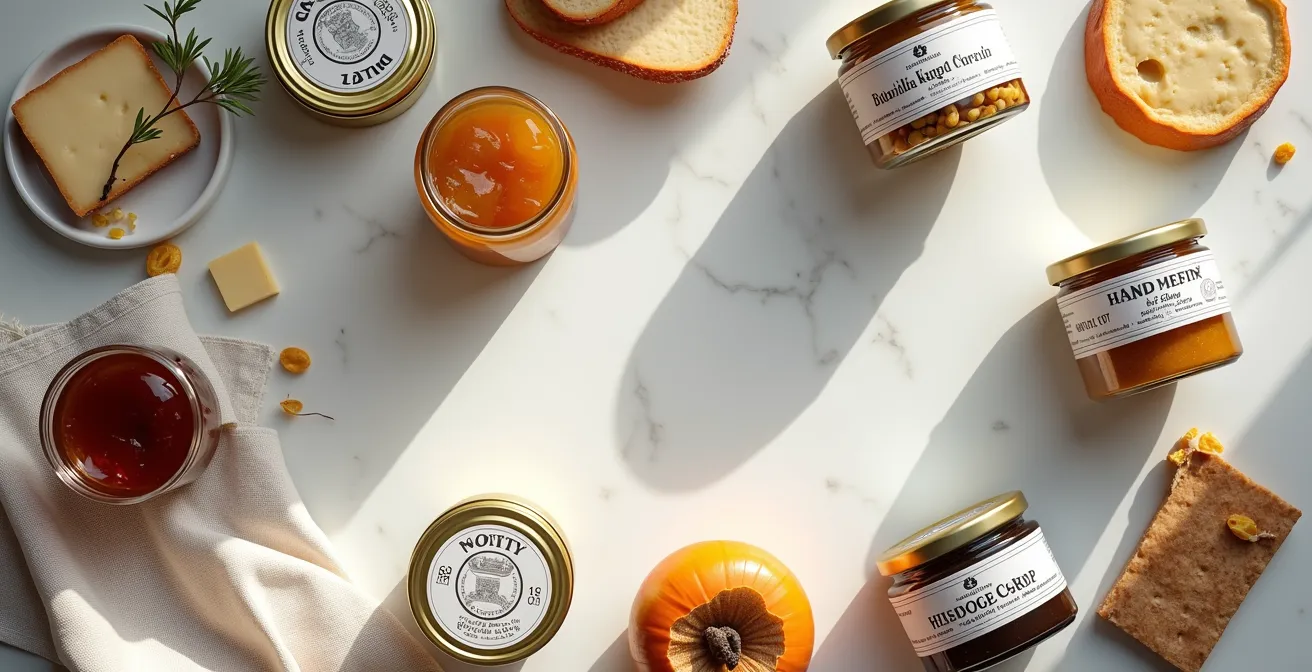
Successfully bringing French food souvenirs home is less about security rules and more about identifying authentic, travel-durable products.
- Look for official AOP/IGP labels over vague “artisanal” claims to guarantee origin and quality.
- Hard, aged foods (like Comté cheese or nougat) travel far better than delicate or raw-milk items.
- Shop where locals do—specialty stores and department store food halls—to avoid tourist-trap pricing and find superior products.
Recommendation: Plan your gourmet shopping *after* visiting museums with bag restrictions, and always check product labels for ingredients and official certifications before you buy.
The scene is a familiar one for any traveler leaving France: a last-minute dash through the airport duty-free, debating whether that tin of foie gras or that alluringly soft cheese will be confiscated at security. The anxiety of navigating complex and ever-changing airport regulations often overshadows the joy of bringing home a delicious piece of French culture. Most advice focuses on the basic liquid rules and the simple distinction between hard and soft cheese, leaving travelers unprepared for the real challenges.
The truth is, security compliance is only half the battle. The bigger risk isn’t confiscation, but disappointment. Many souvenirs sold in high-traffic tourist areas are industrially produced, overpriced, and lack the very authenticity you seek. You might get that jar of “artisanal” jam through security, only to discover it’s no better than what you could find at home. The real art of the food souvenir lies in understanding quality, spotting fakes, and making smart logistical choices before you even get to the airport.
This guide moves beyond the basics. We’ll break down the official quality labels that guarantee a product’s origin, reveal the secrets to identifying truly artisanal goods, and provide packing strategies for even the most challenging delicacies. Forget the guesswork; it’s time to become an expert in selecting and transporting French gourmet souvenirs that are not only permissible but also genuinely worth the effort.
This article provides a detailed roadmap for the discerning traveler. Follow along as we break down everything you need to know, from deciphering labels to smart shopping strategies on Paris’s most famous avenue.
Contents: A Traveler’s Guide to French Food Souvenirs
- IGP vs AOP: Which Label Guarantees the Product Actually Comes from the Region?
- The “Artisanal” Jam Scam: How to Spot Industrial Sugar Bombs in Montmartre?
- Maille Boutique: Is the Fresh Mustard on Tap Worth the Queue?
- Macarons vs Calissons: Which Sweet Survives a 10-Hour Flight Better?
- Why Dried Sausages at Christmas Markets Cost 3x the Normal Price?
- Grand Palais Éphémère: What You Need to Know About Security and Bag Size?
- The Triple-Wrap Method: How to Pack Époisses in Your Suitcase?
- How to Shop on the Champs-Élysées Without Falling into a Tourist Trap?
IGP vs AOP: Which Label Guarantees the Product Actually Comes from the Region?
When standing before a wall of foie gras, terrines, and other regional specialties, the packaging can be a dizzying mix of claims. To cut through the noise, you must learn to read the official French and EU quality labels. These aren’t marketing fluff; they are legally binding certifications that guarantee a product’s origin and production methods. The two most important labels to know are AOP (Appellation d’Origine Protégée) and IGP (Indication Géographique Protégée). While both are signs of quality, they represent different levels of stringency.
AOP is the highest standard. It certifies that every single step of the product’s creation—from raising the animals or growing the raw ingredients to the final processing and aging—occurred within a specific, designated geographical area. The methods used must also adhere to a strict, traditional *savoir-faire* unique to that region. For a product like Roquefort cheese, this means the milk, the production, and the aging in specific caves all happen in one place. IGP is more flexible. It guarantees that at least one major stage of production took place in the designated region. For foie gras, this often means the ducks or geese were raised and force-fed in the region, but the final canning or processing could happen elsewhere. For example, a genuine IGP Périgord duck foie gras must come from a duck with a liver weighing at least 350 grams, according to strict certification standards.
This comparative table, based on official guidelines from the French Ministry of Economy, breaks down the key differences to help you make an informed choice. For the ultimate guarantee of terroir and tradition, always prioritize AOP.
| Label | Geographic Requirement | Production Control | Quality Guarantee |
|---|---|---|---|
| AOP/AOC | All production steps in designated region | Strictest controls | Highest – complete traceability |
| IGP | At least one production step in region | Regular audits by independent bodies | High – origin guaranteed |
| Label Rouge | No geographic requirement | Quality-focused controls | Superior taste quality |
The “Artisanal” Jam Scam: How to Spot Industrial Sugar Bombs in Montmartre?
In charming Parisian neighborhoods like Montmartre, you’ll find countless stalls selling products labeled “artisanal” or “fait maison” (homemade). While some are genuine, many are tourist traps selling industrial products disguised as authentic crafts. This is especially true for jams and preserves. A handwritten label on a generic jar does not guarantee quality. To avoid paying a premium for a sugary, pectin-filled imposter, you need to become a savvy consumer and look for specific red flags.
First, inspect the label and the ingredients. A real artisanal product will have the producer’s name and address. Vague claims without this information are suspicious. The ingredients list is your best friend: if you see “sirop de glucose-fructose” (glucose-fructose syrup), put it back. This is a clear sign of industrial production. A true jam should contain only fruit, sugar, and perhaps lemon juice as a natural pectin. Also, beware of the term “Préparation de fruit,” which legally requires less fruit content than “Confiture” (jam).
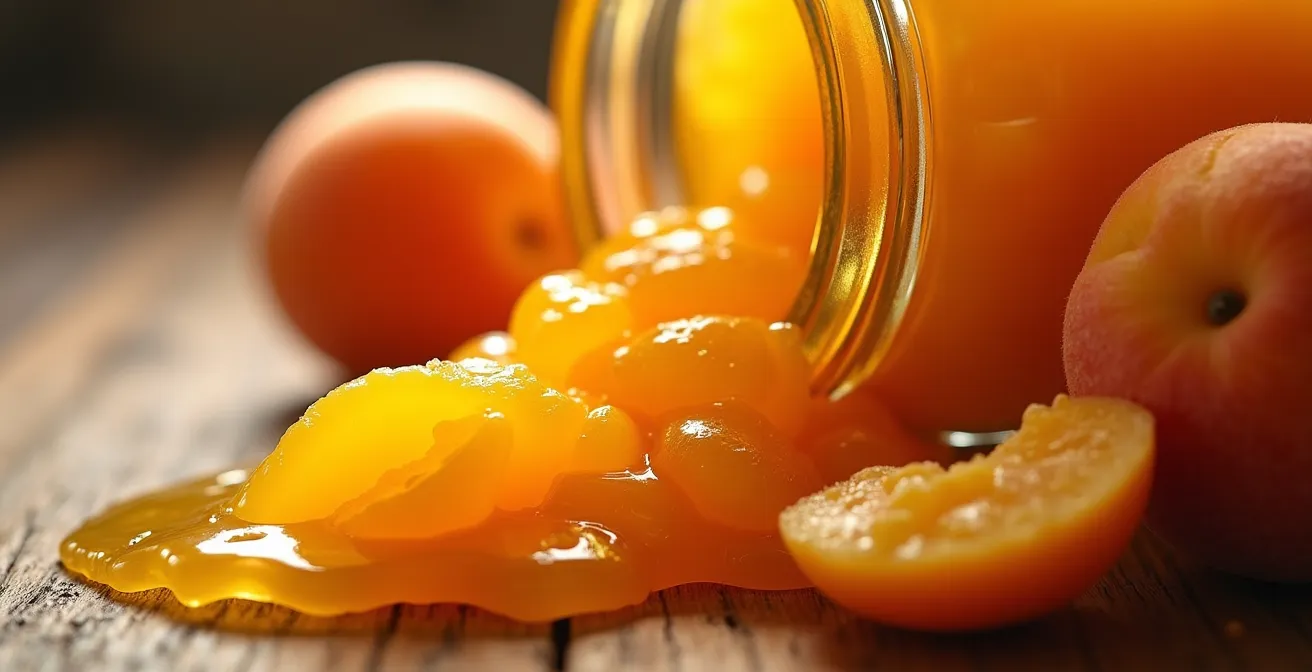
Beyond the label, the product itself offers clues. A high-quality, fruit-rich jam isn’t a solid gel. When you tilt the jar, it should flow slightly, showing a natural, not-too-firm set. You should be able to see real pieces of fruit, not just a uniform, translucent jelly. These visual and textual cues are far more reliable than a rustic-looking cloth lid or a charming sales pitch. Trust the product, not the packaging.
Maille Boutique: Is the Fresh Mustard on Tap Worth the Queue?
The Maille boutique at Place de la Madeleine is a famous stop for tourists, known for its fresh mustard served from ceramic pumps. The experience is theatrical, and the porcelain pots make for a beautiful souvenir. However, the long queues and premium prices raise a critical question: is it worth it? From a connoisseur’s perspective, the answer is nuanced. While the fresh mustard is certainly a step up from a standard supermarket jar, it’s important to understand its limitations.
The primary issue is shelf life. The potent, sharp flavor that makes fresh mustard so appealing is volatile. Experts agree that this type of fresh mustard loses its potency within 3-4 weeks, even when refrigerated. This makes it a souvenir with a very short fuse, best consumed quickly rather than saved for a special occasion months later. For travelers, this means the precious flavor you queued for might be gone by the time you gift it.
Furthermore, many French food lovers argue that superior alternatives exist, often without the crowds. For those seeking the pinnacle of French mustard, a different name often comes up.
Edmond Fallot – The Connoisseur’s Alternative to Maille
Edmond Fallot from Beaune (Burgundy) is recognized by French connoisseurs as producing superior artisanal mustard. Their Paris-area shops offer high-quality alternatives to the tourist-heavy Maille boutique, often with no queues and better value. The traditional stone-ground process preserves more flavor compounds than industrial methods, resulting in a more complex and enduring taste. Seeking out a brand like Fallot offers a more authentic experience and a product celebrated by locals, not just tourists.
Macarons vs Calissons: Which Sweet Survives a 10-Hour Flight Better?
Bringing back a box of delicate Parisian macarons is a classic traveler’s dream, but it often ends in a nightmare of cracked shells and smooshed fillings. The macaron is a notoriously fragile confection. Its delicate meringue shells are sensitive to humidity and pressure, and the ganache or fruit fillings are highly perishable. While beautiful, they are perhaps the worst candidate for a long-haul flight. So, what’s a sweet-toothed traveler to do? The key is to choose confections based on their travel durability.
If you are set on macarons, take precautions. High-end pâtisseries like Pierre Hermé or Ladurée offer a “boîte de voyage” (travel box) with sturdy inserts designed to protect the shells. When selecting flavors, opt for more robust fillings like salted caramel or chocolate over fresh fruit purées, which are more watery and can make the shells soggy. Most importantly, buy them on your day of departure and hand-carry them, keeping the box perfectly flat throughout your journey.
For a less stressful option, consider France’s wealth of sturdier, yet equally delicious, confections. Calissons d’Aix, the diamond-shaped sweets from Provence made of candied fruit and almonds with a royal icing topping, are far more robust. Nougat de Montélimar is practically indestructible and travels exceptionally well. Other durable choices include hard candies like Bêtises de Cambrai or fruit jellies known as Pâtes de fruits d’Auvergne. These alternatives offer an authentic taste of French regional confectionery without the high risk of a travel disaster.
Why Dried Sausages at Christmas Markets Cost 3x the Normal Price?
Strolling through a Parisian Christmas market, the sight of hanging *saucissons secs* (dried sausages) is incredibly tempting. They seem like the perfect, rustic souvenir. However, a quick glance at the price tag can be shocking. These sausages often cost two to three times what you’d pay in a proper shop. This isn’t just a small tourist markup; it’s a reflection of the unique and challenging economics of seasonal markets.
The primary driver of these inflated prices is the astronomical cost of operating a stall. Vendors face immense overhead. A report on market economics revealed that prime Parisian Christmas market stalls can cost vendors up to €3000 per week. This cost, combined with staffing, stocking, and the short sales window, forces vendors to set high prices to turn a profit. You are paying not just for the sausage, but for the “magical” market ambiance. While the product might be good, you are certainly not getting good value.
So, where should you buy your charcuterie instead? The answer is simple: shop where Parisians do. This ensures better quality, fair pricing, and proper product information.
Where Parisians Actually Buy Their Charcuterie
Locals avoid tourist markets for charcuterie, instead shopping at neighborhood ‘charcutier-traiteurs’ (artisan butcher/deli shops), bustling market streets like Rue Montorgueil, or even the specialty aisles at upscale Monoprix supermarkets. These venues offer authentic products at fair prices with proper labeling, such as ‘pur porc’ (pure pork) and official origin labels like the coveted ‘Saucisson sec d’Ardèche IGP’. This guarantees you’re buying an authentic product, not just a pricey market souvenir.
Grand Palais Éphémère: What You Need to Know About Security and Bag Size?
A common travel mistake is planning a big souvenir shopping spree right before visiting a major museum or landmark. Venues in Paris, especially post-2015, have strict security protocols. Places like the Louvre, Musée d’Orsay, and the Grand Palais Éphémère enforce bag size restrictions and prohibit large shopping bags, backpacks, and luggage. You will be denied entry. This logistical challenge requires strategic planning to avoid a frustrating disruption to your day.
Furthermore, when it comes to airport security, the most common point of confusion remains liquids and semi-solids. Pâté, terrines in jars, fresh cheese, and mustard all fall under the liquid rule. This means they are subject to the 3.4 ounces (100 milliliters) maximum per container rule for carry-on luggage. A large jar of mustard or a block of creamy foie gras will be confiscated if it’s in your carry-on. Tinned foie gras (*mi-cuit* or fully cooked) is generally considered a solid and is usually permitted, but it’s always at the discretion of the security agent. When in doubt, pack it in your checked luggage.
To balance sightseeing with shopping, you must think like a Parisian planner. The goal is to separate your activities or use the city’s infrastructure to your advantage.
Your Action Plan: Strategic Shopping & Museum Visits
- Store Luggage: Use a luggage storage service like Nannybag or a locker at a major train station (Gare de Lyon, Gare du Nord) to stash your bags before a museum visit.
- Check Restrictions Online: Before leaving your hotel, always visit the venue’s official website to check their current bag policy. It can change without notice.
- Sequence Your Day: Plan your major souvenir shopping as the last activity of the day, after you’ve finished with security-restricted venues.
- Ship It Home: For large or heavy purchases, consider using a service like La Poste (the French postal service) to ship your items home. It can be more cost-effective than paying for an extra checked bag.
- Consolidate and Carry: If you must shop before a visit, try to consolidate purchases into one small, acceptable bag, and be prepared for a thorough security check.
The Triple-Wrap Method: How to Pack Époisses in Your Suitcase?
Bringing back French cheese is a rite of passage for food lovers, but it’s fraught with peril. The biggest challenges are legality and odor. In the US, for instance, raw-milk soft cheeses aged less than 60 days are technically illegal to import for commercial purposes, though enforcement on personal quantities can be inconsistent. More pressingly for your fellow travelers, a pungent cheese like Époisses or Munster can quickly turn your suitcase into a biohazard. However, with the right technique, even the smelliest of cheeses can be tamed for travel.
The solution is the “Triple-Wrap Method.” This is an essential technique for packing any strong-smelling food. First, have the fromager vacuum-seal the cheese for you; most good cheese shops (*fromageries*) offer this service. This is your first line of defense. Second, wrap the vacuum-sealed package tightly in several layers of plastic wrap. Third, place the plastic-wrapped bundle inside a zip-top freezer bag, pressing out all the air before sealing. For extreme cases, you can place this bag inside another zip-top bag. This multi-layer system creates a nearly impenetrable barrier against odor leakage.
Of course, the easiest way to avoid issues is to choose travel-friendly cheeses from the start. Hard, aged cheeses are far more stable and less odorous.
This table offers a clear guide to which cheeses are best suited for travel versus those that pose a significant challenge, based on data from cheese import regulation analyses.
| Cheese Type | Travel Suitability | Legal Status (USA) | Packing Method |
|---|---|---|---|
| 24-month Comté (hard) | Excellent – travels well | Allowed | Vacuum seal recommended |
| Beaufort (pressed) | Excellent – very stable | Allowed | Wrap in cheese paper |
| Époisses (raw milk, soft) | Poor – very fragile | Technically illegal | Triple-wrap if attempting |
| Young/firm cheeses | Good – continues ripening | Usually allowed | Keep whole if possible |
Key Takeaways
- Labels Over Looks: Prioritize products with official AOP or IGP labels over items with vague “artisanal” claims to guarantee authenticity and origin.
- Structure Over Impulse: Choose travel-friendly foods based on durability. Hard, aged items like Comté, nougat, or calissons are safer bets than fragile macarons or odorous soft cheeses.
- Location, Location, Location: Avoid tourist-trap pricing by shopping where locals do. Specialty food halls (La Grande Épicerie) and neighborhood *charcutiers* offer better value and higher quality.
How to Shop on the Champs-Élysées Without Falling into a Tourist Trap?
The Champs-Élysées is one of the world’s most famous avenues, but for food souvenirs, it’s largely a tourist trap. The shops lining the main drag are often overpriced, and the quality can be secondary to the prime real estate. However, this doesn’t mean you have to avoid the area entirely. With a smart strategy, you can enjoy the glamour of the neighborhood while still finding high-quality, authentic gifts at fair prices. The secret is simple: walk one or two blocks off the main avenue.
The side streets and adjacent neighborhoods, such as the area around La Madeleine church or the Saint-Germain-des-Prés district, are where you’ll find the specialty shops and pâtisseries that locals frequent. Even for famous brands like Ladurée, the location on the Champs-Élysées is often the most crowded and hectic. Visiting a branch in a less tourist-dense area can provide a much more pleasant experience. A little bit of politeness also goes a long way. Always start any interaction with a simple “Bonjour, madame/monsieur” before asking your question. If you don’t speak French, asking “Parlez-vous anglais?” in French shows respect and is more likely to result in helpful service.
For a one-stop-shop that guarantees quality and authenticity, discerning Parisians head to the city’s world-class department store food halls.
La Grande Épicerie de Paris – Where Locals Shop for Gifts
La Grande Épicerie de Paris (part of Le Bon Marché) and Lafayette Gourmet are world-class food halls where discerning locals and chefs shop for high-quality gifts. These venues are curated collections of the best of French gastronomy. You will find a vast selection of AOP/IGP certified products, items that have won medals at the prestigious Concours Général Agricole, and authentic artisanal goods from all over France. The prices are fair, the quality is vetted, and the selection is unparalleled—a stark contrast to the overpriced tourist shops on the Champs-Élysées.
Armed with this knowledge, your next step is to confidently explore France’s local markets and specialty shops, transforming your souvenir hunt from a gamble into a gourmet victory.