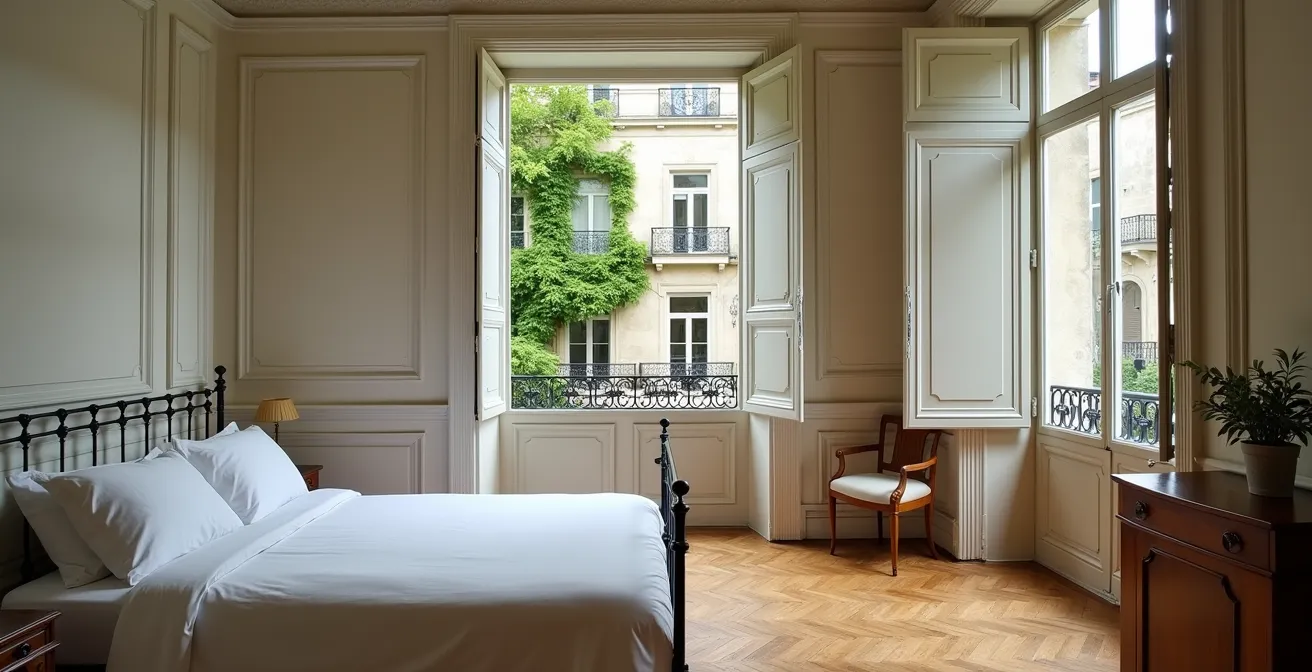
The dream of an affordable Marais rental often ignores the hidden costs in comfort, convenience, and even legal fines that a hotel stay avoids.
- Parisian rentals come with unique challenges: extreme street noise, confusing floor numbers hiding six-story walk-ups, and strict local rules.
- A hotel offers predictable quality—guaranteed elevators, air conditioning, and soundproofing—that can be worth more than a rental’s extra space for a short stay.
Recommendation: Unless you are prepared to conduct detailed “real estate forensics” on a listing, a well-chosen hotel just outside the busiest streets offers superior value and peace of mind for a couple’s getaway.
You’ve pictured it: a romantic trip to Paris, staying in the historic heart of the Marais. You start searching, and the reality hits. The charming hotels in the 3rd and 4th arrondissements command prices that make your eyes water. Naturally, you turn to vacation rentals, seeing listings that promise more space and a kitchen for a fraction of the cost. It seems like the obvious, smarter choice. But as a real estate analyst specializing in this exact micro-market, I can tell you that the price tag on a rental listing is only the beginning of the story. The dream of “living like a local” can quickly turn into a nightmare of sleepless nights, logistical headaches, and unexpected costs.
The standard advice pits the pros and cons: a rental’s kitchen versus a hotel’s room service. This is a surface-level comparison that misses the crucial realities of Parisian architecture and urban life. The real decision isn’t about space; it’s about navigating a complex set of trade-offs that most tourists are completely unaware of. The key to a successful stay under 200€/night isn’t just finding a listing—it’s learning to decode it. It requires you to think less like a tourist and more like a property investigator, assessing what I call the “Sound Signature,” the “Verticality Tax,” and the “Authenticity Paradox” of each option.
This guide moves beyond the generic debate. We will dissect the hidden challenges of renting in Paris’s oldest districts, from the deceptive allure of Rue de Rivoli to the physical toll of a “4th floor” apartment. We will explore practical strategies for everything from grocery shopping to respectfully exploring hidden courtyards. By the end, you’ll have the analytical tools to either find a genuinely great rental or confidently choose a hotel, knowing you’ve made the most intelligent decision for your budget and your sanity.
To help you navigate this complex decision, this guide breaks down the critical factors you must consider. Below is a summary of the key areas we will dissect to help you master your stay in central Paris.
Summary: A Strategic Guide to Accommodation in the Marais
- Why Staying on Rue de Rivoli Might Ruin Your Sleep Despite the Central Location?
- Double Glazing: How to Spot a Quiet Room on a Busy Street?
- How to Verify If Your ‘4th Floor’ Rental Has an Elevator Before Booking?
- How to Peek into Historic Courtyards Without Being Chased by a Concierge?
- Carrefour City vs Marché des Enfants Rouges: Where to Shop for a Weekend Stay?
- The Traffic Mistake That Could Cost You a 135€ Fine in Paris Centre
- When Is the Best Time to Explore Île Saint-Louis to Feel Alone in the World?
- Why Belleville and Ménilmontant Are the Best Areas for Budget Foodies?
Why Staying on Rue de Rivoli Might Ruin Your Sleep Despite the Central Location?
The allure of a major artery like Rue de Rivoli or Boulevard Saint-Germain is powerful. You’re in the center of everything, with shops, museums, and cafés at your doorstep. However, this centrality comes at a steep, often invisible, cost: noise. Paris is a dense, lively city, and its main boulevards are conduits for traffic, late-night revelers, and early-morning deliveries. Many of the beautiful, historic Haussmannian buildings that line these streets were built long before soundproofing was a consideration, featuring original, single-pane windows that offer little protection from the city’s 24/7 hum.
This is where understanding a property’s “Sound Signature” becomes critical. A rental’s appeal can evaporate after one sleepless night. The seemingly perfect apartment “sur rue” (facing the street) can expose you to a constant barrage of sirens, scooters, and café chatter. In contrast, an apartment “sur cour” (facing the courtyard) can be an oasis of tranquility, despite being in the very same building. This single detail, often buried in a listing’s description, is one of the most important differentiators for quality of life in a central Paris rental.
Hotels, even on busy streets, have a significant advantage here. They are commercial enterprises that live or die by guest reviews, so they invest heavily in soundproofing measures like commercial-grade windows and thicker walls. When you book a hotel, you’re buying a degree of certainty about quiet that is rarely guaranteed in a private rental, especially in a competitive market where landlords may not prioritize such expensive upgrades. Even with prices hovering around €34 per square meter in the 1st arrondissement, acoustic comfort is not a given.
Double Glazing: How to Spot a Quiet Room on a Busy Street?
Identifying a quiet apartment goes beyond simply choosing a courtyard-facing unit. The most effective weapon against urban noise is a feature you must actively hunt for in rental listings: “double vitrage,” or double glazing. This is the single most important architectural feature for ensuring a peaceful stay. A street-facing apartment with modern double glazing can be significantly quieter than a courtyard-facing one with old, single-pane windows. But how do you spot it, especially when photos can be deceiving?
Your “real estate forensics” begin by scrutinizing listing photos. Look for reflections in the window panes. Double-glazed windows often show a faint, secondary reflection. Zoom in on the window frames; modern PVC or thick wooden frames are more likely to hold double glazing than thin, historic ones. The most direct method, however, is to search the listing’s text for the exact terms “double vitrage” or “double-glazed.” If it’s not mentioned, you should assume the apartment doesn’t have it. With a 60% drop in available listings over 5 years, the market is tight, and landlords often don’t upgrade unless necessary.
Another crucial element of an apartment’s sound barrier is its shutters, or “volets.” Many Parisian apartments have them, either as traditional wooden panels that swing shut or modern “volets roulants” (rolling shutters). These provide an excellent additional layer of sound and light insulation. A listing that mentions both “double vitrage” and “volets” is a strong candidate for a quiet night’s sleep, even on a moderately busy street. Don’t be afraid to message the host directly and ask: “L’appartement est-il équipé de double vitrage et de volets?” (Is the apartment equipped with double glazing and shutters?). Their answer is a key piece of data for your decision.
How to Verify If Your ‘4th Floor’ Rental Has an Elevator Before Booking?
You’ve found a promising rental listed on the “4ème étage” (4th floor). The height promises better light and less street noise. But then you see the fine print: “no elevator.” In Paris, this is not a minor inconvenience; it’s a physical challenge I call the “Verticality Tax.” Hauling luggage up five or six flights of steep, narrow, winding stairs can be a brutal start to a romantic getaway. The problem is compounded by a fundamental misunderstanding of how floors are counted in France.
Unlike in the United States, the ground floor in France is the “rez-de-chaussée” (RDC). The “1er étage” (1st floor) is what an American would call the second floor. This means a “4th floor” apartment is actually on the fifth level. The table below clarifies this crucial difference, which is essential for managing your expectations.
| French Term | American Equivalent | Elevator Access Note |
|---|---|---|
| Rez-de-chaussée | Ground floor/1st floor | No elevator needed |
| 1er étage | 2nd floor | May still require one flight of stairs |
| 2ème étage | 3rd floor | Usually elevator accessible |
| 3ème étage | 4th floor | Check if elevator serves all floors |
| 4ème étage | 5th floor | Verify elevator capacity (often 2-3 people max) |
| Dernier étage | Top floor | May be chambres de bonne without elevator |
Even when a building has an elevator, your journey might not be over. Many top-floor apartments, known as “chambres de bonne” (former maids’ rooms), are only accessible via a separate, steep “service staircase.” These tiny-but-charming studios often lack elevator access even if the main apartments below have it. Always verify that the elevator goes directly to your floor. A host’s evasive answer is a red flag. Hotels, by contrast, almost universally have elevators, and their floor numbering is unambiguous. This is a prime example where the predictability of a hotel can far outweigh the supposed charm of a top-floor rental.
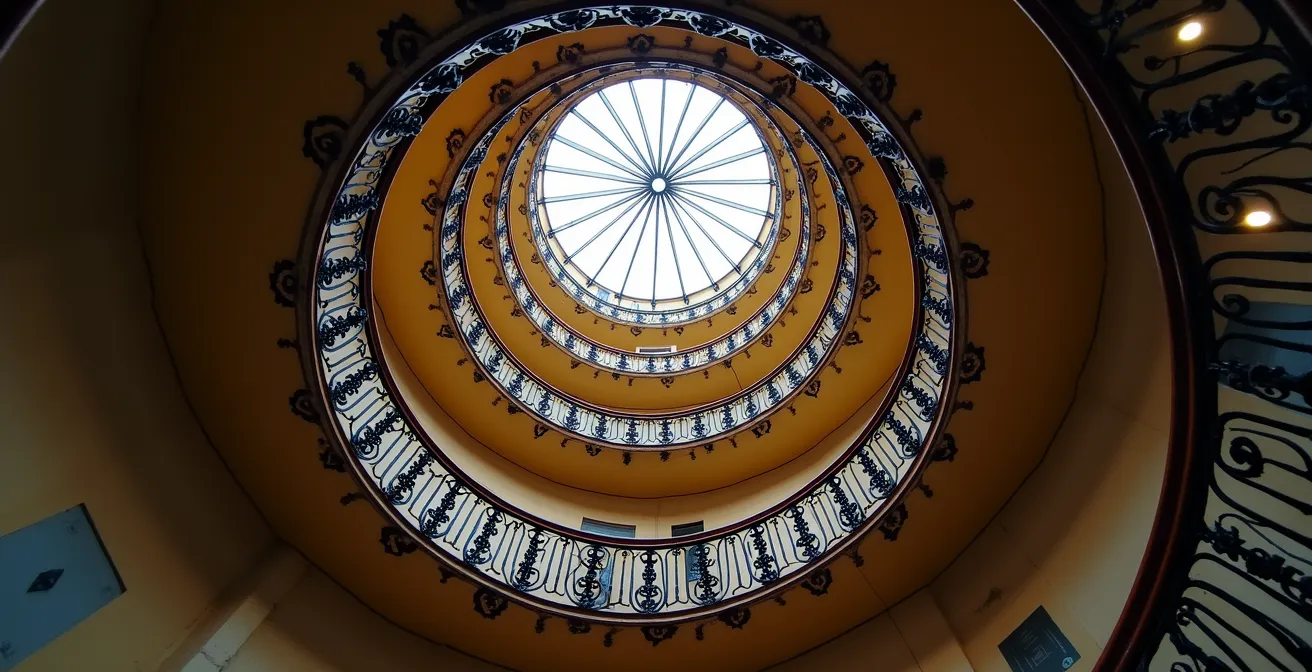
The romantic image of a Parisian staircase quickly fades after your third trip up with groceries. This physical toll is a real cost to consider in your rent-versus-hotel calculation, especially if you have heavy luggage or any mobility concerns.
How to Peek into Historic Courtyards Without Being Chased by a Concierge?
One of the true joys of exploring the Marais is discovering the hidden worlds behind its grand wooden doors: the tranquil, leafy courtyards that offer a glimpse into a more serene Paris. As a temporary resident in a rental, you’ll be tempted to explore these private spaces. However, this is where a cultural misunderstanding can lead to an uncomfortable encounter. These courtyards are part of private residences, protected by a gatekeeper known as a “gardien” or “gardienne.” Their job is to ensure the security and privacy of the residents, not to welcome tourists.
As the Paris Marais Guide, an authority on local etiquette, points out, there’s a delicate protocol to follow. The role of this individual is often misunderstood by visitors.
The gardien or gardienne is not a hotel doorman but a protector of a private residence. A simple, polite ‘Bonjour Madame/Monsieur’ upon entering and exiting is non-negotiable and shows respect.
– Paris Marais Guide, Local Etiquette Guidelines
Attempting to tailgate a resident through a “digicode” (keypad) door is considered extremely rude and will likely earn you a sharp rebuke. The polite way is to wait for someone to enter or exit, make eye contact, offer a warm “Bonjour,” and ask, “Excusez-moi, c’est possible de jeter un coup d’œil?” (Excuse me, is it possible to have a quick look?). A smile and polite French go a long way. If you are granted entry, be quiet, respectful, and don’t linger. Remember, you are a guest in someone’s home.
Your Checklist for Respectful Courtyard Exploration
- Never tailgate: Do not follow residents through keypad-secured doors. Instead, politely ask for permission to enter for a brief look.
- Greet the Guardian: Always greet the ‘gardien/gardienne’ with a ‘Bonjour Madame/Monsieur.’ This simple courtesy is a sign of respect.
- Visit Public Courtyards: Freely explore known public or semi-public courtyards like the Hôtel de Sully, Village Saint-Paul, or Cour de l’Industrie.
- Use Digital Previews: Use Google Street View to digitally explore many historic courtyards online before you even arrive.
- Choose the Right Time: The best times for discreet viewing are often weekday mornings when residents are away and tourist traffic is low.
Carrefour City vs Marché des Enfants Rouges: Where to Shop for a Weekend Stay?
A key argument for choosing a rental is the kitchen, promising romantic home-cooked meals with fresh market ingredients. The dream often involves a morning stroll to the famous Marché des Enfants Rouges, Paris’s oldest covered market. This is the “Authenticity Paradox” in action: the most famous “local” experience is often the least practical for actual local life. The Marché des Enfants Rouges today functions more like a high-end international food court than a traditional grocery market. It’s a fantastic place for a delicious prepared lunch—from Moroccan tagine to Japanese bento—but a terrible place to stock your rental’s kitchen for the weekend.
For a short stay, a more strategic approach is required. Your best allies are the neighborhood’s specialized shops and modern convenience stores. For authentic basics, seek out a good “boulangerie” for bread and croissants, a “fromagerie” for cheese, and a “primeur” for fresh fruits and vegetables. You’ll find many excellent ones along Rue de Bretagne, near the famous market.
For pantry staples like coffee, milk, and wine, the humble Carrefour City, Franprix, or Monop’ supermarket is your most efficient and cost-effective option. These stores are ubiquitous in the Marais and offer a wide range of products at reasonable prices. While it may feel less romantic than a bustling open-air market, this hybrid approach—specialty shops for the stars of the meal and a supermarket for the basics—is how actual Parisians shop. It saves you time and money, freeing you up to enjoy the city rather than hunting for overpriced “artisanal” salt. It balances the budget against the experience, a key consideration when a couple’s typical grocery spending in Paris can be a significant part of a trip’s cost.
The Traffic Mistake That Could Cost You a 135€ Fine in Paris Centre
Whether you choose a hotel or a rental, navigating the Marais has become increasingly complex due to new regulations aimed at reducing traffic. The most significant of these is the “Zone à Trafic Limité” (ZTL), or Limited Traffic Zone, which covers the entire Paris Centre area (1st, 2nd, 3rd, and 4th arrondissements). This isn’t just a concern for those who foolishly rent a car; it directly impacts visitors using ride-sharing services like Uber or Bolt.
The official Paris Tourism Office provides a clear warning about the scope of this rule.
The ‘Zone à Trafic Limité’ implemented in Paris Centre in 2022 affects not just those who rent a car, but also those using ride-sharing services, which may be restricted from direct drop-offs.
– Paris Tourism Office, Official Paris Travel Guide
This means your Uber may not be able to drop you at your rental’s front door, forcing you to drag your luggage several blocks. Beyond the ZTL, Paris has become famously strict on other traffic violations that often catch tourists by surprise. Riding an electric scooter on the sidewalk or parking it improperly is an instant 135€ fine. Even jaywalking, while common, can technically result in a fine, especially if you disrupt traffic on a major boulevard. These rules underscore a key point: staying in the city center requires you to be aware of and abide by its regulations. The convenience of a hotel, often located on a main street with a designated taxi/VTC drop-off zone, can mitigate some of these access headaches.
To avoid costly mistakes during your stay, familiarize yourself with these essential rules:
- Zone à Trafic Limité (ZTL): Assume your ride-share will face restrictions. Plan for drop-offs at the edge of the zone and a short walk.
- Electric Scooters: Never ride on the sidewalk. Use bike lanes and designated parking areas only to avoid the hefty 135€ fine.
- Vélib’ Bicycles: You must obey all traffic laws, including stopping at red lights. Fines apply for sidewalk cycling.
- Parking: If you do have a car, be hyper-aware of resident-only zones and paid parking hours, which typically run from 9 am to 8 pm, Monday through Saturday.
When Is the Best Time to Explore Île Saint-Louis to Feel Alone in the World?
After navigating the practical challenges of accommodation, your reward is the unparalleled magic of central Paris. Île Saint-Louis, the smaller island on the Seine, is the epitome of this magic—a 17th-century village seemingly frozen in time. But during peak hours, its narrow main street, Rue Saint-Louis en l’Île, can feel more like a crowded theme park, with a long queue snaking from the famous Berthillon ice cream shop. The key to experiencing its true, tranquil soul is timing.
The secret to solitude lies in moving against the tourist tide. Travel expert Rick Steves’ analysis highlights a golden window: weekday mornings between 8:30 AM and 10:00 AM, particularly from Tuesday to Thursday. At this hour, the island’s residents have left for work, but the day-trippers and tour groups have yet to arrive. You can wander the quiet quays, admire the elegant “hôtels particuliers,” and cross its bridges with only the sound of the river for company. This is the time to feel the island’s authentic, residential pulse.

Another opportunity for a peaceful experience is on a Sunday evening after 9 PM. The weekend crowds have dispersed, the shops are closed, and the island returns to its residents, its streets bathed in the soft glow of gas-style lamps. For an even more atmospheric visit, a walk during a light rain in the shoulder season (like November) can be uniquely poetic, as the wet cobblestones reflect the historic architecture, creating a scene of timeless beauty. This strategic timing is the ultimate payoff for all your analytical planning.
Key Takeaways
- Financial Value: The sticker price of a rental is deceptive; factor in the “Verticality Tax” of no-elevator buildings and the potential for noise-related disappointment.
- Predictability vs. Risk: A hotel provides a predictable, quality-controlled product (soundproofing, elevator, service), while a rental is a gamble that requires significant pre-booking investigation.
- Authenticity is Practicality: True “local living” for a short trip means using convenient supermarkets and understanding local etiquette, not just visiting tourist-heavy markets.
Why Belleville and Ménilmontant Are the Best Areas for Budget Foodies?
After meticulously planning a budget-conscious stay in the Marais, the ultimate analytical move might be to strategically leave it for dinner. While the Marais offers incredible charm, its food scene can be pricey and geared towards tourists. For a couple who loves food but is mindful of the budget, the neighborhoods of Belleville and Ménilmontant in the 20th arrondissement represent the best value proposition in all of Paris. A quick 10-minute ride on the Line 11 metro from Hôtel de Ville transports you to a different world.
This is where Paris’s vibrant, multicultural heart beats strongest, and it’s reflected in the food. Here, you’ll find some of the city’s most authentic and affordable international cuisine. Rue de Belleville is famous for its Vietnamese phở canteens, cult-favorite Szechuan restaurants, and classic North African couscous joints. The value is astonishing; an analysis of dining costs shows that €25 for a three-course meal in Belleville is common, a price that would barely cover a main course in many Marais bistros.
This isn’t just about cheap eats; it’s about quality and authenticity. Legendary bistros like Le Baratin have a devoted local following, and vibrant spots like La Cantine de Belleville offer an electric atmosphere you won’t find in more polished central districts. So, the final piece of your accommodation strategy is this: save money by being smart about your rental or hotel choice in the Marais, then reinvest those savings into unforgettable, authentic, and affordable culinary experiences just a short metro ride away. It’s the perfect synthesis of central location for your stay and adventurous eating for your evenings.
Ultimately, the choice between a rental and a hotel in the Marais hinges on your tolerance for risk and your willingness to do upfront research. By applying an analytical lens to your search, you can either uncover a rental that truly delivers on its promise or wisely opt for the guaranteed comfort of a hotel, all while staying within your budget. Evaluate your priorities now to ensure your Parisian dream becomes a flawless reality.