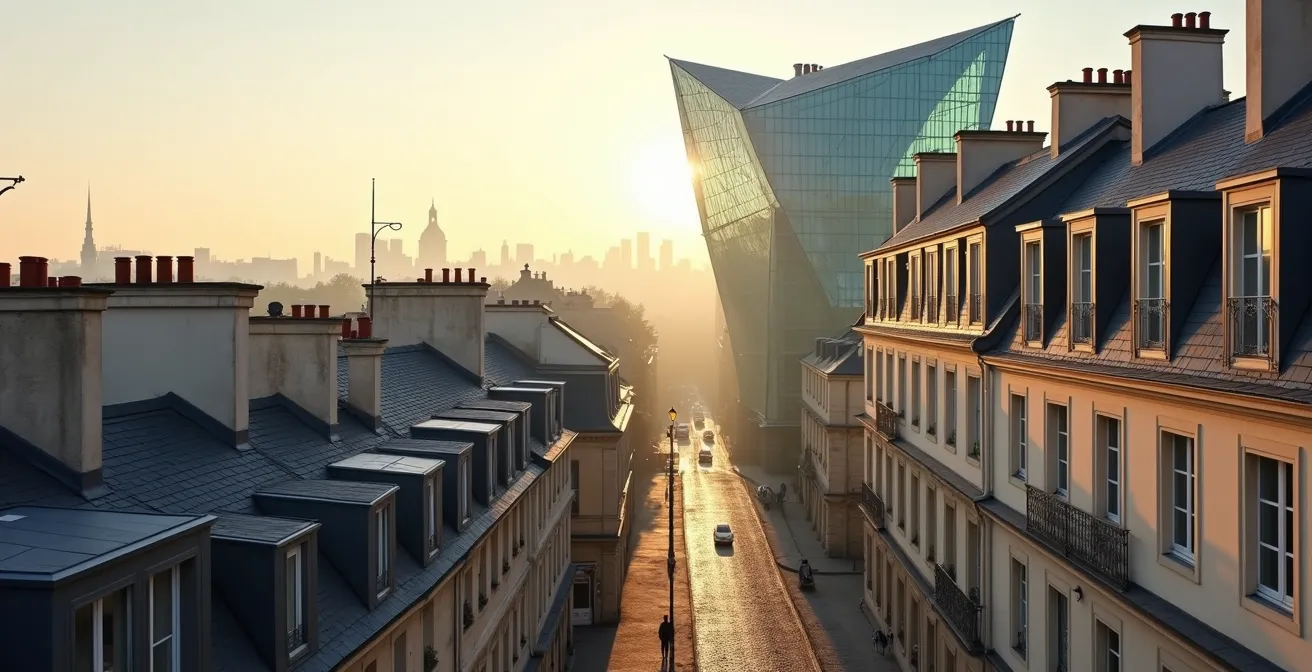
The most significant contemporary architecture in Paris is not just about aesthetics; it’s a high-stakes dialogue between heritage and power, where each new structure tells a story of political ambition and cultural identity.
- Billionaire rivalries are physically reshaping the city’s cultural landscape, creating landmark private museums like the Bourse de Commerce and Fondation Louis Vuitton.
- Major renovations, like that of the Centre Pompidou or La Samaritaine, are often epicenters of controversy, revealing deep tensions about the soul of Paris.
Recommendation: To truly understand modern Paris, look beyond the buildings themselves and analyze the political and cultural forces that brought them into being.
Paris. The name alone conjures a specific image: cream-colored Haussmannian facades, wrought-iron balconies, and the enduring grace of historic monuments. This is the city as a perfectly preserved museum piece, a globally recognized brand of classical beauty. For the design lover, however, this pristine surface can feel like a beautiful cage, obscuring the city’s more radical, contemporary pulse. The common advice points to predictable landmarks—the Eiffel Tower, the Louvre Pyramid—as examples of “modern” disruption, but these are now part of the establishment.
The real story of contemporary Paris is found not in the icons, but in the interventions. It’s a story of architectural grafts, cultural warfare waged by billionaires, and political signatures etched in glass and steel. To find the boldest architecture, you must look for the points of friction, the places where the city’s sacrosanct heritage is challenged. This isn’t just a contrast of old and new; it’s an ongoing, often brutal, dialogue about power, identity, and the future of the urban form. Forget the placid postcard view; the city’s contemporary architectural scene is a battlefield.
This guide will take you beyond the tourist trail to decode these architectural statements. We will analyze the rival foundations shaping the art scene, dissect the necessary survival of an aging icon, hunt for politically charged street art, and understand why a single glass facade can provoke a national scandal. This is your curatorial brief for understanding the forces shaping the new Paris.
Summary: A Curator’s Guide to Paris’s Modern Architectural Statements
- Bourse de Commerce or Louis Vuitton Foundation: Which One to Prioritize for Modern Art?
- Why the Centre Pompidou Facade Renovation Is Essential for Its Survival?
- How to Plan a Street Art Hunt in the 13th Arrondissement Without a Guide?
- Samaritaine vs Galeries Lafayette: Which Renovated Dome Offers the Best Modern Experience?
- The Secret Modern Garden in Les Halles That Most Tourists Walk Past
- The Samaritaine Glass Facade: Why Did It Cause Such a Scandal Among Purists?
- Rue de Turenne or Saint-Germain: Which District Has the boldest New Art?
- How to Secure Tickets for Sold-Out Blockbuster Exhibitions in Paris?
Bourse de Commerce or Louis Vuitton Foundation: Which One to Prioritize for Modern Art?
This isn’t merely a choice between two museums; it’s a decision on which side you take in the decades-long cultural war between two of France’s most powerful billionaires. The rivalry between François Pinault (Kering) and Bernard Arnault (LVMH) has physically reshaped the Parisian art landscape, with each man commissioning a monumental private museum as a testament to his legacy. These institutions, drawing a combined 3.2 million visitors annually to major contemporary art venues, are the dueling hearts of the city’s modern art scene.
The Fondation Louis Vuitton, designed by Frank Gehry, is Arnault’s statement of pure, unapologetic modernity. A cascade of twelve glass “sails” erupts from the Bois de Boulogne, a standalone object of architectural spectacle that houses a collection focused on 20th and 21st-century titans. It’s an experience of overwhelming scale and ambition, set apart from the city’s historic fabric. In contrast, Pinault’s Bourse de Commerce represents a more complex architectural dialogue. Here, architect Tadao Ando inserted a massive, minimalist concrete cylinder into the core of the historic 18th-century rotunda. It is a powerful, almost reverent, contemporary intervention that forces a direct conversation between centuries. The choice is strategic: do you prioritize the spectacular, self-contained object (Vuitton) or the nuanced, integrated architectural graft (Bourse)?
For the purist seeking an intense dialogue between contemporary art and architectural history, the Bourse de Commerce is essential. For those seeking spectacle and a collection of modern masters in a landmark of 21st-century design, the Fondation Louis Vuitton is the priority.
Why the Centre Pompidou Facade Renovation Is Essential for Its Survival?
When the Centre Pompidou erupted onto the Parisian scene in 1977, its inside-out design—with its skeleton, color-coded pipes, and circulation systems exposed to the elements—was a radical act of architectural rebellion. But this very rebellion contained the seeds of its own decay. Nearly fifty years of exposure to Parisian weather have taken a toll, making the upcoming massive renovation not just a facelift, but a critical operation for its very survival. The building, once a symbol of the future, is now a case study in the material consequences of utopian design.
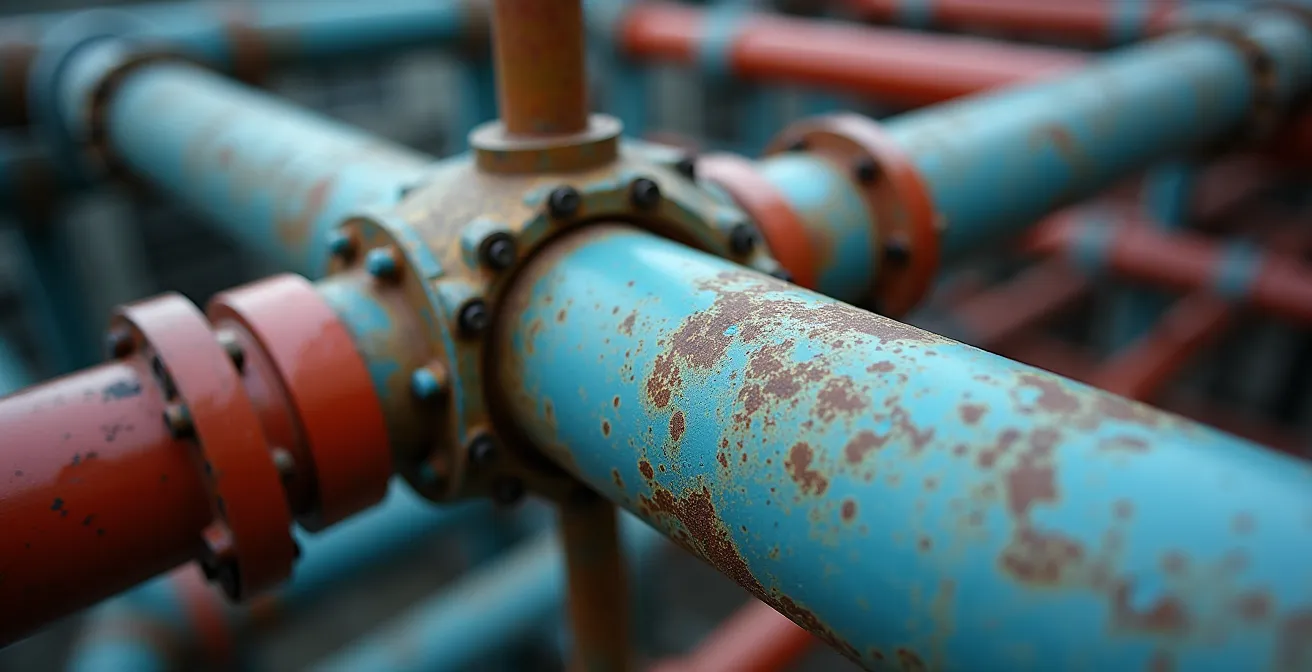
The visual evidence of corrosion on its iconic pipes and the degradation of its materials are undeniable. This is more than an aesthetic issue; it’s a matter of safety, function, and energy efficiency. As Centre Pompidou President Laurent Le Bon stated, “We’re keeping the exterior framework, but from the basement to the top floor, we’re changing everything.” The scale of the project, with a €460 million total renovation cost and a target of 40% energy reduction, underscores its urgency. The goal is to completely asbestos-strip the structure, update all safety and accessibility standards, and optimize its climate control—a feat impossible while the museum remains open.
The five-year closure, beginning in 2025, is therefore not a failure but a testament to the building’s enduring importance. It is a necessary pause to ensure this icon of 20th-century architecture can continue its role as a vital cultural engine for decades to come, proving that even the most revolutionary structures require careful preservation.
How to Plan a Street Art Hunt in the 13th Arrondissement Without a Guide?
Dismissing the 13th arrondissement as just a place with “cool murals” is to fundamentally misunderstand one of Paris’s most ambitious contemporary urban projects. This is not an organic collection of graffiti; it is a deliberately curated open-air museum, a political and social statement initiated by mayor Jérôme Coumet. Since 2009, he has strategically transformed the district by inviting world-renowned artists like Shepard Fairey (OBEY), C215, and Inti to use the vast, blank gables of 1970s social housing towers as their canvases. This initiative masterfully integrates buildings often seen as marginal into the central cultural narrative of Paris.
Planning a hunt here requires a strategy, not just aimless wandering. The key is to understand the two types of art you’ll encounter: the monumental, commissioned works and the smaller, organic interventions. For the giants, start your journey at Metro stop Bibliothèque François Mitterrand and walk west along Boulevard Vincent Auriol. This is the “Giants Trail,” where you’ll find many of the most famous large-scale murals. For a more dynamic experience, use an app like Street Art Cities, which provides real-time locations and artist details, turning your walk into a treasure hunt.
Case Study: Mayor Jérôme Coumet’s Open-Air Museum Initiative
Since 2009, the 13th arrondissement mayor Jérôme Coumet has transformed the district into an ‘open-air museum’ through strategic partnerships with international street artists. The initiative began with Shepard Fairey’s (OBEY) massive mural and expanded to include works by C215, Inti, and D*Face, deliberately using blank gables of social housing to integrate marginalized buildings into Paris’s cultural narrative.
But don’t just look up. The soul of the area is also in the smaller details. Explore the charming side streets of the Butte-aux-Cailles neighborhood for uncommissioned art. Keep an eye out for the pixelated mosaics of Invader on street corners and the cleverly modified street signs by Clet Abraham. This dual approach—hunting for both the monumental and the mischievous—is the best way to appreciate the full scope of this unique urban gallery.
By combining a planned route for the major works with spontaneous exploration for the smaller pieces, you can curate your own compelling tour of the 13th arrondissement, no guide required.
Samaritaine vs Galeries Lafayette: Which Renovated Dome Offers the Best Modern Experience?
The grand magasin dome is a Parisian archetype, but the recent renovations of La Samaritaine and Galeries Lafayette offer two radically different philosophies on how to blend heritage with a modern commercial experience. While both are centered around historic atriums, their approaches to architecture, accessibility, and urban integration place them in stark opposition. Choosing between them depends on whether you seek radical contemporary intervention or masterful heritage restoration.
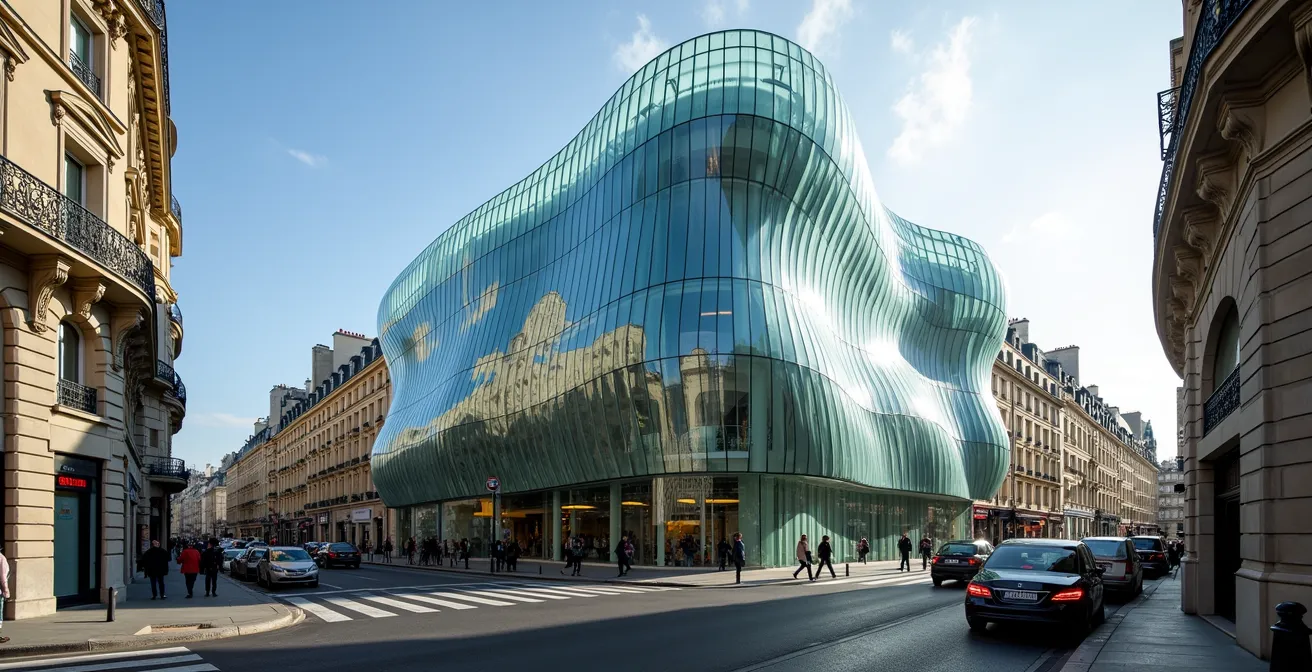
La Samaritaine, reopened in 2021 after a 16-year closure, represents a shock treatment. While its Art Nouveau peacock fresco and grand staircase were meticulously restored, the project is defined by the controversial, undulating glass facade by Japanese firm SANAA on the Rue de Rivoli side. This modern “graft” creates an exclusive luxury bubble, housing the ultra-high-end Cheval Blanc hotel and a department store whose views are best enjoyed from its restaurants. The experience is polished and controlled, a contemporary layer added to, and arguably sealing off, the historic structure.
Galeries Lafayette Haussmann, by contrast, has doubled down on its heritage. Its recent efforts have focused on meticulously restoring the original 1912 Art Nouveau dome and structure. The modern experience here is not architectural but experiential. The creation of a free-to-access rooftop terrace offers one of the most democratic and breathtaking views of Paris, directly integrating the bustling store with the urban fabric. It remains a traditional, accessible grand magasin that celebrates its history rather than layering over it.
This table from a recent architectural analysis starkly contrasts the two approaches.
| Aspect | La Samaritaine | Galeries Lafayette |
|---|---|---|
| Renovation Philosophy | Radical intervention with SANAA glass facade | Meticulous restoration of Art Nouveau heritage |
| Accessibility | Views from luxury hotel and restaurants (paid) | Free rooftop terrace open to all |
| Architectural Approach | Contemporary layer added to historic structure | Preservation of original 1912 dome |
| Urban Integration | Exclusive luxury bubble with Cheval Blanc hotel | Traditional bustling grand magasin |
| Controversy Level | High – legal battles with heritage associations | Low – celebrated restoration |
Ultimately, La Samaritaine offers a lesson in high-concept, controversial architectural intervention, while Galeries Lafayette provides a more populist, celebratory experience rooted in its beloved heritage.
The Secret Modern Garden in Les Halles That Most Tourists Walk Past
For decades, the heart of Paris was scarred by a notorious wound: the “trou des Halles” (the hole of Les Halles). After the historic 19th-century market was demolished in 1971, the site became a seemingly endless construction pit, a symbol of urban planning failure that haunted a generation of Parisians. Today, that void has been transformed into the Jardin Nelson Mandela, a sprawling, contemporary park that most tourists, rushing through the underground transport hub, walk straight past without a second glance.
This is a significant oversight, as the garden is one of the city’s most successful examples of modern landscape architecture and social design. It’s the final chapter in the site’s saga, an “urban oasis” completed in 2016 that serves as a microcosm of contemporary Parisian life. The design isn’t monolithic; it features distinct zones cleverly tailored to the diverse demographics that converge here. There are quiet reading areas for students, dynamic play structures for families, open lawns for commuters from the RER hub, and dedicated spaces for urban sports enthusiasts. It is an active, living part of the city, not a passive, decorative park.
Furthermore, it’s a model of sustainable design. The Jardin Nelson Mandela incorporates 4.3 hectares of green space with advanced rainwater harvesting systems that contribute to the city’s ecological resilience. To find it, simply emerge from the Châtelet-Les Halles station on the western side, towards the Bourse de Commerce. Instead of walking around it, walk through it. Take the time to observe how different groups interact with the space—it’s a masterclass in contemporary urbanism hiding in plain sight.
This garden is not just a green space; it’s a piece of living architecture and a healed scar on the city’s urban palimpsest, offering a more authentic glimpse into modern Parisian life than many of the more famous manicured parks.
The Samaritaine Glass Facade: Why Did It Cause Such a Scandal Among Purists?
The undulating glass facade of La Samaritaine on the Rue de Rivoli is more than just a wall; it’s a manifesto that triggered one of Paris’s most significant architectural battles of the 21st century. The scandal it caused among heritage purists was not an overreaction but a defense of a core principle of Parisian urbanism: the Haussmannian legacy of alignment, order, and material consistency. The rippling, translucent curtain wall designed by the Japanese firm SANAA was seen as a direct assault on this historic fabric.
Heritage associations like SOS Paris led the charge, arguing in court that “the undulating glass facade violated the strict alignment and aesthetic codes of the local urban plan for the historic Rue de Rivoli, setting a dangerous precedent.” Their legal argument, as detailed in publications like Architectural Record, was powerful enough to initially halt the project. The Conseil d’État, France’s highest administrative court, sided with the preservationists and canceled the building permit in 2014, putting the entire billion-euro renovation in jeopardy.
Case Study: Political Intervention to Save SANAA’s Design
The Samaritaine facade battle reached France’s highest administrative court, the Conseil d’État, which initially canceled the building permit following appeals by heritage associations SPPEF and SOS Paris. The project was ultimately saved through direct political intervention by Prime Minister Manuel Valls in 2014, demonstrating the national importance of this architectural statement and placing it in the tradition of controversial Parisian additions like the Eiffel Tower and Centre Pompidou.
The fact that the project was ultimately saved is a testament to another great Parisian tradition: the ‘fait du prince’, or political intervention in grand projects. Then-Prime Minister Manuel Valls stepped in, highlighting the project’s national economic importance and effectively overriding the court’s decision. This placed the Samaritaine facade firmly in the lineage of controversial but ultimately iconic Parisian structures, like the Eiffel Tower and the Pompidou itself, which were fiercely opposed before becoming symbols of the city.
The facade is a physical scar from a cultural battle, a reminder that in Paris, every new architectural line drawn is a political act.
Rue de Turenne or Saint-Germain: Which District Has the boldest New Art?
For the art-savvy traveler, the question of where to find the “boldest” art in Paris is nuanced. It’s a choice between two very different kinds of audacity: the spectacle of the global art market versus the quieter confidence of intellectual curation. This plays out in the city’s two primary gallery districts: the Marais, particularly around Rue de Turenne, and the historic hub of Saint-Germain-des-Prés. Your preference will dictate your path.
The Marais (Rue de Turenne) is now the Parisian outpost for global mega-galleries like Gagosian, David Zwirner, and Perrotin. Here, boldness is expressed through scale, price, and spectacle. You will find museum-scale exhibitions by established, blue-chip artists in vast, white-cube spaces. It’s an impressive, powerful display of the art world’s premier league. The experience is often crowded and event-driven, best experienced in the morning to witness the spectacle at its peak.
Saint-Germain, the historic heart of the Parisian art scene, offers a different kind of boldness: intellectual discovery. While home to historic galleries, it’s also where chic newcomers present more intimate, contemplative shows. The focus is less on blockbuster names and more on rediscovering 20th-century masters or championing emerging talent with a strong curatorial thesis. It’s a district for quiet afternoons of thoughtful looking.
Action Plan: Auditing a Parisian Art District
- Points of Contact: List the key galleries and alternative art spaces in the district. Note their opening hours and current exhibitions.
- Collect: Walk the primary streets and back alleys. Photograph not just the art, but the gallery architecture and the street atmosphere.
- Coherence: Does the district have a unified feel? Compare the types of artists shown (emerging vs. blue-chip) and the gallery styles (intimate vs. mega-gallery).
- Memorability & Emotion: Identify the one or two exhibitions or artworks that felt truly unique versus those that felt commercial or generic. Why did they stand out?
- Integration Plan: Based on your audit, decide if this district aligns with your personal definition of “bold” and prioritize a return visit for a deeper dive.
However, a true insider knows the landscape is shifting. As one recent analysis noted, “The real frontier of the Parisian art scene has moved to Komunuma in Romainville, where major galleries have opened huge spaces in a former industrial complex.” This tip, highlighted by sources like the Contemporary Art Report, points to the city’s ever-evolving creative geography, pushing beyond the central arrondissements.
Ultimately, for market-defining power, head to the Marais. For intellectual and historical depth, explore Saint-Germain. And for a glimpse of the future, venture out to Romainville.
Key Takeaways
- Parisian contemporary architecture is a form of political and cultural statement, not just a matter of design.
- The personal rivalries of billionaires like Arnault and Pinault have become a primary force in commissioning monumental cultural buildings.
- Controversy is an integral part of Paris’s architectural DNA, from the Eiffel Tower to the Samaritaine’s glass facade.
How to Secure Tickets for Sold-Out Blockbuster Exhibitions in Paris?
After identifying the architectural and artistic sites that form your personal itinerary, the final barrier is a practical one: access. Paris’s blockbuster exhibitions are notorious for selling out weeks, if not months, in advance. Arriving without a ticket is a recipe for disappointment. However, securing a spot for a sold-out show is not impossible; it simply requires an insider’s strategy that goes beyond refreshing the main ticketing page.
The single most effective strategy is to invest in an annual museum pass or membership. An analysis of pricing structures shows that annual passes often cost the equivalent of just two or three regular tickets but provide unlimited, queue-skipping access for a full year. Memberships at institutions like the Louvre, Orsay, or Pompidou also grant priority booking windows and pre-sale access codes delivered via newsletters, allowing you to secure tickets before they are released to the general public. This is the professional’s choice.
If a membership isn’t practical, tactical timing is key. First, always book a specific `créneau horaire` (time slot) the moment sales open. Second, check the official museum websites daily at 8 AM Paris time. This is often when small batches of returned tickets are put back into the system. Finally, look for `nocturnes` (late-night openings), which are common for major exhibitions and have separate ticket quotas, offering another chance to get in. Always use official sites or authorized resellers like FNAC Spectacles; third-party sites are often unreliable and overpriced.
Insider Strategies for Securing Exhibition Tickets
- Purchase annual museum passes (‘laissez-passer’) for unlimited queue-skipping access.
- Check museum websites at 8 AM Paris time for returned ticket batches.
- Book ‘nocturnes’ (late-night openings) which have separate ticket quotas.
- Use official resellers like FNAC Spectacles, never unofficial third-party sites.
- Book specific ‘créneaux horaires’ (time slots) immediately when sales open.
- Consider memberships at major museums (Louvre, Orsay, Pompidou) for priority booking.
- Sign up for museum newsletters for pre-sale access codes.
Now that you have the intellectual framework to understand the city’s architectural dialogues and the practical tools to gain access, you are equipped to begin curating your own journey through the bold, contemporary landscape of Paris.