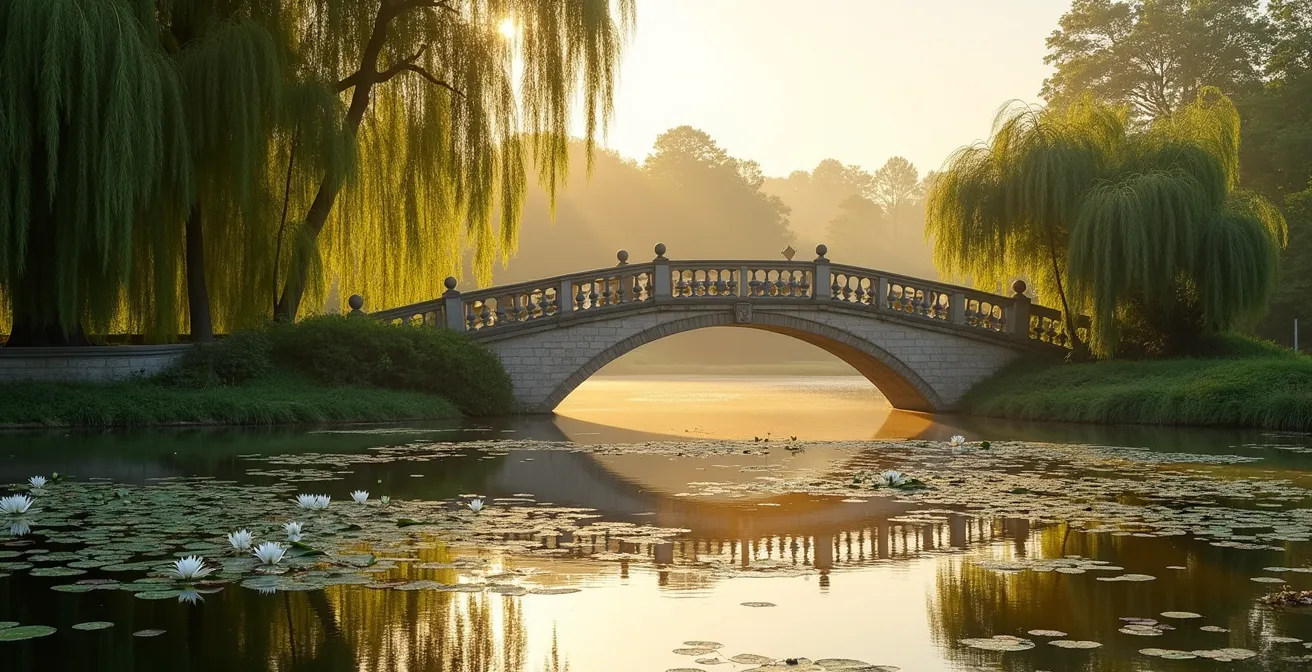
To truly understand Impressionism, you must step out of the museum and into the light that inspired it.
- The key is not just visiting locations, but experiencing the specific quality of light and atmosphere the artists sought to capture.
- Strategic choices—like visiting l’Orangerie on a cloudy day or exploring the Musée d’Orsay in reverse—transform your visit from a tour into a deep artistic immersion.
Recommendation: Treat your journey as a sensory pilgrimage. Connect the brushstrokes on the canvas to the very soil, air, and social energy of the places where these masterpieces were born.
For any art lover, standing before a Monet or a Renoir is a profound experience. We marvel at the revolutionary brushstrokes, the dance of light and colour, and the capture of a fleeting moment. Yet, a subtle barrier often remains: the museum frame itself. We see the masterpiece, but we are disconnected from the world that gave it life. The typical art tour of Paris often reinforces this, ticking off the major institutions like Musée d’Orsay and the Orangerie, leaving us knowledgeable but perhaps not truly moved.
The conventional wisdom is to see the art first and foremost. But what if the secret to a deeper understanding lies not just within the gallery walls, but outside, in the very air the artists breathed? This guide is built on a different philosophy. It proposes that to genuinely connect with Impressionism, you must embark on a sensory pilgrimage. It’s about feeling the diffuse, hazy light of a Parisian cloudy day that Monet chased for his Water Lilies, or understanding the bohemian social fabric of Montmartre that animated Renoir’s figures. This is a journey to connect the *terroir artistique*—the artistic soil—of a location to the final work.
We will explore how to make the pilgrimage to Monet’s sacred garden at Giverny an intimate journey rather than a tourist chore. We will walk the exact same streets as Renoir in Montmartre, uncover hidden museum gems, and learn the strategies to see the most famous works in a new light. This is your invitation to step beyond the frame and see the world through the eyes of the Impressionists themselves.
This article provides a detailed roadmap for your artistic journey. From practical travel logistics to the philosophical approach of viewing the art, the following sections will guide you through the essential locations and strategies to experience Impressionism on a deeper level.
Summary: Beyond the Frame: Tracing the True Footsteps of Monet and Renoir in France
- Train or Tour Bus: What Is the Best Way to Visit Monet’s Gardens from Paris?
- Montmartre Vineyards: Where Exactly Did Renoir Paint “The Swing”?
- Marmottan Monet: Why This Hidden Gem Beats the Crowds at the Major Museums?
- Why Visiting l’Orangerie on a Cloudy Day Enhances the Water Lilies Experience?
- The Souvenir Trap: How to Distinguish a High-Quality Print from a Cheap Poster?
- Top Floor First: Why Starting with the Impressionists Is the Best Strategy?
- Prints vs Originals: Where to Start Your Collection Under 500€?
- Why Belleville and Ménilmontant Are the Best Areas for Budget Foodies?
Train or Tour Bus: What Is the Best Way to Visit Monet’s Gardens from Paris?
The pilgrimage to Giverny, the heart of Monet’s universe, is a non-negotiable for any Impressionist devotee. While large tour buses offer a simple, one-click solution, they often strip the journey of its soul. To truly embrace the artist’s spirit of independence and connection to the landscape, the do-it-yourself train journey is unequivocally superior. It transforms a logistical task into the first act of your sensory pilgrimage. The experience begins not at the garden gates, but on the platform at Paris’s Gare Saint-Lazare, a station Monet himself painted with such vigour.
Taking the train to the town of Vernon allows you to control your own time and rhythm. From Vernon, you have choices that align with the *plein air* sensibility: a quick shuttle, or better yet, renting a bicycle. The 5km ride along the Seine is not just a transfer; it’s a gradual immersion into the Norman countryside, the very landscapes that informed Monet’s work. This independent approach is also more economical; a complete DIY train journey costs approximately €45 per person, often significantly less than an organised tour, freeing up resources for a quality souvenir or a better meal.

Arriving on your own terms, especially if you’ve booked tickets in advance to bypass the queues, allows you to enter the gardens with a sense of peace and anticipation. You are not part of a herd being ushered through; you are an individual arriving at a sacred space, ready to engage in a quiet dialogue with the artist’s vision. The train journey is more than transport; it is the proper, mindful prelude to the Giverny experience.
Montmartre Vineyards: Where Exactly Did Renoir Paint “The Swing”?
While Giverny was Monet’s rural sanctuary, Montmartre was the vibrant, bohemian heart of the Impressionist social world. To find the spirit of Renoir, one must walk these steep, winding streets. His famous painting, Bal du moulin de la Galette, captures the public revelry of the district, but a more intimate glimpse into his world is found in The Swing (La Balançoire). But where exactly was this idyllic, sun-dappled scene painted?
The location was not a public park but a private garden, the “terroir artistique” for several of Renoir’s most important works of the 1870s. The exact spot is the garden of what is now the Musée de Montmartre, at 12 rue Cortot. This was the location of Renoir’s second studio in the area, and its then-wild, overgrown garden served as the setting for both The Swing and the Bal du moulin de la Galette. Standing in this garden today, you can almost feel the presence of his models, Estelle and Jeanne, and sense the camaraderie of the artistic community that defined the era. It was here that Renoir mastered his technique of capturing light filtered through foliage, a hallmark of his style.
Tracing Renoir’s footsteps is an exercise in historical imagination. While the rural ‘maquis’ landscape has been replaced by a modern Parisian neighbourhood, the key locations—his studio, the homes of his models, and the Moulin de la Galette itself—still exist. Following this path allows you to map the social geography of his art, understanding that his paintings were not just landscapes, but documents of *la vie moderne*.
Your Action Plan: A Self-Guided Renoir Walk in Montmartre
- Start at the Musée de Montmartre garden (12 rue Cortot) to see the exact location of ‘The Swing’.
- Walk to Renoir’s former studio on rue Cortot and imagine the artist at work.
- Visit the homes of his models Estelle and Jeanne in the surrounding streets to understand his social circle.
- End at the original Moulin de la Galette site to complete the social geography of his artistic life.
- Compare Berthe Morisot’s paintings from the same garden for a different artistic perspective on the same space.
Marmottan Monet: Why This Hidden Gem Beats the Crowds at the Major Museums?
The Musée d’Orsay and the Orangerie are magnificent, but their popularity can sometimes lead to an overwhelming viewing experience, with crowds jostling for a view. For the art lover seeking a more contemplative and intimate encounter with Monet, the Musée Marmottan Monet is Paris’s greatest secret. Tucked away in the tranquil 16th arrondissement, this elegant mansion offers a unique and profound immersion into the master’s work, far from the tourist hordes.
The museum’s power lies in its collection’s depth and origin. It houses the world’s largest collection of works by Monet, a legacy bequeathed by his son, Michel. This includes the single most important painting of the movement: Impression, Sunrise. This is the very canvas whose title, when exhibited in 1874, was mockingly seized upon by a critic to give Impressionism its name. Seeing it here, in a quiet, dedicated room, feels like a pilgrimage to the movement’s source. The collection’s dramatic history, including the audacious 1985 daylight theft and subsequent recovery of Impression, Sunrise, adds a layer of mystique to the visit. You are not just seeing a painting; you are seeing a survivor.
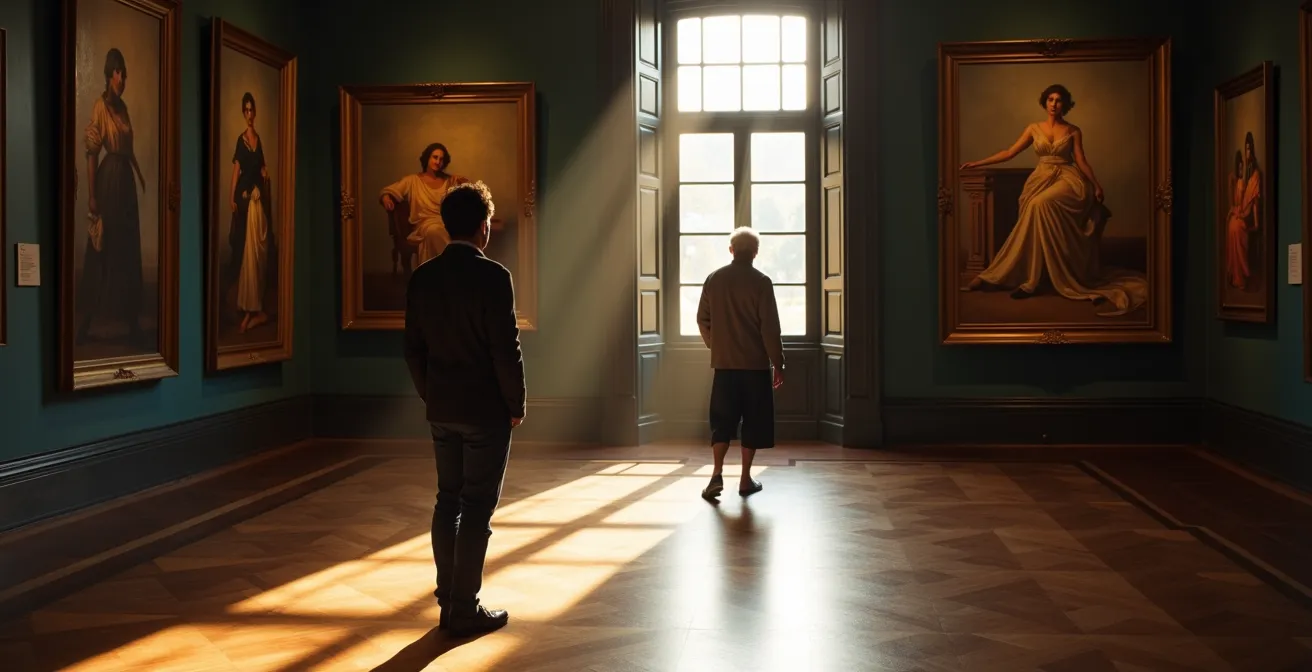
Beyond this iconic piece, the Marmottan holds over three hundred Impressionist paintings and also boasts the world’s largest collection of works by Berthe Morisot, a central and often-underappreciated figure of the movement. The combination of a world-class, deeply personal collection and a serene, uncrowded setting makes the Marmottan an essential destination. It provides the space and silence needed for the art to truly speak to you.
Why Visiting l’Orangerie on a Cloudy Day Enhances the Water Lilies Experience?
Conventional wisdom dictates that art is best seen in bright, sunny weather. However, for Claude Monet’s final, monumental masterpiece, the *Nymphéas* (Water Lilies) at the Musée de l’Orangerie, this is simply not true. To have the most authentic and powerful experience, the ideal condition is not a clear blue sky, but a soft, overcast Parisian day. This is not a matter of opinion, but of science and artistic intent.
Monet himself was intimately involved in the design of the two oval rooms that house his grand decorations. His single, adamant demand was for top-down natural light, or *lumière zénithale*. He wanted the paintings to be illuminated by the same sky that shone upon his pond at Giverny. A cloudy day provides the perfect diffuse, even light, eliminating the harsh shadows and intense glare that direct sun can cause. As a study of the museum’s design confirms, this soft illumination allows the subtle, near-infinite colour transitions in the canvases to emerge exactly as the artist intended. On a cloudy day, the water’s surface comes alive with nuance, and the boundary between water and reflection dissolves, just as it did for Monet.
Framing your visit as a meditative refuge from the weather transforms the experience. Instead of a tourist obligation, it becomes a multi-sensory immersion. Bring headphones with music by Debussy or Satie, contemporaries of Monet, and allow yourself at least 30 minutes to sit in quiet contemplation. Watch as the shifting natural light outside subtly alters the mood within the rooms. On a cloudy day, you are not just looking at a painting of a pond; you are enveloped by the very atmosphere Monet sought to eternalize.
The Souvenir Trap: How to Distinguish a High-Quality Print from a Cheap Poster?
After an inspiring journey through Impressionist landscapes and museums, it’s natural to want to take a piece of that beauty home. However, the streets of Paris are filled with souvenir traps, selling cheap posters (*affiches*) that fade quickly and do a disservice to the original art. For an art lover, choosing a reproduction is a final act of curation. Knowing how to distinguish a museum-quality print from a disposable souvenir is an essential skill.
The key difference lies in quality, materials, and official sanction. A high-quality reproduction, often termed an *estampe* or *lithographie*, is printed on acid-free art paper (*papier d’art*) that ensures longevity and colour fidelity. A cheap poster is printed on standard, thin paper that will yellow and degrade. The most important mark of authenticity and quality is an official seal. As the official guidelines state:
Look for the official seal of the ‘Réunion des Musées Nationaux’. This French state institution guarantees the fidelity and quality of reproductions
– Museum Quality Standards Guide, Official RMN-Grand Palais Guidelines
This RMN-Grand Palais seal is your guarantee. You will find these high-quality prints in official museum bookshops and specialized galleries like the Chalcographie du Louvre, not from street vendors. The price will be higher, but you are investing in a lasting piece of art, not a temporary memento. The following table breaks down the key differences to look for.
| Quality Indicator | Museum Quality Print | Tourist Poster |
|---|---|---|
| Official Seal | RMN-Grand Palais seal | No official marking |
| Paper Type | Papier d’art sans acide | Standard paper |
| Price Range | €30-150 | €5-20 |
| Where to Buy | Museum bookshops, Chalcographie du Louvre | Street vendors, souvenir shops |
| French Terms | Reproduction, Estampe, Lithographie | Simple Affiche |
Top Floor First: Why Starting with the Impressionists Is the Best Strategy?
The Musée d’Orsay, housed in a magnificent former train station, is the world’s temple to Impressionism. Confronted with its vast collection, most visitors begin on the ground floor and work their way up. This is a mistake. The most effective and historically resonant way to experience the museum is to do the exact opposite: take the elevator straight to the top floor (Level 5) and begin with the Impressionists.
This “reverse chronology” strategy is powerful for two reasons. First, it allows you to see the revolutionary art of Monet, Renoir, Degas, and Caillebotte with fresh eyes and maximum energy, before museum fatigue sets in. You experience the explosion of light and colour in the most breathtaking space in the museum—the attic, where the former station’s industrial ironwork is flooded with the very natural light the artists cherished. Seeing Monet’s Gare Saint-Lazare series within the architectural context of a real train station is a uniquely powerful moment of connection.
Second, as you descend through the museum, you travel backward in time. After being immersed in the Impressionists’ modern vision, seeing the polished, formal, and often rigid Academic art on the lower floors provides a visceral understanding of just how shocking and revolutionary Impressionism truly was. The contrast is not an abstract art history lesson; it’s something you feel. As confirmed by the optimal strategy for understanding the movement, this approach allows the artistic revolution to unfold before your eyes. To best execute this plan:
- Arrive at opening time and head straight to the 5th floor via the elevators at the back of the main hall.
- Immerse yourself in the Impressionist galleries before the main crowds arrive.
- Descend chronologically, moving through Post-Impressionism (Van Gogh, Gauguin) on the middle floors.
- End your visit with the Academic and Realist art on the ground floor to fully grasp the radical break that Impressionism represented.
Prints vs Originals: Where to Start Your Collection Under 500€?
After immersing yourself in the world of the Impressionists, the desire to own a piece of it can be strong. While a Monet original is beyond reach for most, starting a meaningful art collection is more accessible than you might think. The key is to shift your focus from famous names to authentic works. Instead of a high-end reproduction of a famous painting, consider acquiring an original work by a lesser-known contemporary or a “petit maître” (little master) of the era.
As the Paris Art Dealers Association advises, the path to accessible collecting is through authenticity. Their guide highlights this very point:
An original sketch or watercolor by a less famous contemporary is far more accessible and authentic than a Monet print
– Paris Art Dealers Association, Guide to Collecting Impressionist Art
Paris offers several avenues for the budding collector on a budget. The legendary Drouot auction house is a treasure trove where original sketches or studies by artists from the Barbizon or Honfleur schools can sometimes be acquired for under €500. The *estampe* galleries of Saint-Germain-des-Prés specialize in original 19th-century prints, such as lithographs and etchings, which offer a direct connection to the period’s graphic arts. For a more direct link to the *plein air* tradition, consider visiting art colonies like Moret-sur-Loing or Barbizon, where you can often buy directly from contemporary landscape painters who carry on the Impressionist tradition.
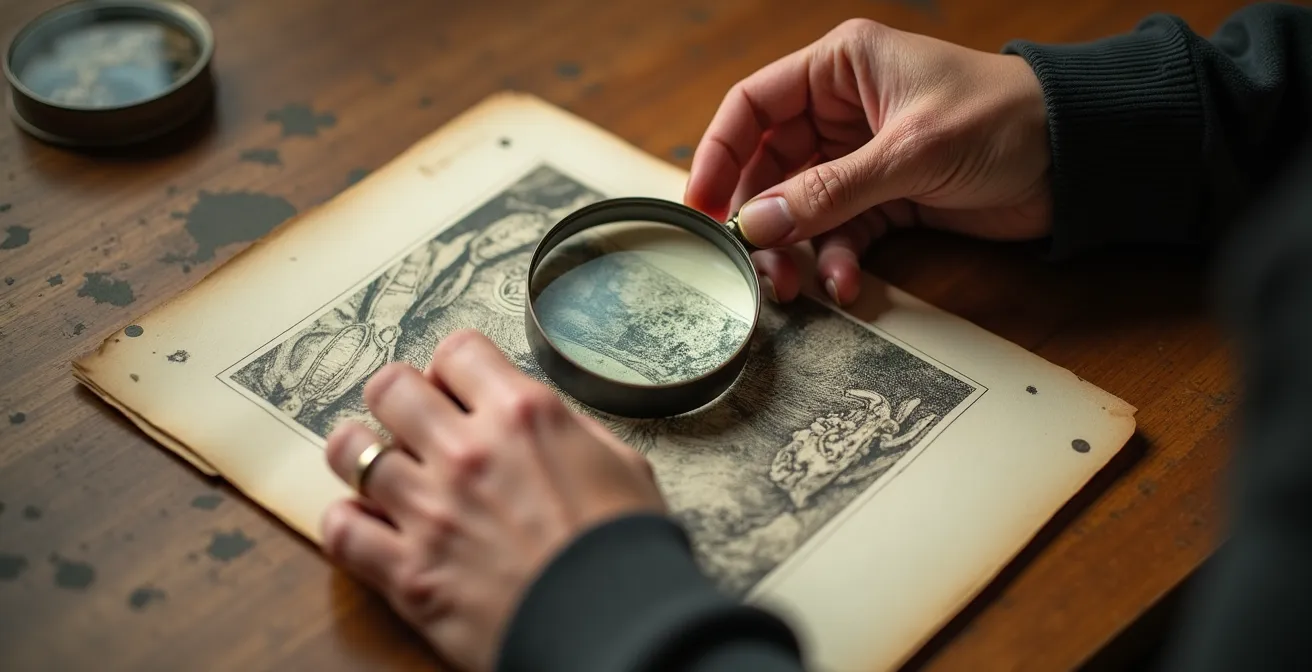
Starting a collection is not about acquiring a famous signature; it’s about finding a piece that speaks to you and possesses its own unique history and artistic integrity. An original watercolor by a skilled but less famous artist from the period holds a story and a human touch that no mass-produced print can ever replicate.
Key Takeaways
- True understanding of Impressionism comes from a sensory pilgrimage, connecting the art to its original environment, not just from a museum checklist.
- The quality of natural light is paramount; strategically choosing when and how you visit a museum (like l’Orangerie on a cloudy day) can transform your experience.
- The Impressionist spirit of capturing modern life is not confined to the past; it can still be found in the vibrant, artistic energy of contemporary Parisian neighbourhoods like Belleville.
Why Belleville and Ménilmontant Are the Best Areas for Budget Foodies?
After days spent communing with the past, the final step in a true Impressionist pilgrimage is to connect with its living spirit. If Montmartre was the gritty, creative, working-class hub for the Impressionists in the 19th century, then Belleville and Ménilmontant are its 21st-century equivalent. These neighbourhoods in the northeast of Paris offer a vibrant, authentic taste of *la vie moderne* today, and they are also a paradise for foodies on a budget.
The parallels are striking. The Impressionists sought to capture the reality of modern life, from smoky cafes to suburban landscapes. Today, the streets of Belleville, particularly the famous Rue Dénoyez, are a constantly evolving canvas for contemporary street artists, the modern-day practitioners of *plein air* art. The area’s affordable and celebrated “néo-bistros,” often praised in guides like Le Fooding, are the direct descendants of the cheap *guinguettes* (drinking establishments with music) along the Seine where artists would gather. Here, you can find incredible couscous for under €15 or innovative bistro cuisine that won’t break the bank.
A perfect itinerary would be to follow a morning of quiet contemplation at the Orangerie with a trip on the Metro to Belleville for lunch. The contrast is electric: from the serene, bourgeois center to the pulsing, multicultural energy of the east. This shift provides a powerful context, reminding us that Impressionism was, at its core, a radical art form born from the dynamic changes of its time. Ending your day with a sunset view over Paris from the Parc de Belleville offers a final, breathtaking panorama, a modern-day cityscape that the Impressionists could only have dreamed of.
Your journey into the world of the Impressionists should not end when you leave the last museum. Carry this new way of seeing with you. Look for the way light falls on a city street, notice the vibrant life in unexpected neighbourhoods, and seek out authenticity in the art you choose to live with. Start your own sensory pilgrimage today.