Heritage and culture
France’s heritage reveals itself not just in famous landmarks, but in the subtle details embedded throughout its cities and countryside. Every building facade, museum layout, street name, and market stall carries encoded information about social history, artistic movements, and collective memory. For travelers, developing the ability to decode these cultural layers transforms passive sightseeing into active discovery, where each visit becomes an opportunity to understand how societies preserve, interpret, and sometimes reinvent their past.
This depth of engagement requires more than guidebook knowledge. It demands practical literacy in reading architecture, navigating institutional spaces strategically, distinguishing authentic history from constructed narratives, and interpreting the physical traces cities leave behind. From understanding why certain Parisian apartments command prestige to recognizing the evidence of vanished rivers beneath modern streets, cultural heritage appreciation combines observation skills with contextual knowledge that turns any French city into a legible text.
Reading the Built Environment
Architecture functions as France’s most accessible historical archive, with buildings recording centuries of social organization, aesthetic values, and technological evolution. Unlike museum collections with curated narratives, the built environment presents an unfiltered chronicle that rewards careful observation and contextual understanding.
Decoding Architectural Layers and Styles
French urban architecture operates as a stratified timeline, where different eras coexist on single streets. Identifying these layers begins with recognizing stone construction periods—the warm limestone of Haussmannian buildings differs fundamentally from medieval rough-cut blocks or modernist concrete applications. Each material choice reflects both available technology and prevailing aesthetic philosophy.
The social hierarchy encoded in building design remains remarkably consistent. In classic Parisian apartment blocks, the deuxième étage (second floor, or third floor in American counting) traditionally housed the wealthiest residents, featuring higher ceilings, elaborate moldings, and prime street views. Floors descend in prestige toward ground level (often commercial) and ascend toward servants’ quarters under zinc roofs, where temperature management becomes challenging during summer months. Recognizing these patterns allows visitors to reconstruct social relationships simply by observing facade details and window proportions.
Renovation quality reveals itself in subtle markers: the consistency of pointing between stones, the integration of modern elements like intercom systems, and the preservation versus replacement of original features such as ironwork balconies. Art Nouveau contributions by Hector Guimard, particularly his Metro entrances and residential buildings, demonstrate how individual architects can define entire movements. Meanwhile, modernist icons often spark restoration controversies—debates about whether to preserve original materials or update for contemporary functionality reflect broader questions about heritage authenticity.
Accessing Interior Spaces
While facades tell partial stories, interiors complete the architectural narrative. Public buildings like administrative offices, historic hotels, and cultural institutions occasionally offer glimpses during heritage days or business hours. Hidden residential courtyards, accessible through unassuming street doors, frequently preserve original features stripped from street-facing exteriors during renovations.
Medieval remnants survive most often in substrates—cellars, foundations, and protected courtyards—where later construction incorporated rather than demolished earlier structures. Identifying these fragments requires looking beyond eye level to examine transitions between building materials, changes in wall thickness, and discontinuities in design logic that suggest multiple construction phases.
Navigating Museums and Cultural Institutions
French museums present curated heritage through deliberate spatial and chronological organization. Understanding these institutional logics transforms visits from exhausting marathons into strategic educational experiences.
Strategic Visiting Approaches
Museum architecture itself carries meaning—the Musée d’Orsay’s conversion from a Beaux-Arts train station creates specific viewing conditions for Impressionist works, with natural light flooding the former platforms. Collection layouts typically follow either chronological narratives or thematic groupings, and identifying which approach a museum employs helps visitors predict where specific items or periods will appear.
Practical strategies significantly enhance comprehension and stamina:
- Late opening hours (typically Thursday or Friday evenings) reduce crowds while providing different lighting conditions for artworks
- Audio guide options vary in depth and target audience; comparing available versions before committing prevents mismatched expectations
- Scheduling breaks based on attention spans (typically 45-60 minutes for focused observation) prevents the museum fatigue that diminishes retention
- Restaurant queues often operate separately from exhibition entry; understanding this distinction saves time
Combining visits with nearby attractions makes geographic sense but risks cognitive overload. The concentration required to contextualize historical eras or artistic movements doesn’t compound efficiently—two museums in one day typically yields less understanding than one museum explored thoroughly.
Making Sense of Collections
Effective artifact selection depends on visit objectives. An educational, chronological exploration of French history might prioritize representative objects from each major period, while thematic interests (military history, decorative arts, scientific instruments) require different navigational approaches through the same collections.
Contextualizing historical eras demands understanding what artifacts can and cannot reveal. A medieval sword demonstrates metallurgical skill and social status markers, but its museum context—pristine, well-lit, individually displayed—completely distorts its original function as a tool for violence. Mentally reconstructing these objects’ original contexts separates genuine historical insight from aesthetic appreciation.
For younger visitors or mixed groups, mixing history with engaging elements—interactive displays, comparative challenges, or focused scavenger hunts—maintains interest without sacrificing educational value. The goal is sustainable attention, not exhaustive coverage.
Uncovering Historical Narratives
Beyond formal institutions, French cities preserve historical memory through landscape, naming conventions, and commemorative markers that reward investigative curiosity.
Traces of Different Eras
Specific architectural styles and urban modifications reveal historical moments. Revolutionary traces appear in repurposed religious buildings, secularized street names, and the occasional surviving Tree of Liberty. Medieval street patterns persist beneath modern surfaces, identifiable through irregular angles and sudden narrowings that contrast with planned boulevards.
Exploring eras beyond famous landmarks often proves more revelatory. While Notre-Dame represents Gothic achievement, smaller parish churches demonstrate how architectural styles filtered through economic constraints and regional variations. Similarly, 1920s and 1930s residential developments showcase middle-class aspirations distinct from both aristocratic heritage and modernist housing projects.
Separating Myth from Reality
Popular historical narratives often contain fabricated elements that acquire authenticity through repetition. Identifying fake history requires skepticism about overly convenient stories, particularly those linking famous figures to specific locations without documentary evidence. Celebrity ghosts—the claimed residences and haunts of historical personalities—deserve verification through primary sources rather than plaques installed by enthusiastic later admirers.
Social storytelling and hidden history emerge through archival research and local testimony. Official commemorations highlight certain events while obscuring others; attentive visitors notice these absences and seek alternative sources to understand what happened in spaces now marked by silence rather than plaques.
Interpreting Urban Details and Signs
Cities communicate through multiple sign systems, from official nomenclature to unintentional historical traces embedded in infrastructure.
Street-Level Storytelling
Decoding street names reveals priorities of different naming eras—revolutionary heroes, military victories, intellectual figures, or geographic origins. Patterns in these choices map political transitions, with streets renamed multiple times reflecting successive regime changes. Commemorative plaques mark sites where notable figures lived, worked, or died, creating a distributed biographical network across urban space.
Window tax evidence appears in bricked-up openings, particularly in buildings predating the tax’s abolition. War scars—bullet impacts, shrapnel damage, and structural repairs—remain visible on many buildings, with certain neighborhoods preserving these marks intentionally as memory sites. Phantom signs, the faded painted advertisements on building walls, document vanished businesses and products, offering glimpses into commercial life from decades past.
Hidden Infrastructure and Memory
Locating hidden rivers involves reading street names (rue de la Bièvre), unexplained curves in otherwise straight roads, and flood markers indicating historical water levels. Paris built over numerous small streams; their underground persistence affects basements, metro construction, and occasionally produces mysterious damp spots.
Modern systems like digicodes (entry keypads) control access to residential buildings, but their placement and design occasionally incorporate or obscure earlier architectural features. Reading these technological layers—gas lamp conversions to electric, telegraph wire anchors, now-purposeless pipes and brackets—reconstructs technological evolution through remnant infrastructure.
Photographing Heritage Respectfully
Visual documentation of cultural heritage balances personal memory-making with preservation ethics and institutional regulations.
Understanding tripod regulations prevents frustration—many sites prohibit tripods to manage visitor flow and prevent commercial photography without permits. These rules reflect legitimate concerns about space consumption and professional exploitation, not arbitrary restrictions. Handheld photography techniques, including bracing against stable surfaces and using higher ISO settings, produce quality images within these constraints.
Chasing the golden hour—the warm light shortly after sunrise or before sunset—dramatically affects how heritage appears photographically. Stone architecture particularly benefits from angled sunlight that emphasizes texture and depth. Viewing from the water, where available, provides perspectives impossible from streets while accessing light conditions distinct from ground level.
Photography conservation concerns arise primarily in museums, where flash and sustained light exposure damage sensitive materials. Respecting these restrictions acknowledges that preservation supersedes documentation—the artifacts’ survival for future visitors matters more than any individual’s photographic collection. Many institutions now offer high-quality digital archives that serve documentary purposes better than amateur photography.
Flood markers, often overlooked, become compelling photographic subjects that illustrate climate history and urban vulnerability. Identifying architectural harmony—the successful integration of different periods and styles—rewards photographers who frame compositions to emphasize these relationships rather than isolating individual elements.
Engaging with Traditional Markets and Crafts
Markets represent living heritage where commercial activity perpetuates traditional practices and social interactions distinct from modern retail environments.
Souvenir hunting and cultural preservation intersect when visitors support traditional crafts rather than mass-produced imports. Identifying specialty stalls—those selling regional products, artisanal foods, or handmade objects—requires distinguishing genuine makers from resellers. Conversations with vendors often reveal production methods and regional variations that contextualize objects beyond their commercial value.
Negotiating prices remains culturally variable; while expected in flea markets and antique venues, it’s inappropriate in food markets with posted prices. Understanding opening hours prevents wasted trips—many markets operate specific days or morning-only schedules tied to agricultural rhythms. Supporting the trade involves recognizing that these markets survive through regular local patronage, not tourist visits; respectful engagement acknowledges visitors’ temporary presence in established community institutions.
Exploring market history reveals how these spaces evolved from medieval commercial privileges through various regulatory regimes to their current form. Many occupy sites with centuries-long market traditions, making them among the most persistent urban functions despite radical changes in surrounding contexts.
Developing cultural heritage literacy transforms French travel from checklist completion into ongoing discovery. Each architectural detail decoded, museum strategy refined, historical layer uncovered, or urban sign interpreted builds cumulative expertise that applies across regions and cities. This investigative approach respects heritage as complex, contested, and continuously reinterpreted rather than as static monuments awaiting passive consumption. The skills involved—careful observation, contextual thinking, and healthy skepticism—transfer beyond tourism into broader critical engagement with how societies remember, preserve, and present their pasts.
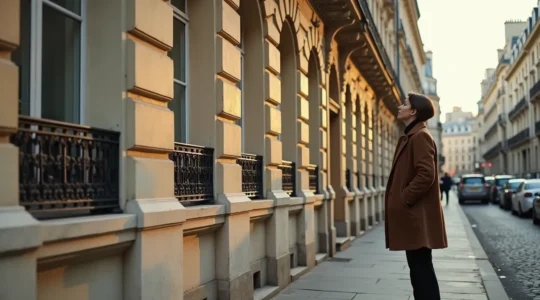
How to “Read” a Parisian Building Facade to Know Its Date of Construction?
To truly read a Parisian facade, you must look past broad architectural styles and become a forensic detective of the…
Read more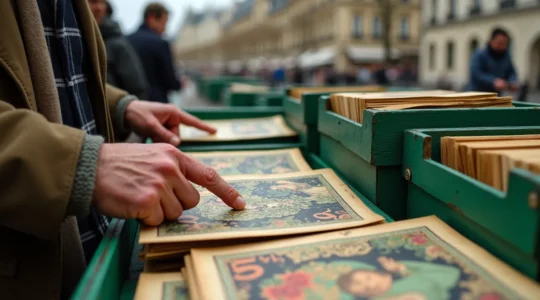
How to Buy a Vintage Poster from a Bouquiniste Without Getting a Reprint?
The real value of a bouquiniste’s poster lies not in its image, but in its paper’s testimony and the story…
Read more
Which Seine Bridge Offers the Most “Cinematic” View for Your Portfolio?
The most cinematic bridge in Paris is not the most famous; it’s the one whose visual grammar you’ve learned to…
Read more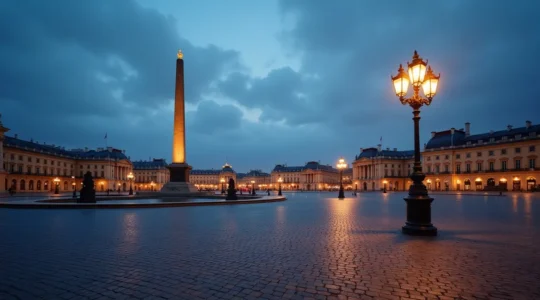
The 3 Bloodiest Squares in Paris: How to Spot the Guillotine Markers?
The true dark history of Paris isn’t in the Catacombs; it’s hiding in plain sight, scarred into the city’s stones,…
Read more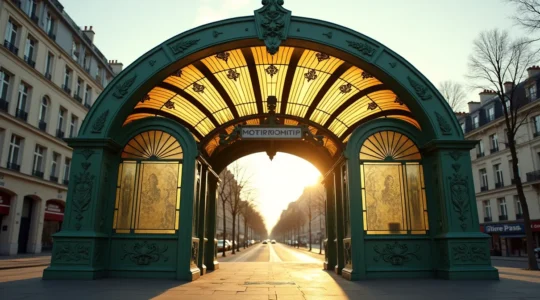
Art Nouveau vs. Art Deco: A Guide to Reading Paris’s Architectural Dialogue
Distinguishing Parisian architectural styles goes far beyond a simple ‘curves vs. lines’ checklist; it’s about learning to read how each…
Read more
How to Create a “Time Travel” Itinerary for Kids in Paris Museums?
In summary: Stop dragging kids through museums. Instead, frame your visits as a chronological “time travel” adventure. Focus on one…
Read more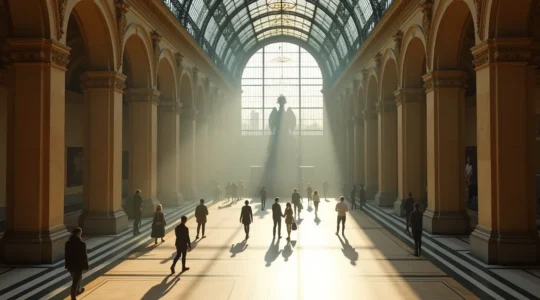
Why Musée d’Orsay Is Often a Better Choice Than the Louvre for a First-Timer’s Unforgettable Visit
Choosing between the Louvre and Orsay isn’t about collection size; it’s about choosing your desired experience: a comprehensive but potentially…
Read more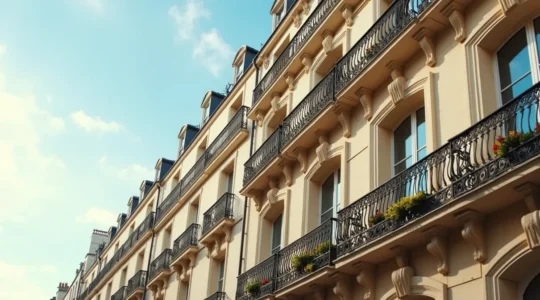
How to Identify a True Haussmannian Building by Looking at the Balconies?
Identifying a true Haussmannian building is less about a simple checklist and more about reading a social story carved in…
Read more