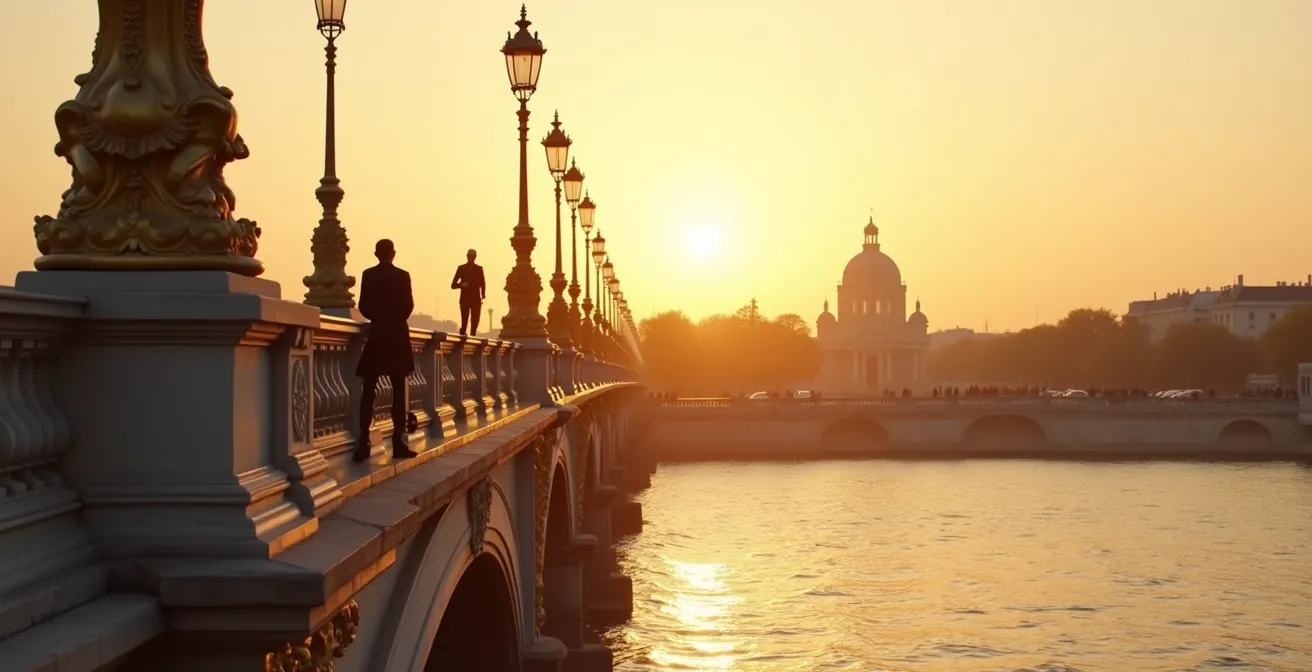
The most cinematic bridge in Paris is not the most famous; it’s the one whose visual grammar you’ve learned to read and direct.
- Light interacts uniquely with each bridge’s stone and orientation, creating distinct moods from sunrise to the blue hour.
- Navigating photography regulations is about discretion and timing, not complex permits for solo artists.
- A truly compelling shot often comes from understanding the narrative potential of a location, from its history to its function.
Recommendation: Master one or two bridges across different light conditions to build a portfolio chapter, rather than just collecting a series of single shots.
Every serious photographer arrives in Paris with a challenge: capturing the city’s soul without recreating a postcard. You see the grand sweep of the Pont Alexandre III, the historic weight of the Pont Neuf, and you feel the pressure to produce something unique. The internet offers the same advice—chase the golden hour, find a unique angle—but this rarely elevates the work from a beautiful snapshot to a truly cinematic image. The advice is generic because it misses the fundamental point.
The key is not to think like a tourist, but like a location scout. A scout doesn’t just look for beauty; they analyze it. They decode the visual grammar of a location, understanding how light will sculpt a form, how architecture can frame a narrative, and how logistical realities will impact the shot. They know that the “best” location is entirely dependent on the story you want to tell. This is not just about finding a pretty view, but about directing a scene where the bridge, the light, and the city are your actors.
This guide abandons the simple listicle format. Instead, we will dissect specific, crucial questions a photographer must ask. We’ll explore the character of light on ancient stone, the legality of your tripod, the narrative power of a statue, and the strategic choice between a high-angle master shot and an intimate river-level perspective. Prepare to move from capturing Paris to composing it.
This article breaks down the essential elements a location scout would consider when planning a shoot on the Seine. The following table of contents will guide you through the key strategic decisions needed to build a cinematic portfolio.
Summary: Decoding the Cinematic Potential of Paris’s Bridges
- Tripods in Paris: Will the Police Stop You on Pont Alexandre III?
- Sunrise vs Sunset: When Does the Stone of Pont Neuf Glow Best?
- Boat Deck vs Riverbank: Which Angle Reveals the Grand Palais Best?
- The Zouave at Pont de l’Alma: How to Read the River’s History?
- Why Are All the Buildings on Île Saint-Louis the Same Height?
- Which Bridge Offers the Best Light Show View of the Eiffel Tower in Winter?
- The Zouave Statue: How Parisians Check the River Level With One Glance?
- Montparnasse Tower vs Eiffel Tower: Which Deck Offers the Best Value for Money?
Tripods in Paris: Will the Police Stop You on Pont Alexandre III?
The fear of a tap on the shoulder from the Gendarmerie is a common anxiety for photographers wanting to capture long exposures of Paris at night. The truth about tripod use is a classic French mix of official rules and practical realities. For a solo photographer, the situation is far simpler than you might imagine. The primary concern of the authorities is not art, but obstruction and commerce. Large-scale commercial shoots require extensive permitting, but a single photographer is in a different category.
The official regulations are surprisingly accommodating for small-scale work. According to official guidelines for filming in France, there is a clear distinction based on crew size. The key takeaway is that for individual photographers or very small teams, the bureaucratic hurdles are minimal to non-existent. The French government states that for crews of under 10 people, no permit is generally required for shooting in public spaces, provided you are not causing an obstruction. This is the bedrock of your freedom to shoot.
However, the “obstruction” clause is where on-the-ground etiquette becomes paramount. Pont Alexandre III at sunset is a river of people. Setting up a tripod in the middle of the walkway is a surefire way to attract negative attention. The location scout’s approach is one of discretion and spatial awareness. You must master the logistical choreography of the shot: be small, be quick, and be respectful. Your goal is to be perceived as an artist capturing a moment, not a professional crew blocking public access. A smile and a willingness to move quickly go further than any permit in your pocket.
Sunrise vs Sunset: When Does the Stone of Pont Neuf Glow Best?
Photography 101 dictates the “golden hour” as the ultimate time to shoot. But in Paris, a city built from a specific, luminous limestone, the question is more nuanced. The famous Lutetian limestone, which forms the core of historic buildings and bridges like the Pont Neuf, has a unique relationship with light. It doesn’t just reflect it; it seems to absorb it and glow from within. Understanding this “character of light” is essential to deciding when to set your alarm.
Sunrise offers a quality of light that is sharp, clean, and often solitary. The first rays of sun striking the eastern faces of the Pont Neuf’s mascarons (the carved grotesque faces decorating the bridge) create a spectacular, high-contrast scene. The low angle of the morning sun rakes across the stone, revealing every detail of its centuries-old patina. This is the time for textural, detailed shots where the stone itself is the subject.
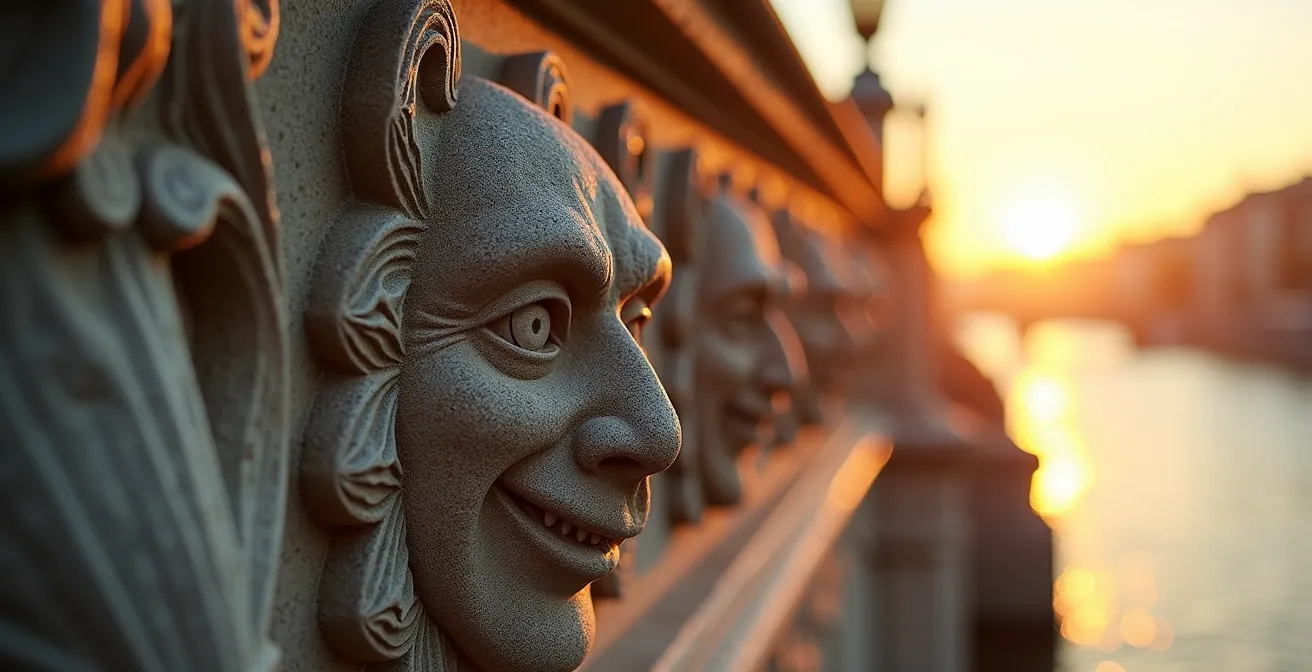
Sunset, by contrast, offers a warmer, softer, and more atmospheric light. The stone, having absorbed the heat of the day, seems to radiate a deeper, creamier hue. However, the real magic for many photographers happens just after the sun has dipped below the horizon. As one photographer noted in a log of their evening shoot, it’s when the sun goes down and the city lights turn on that the photo opportunities truly improve. The “blue hour” provides a perfect balance, with the warm, artificial light of the streetlamps playing against the cool, deep blue of the twilight sky, all reflected in the gentle movement of the Seine. This is the time for narrative, for mood, and for placing the bridge within the context of a living city.
Boat Deck vs Riverbank: Which Angle Reveals the Grand Palais Best?
The classic view of the Grand Palais is framed by the ornate sculptures of the Pont Alexandre III, shot from the riverbank. It’s a magnificent composition, but it is also one of the most photographed scenes in Paris. To create a portfolio with a distinct vision, you must consider altering your fundamental point of view. Moving your camera from the solid ground of the quai to the moving deck of a boat fundamentally changes the visual grammar of the shot, offering both opportunities and challenges.
Shooting from the riverbank provides stability, control, and the ability to use a tripod for long exposures. You can carefully compose your shot, waiting for the perfect light or moment. However, your angle is fixed and shared by thousands. A boat deck, on the other hand, forces a dynamic and fluid approach. It unlocks perspectives that are physically impossible from the shore, allowing you to create compositions where the arches of bridges form dramatic, curving frames. As noted by the experts at Private Seine River Cruise, this shift in perspective is transformative. They observe that from the water, “the arches of the bridge curve gracefully over the Seine,” creating an entirely new dynamic.
From the water, the perspective shifts: the arches of the bridge curve gracefully over the Seine, while the reflections of the gold in the river offer a perfect Instagram photo opportunity. Whether during the day or at night when the lights glitter across the water, this spot is a must-capture.
– Private Seine River Cruise Blog, Best Photo Spots in Paris from the Water
Choosing the right vessel is a key part of the location scout’s job. Not all boat services are created equal for a photographer. You need to weigh the stability of a large deck against the intimacy of a smaller boat that gets you closer to the water line. A hop-on-hop-off service might offer variety, but a dedicated cruise provides more time to shoot. A scout’s analysis looks like this:
| Service | Best Features | Photography Advantages |
|---|---|---|
| Bateaux Mouches | Large open deck | Stable platform, unobstructed views |
| Vedettes du Pont Neuf | Smaller boats, closer to water | Lower angle for dramatic bridge shots |
| Batobus | Hop-on service | Multiple stopping points for varied angles |
The Zouave at Pont de l’Alma: How to Read the River’s History?
Some photographic subjects are more than just stone and form; they are characters laden with narrative. The Zouave statue at the Pont de l’Alma is one such character. Tucked beneath the roadway, this stone soldier is a powerful piece of visual storytelling for any photographer looking to capture a deeper, more resonant image of Paris. To photograph him is not just to document a sculpture, but to engage with the city’s living history and its intimate, often fraught, relationship with the Seine.
Carved for the original bridge in 1856, the Zouave is a veteran of the Crimean War, and he has stood as a silent witness to over 160 years of Parisian life. He has seen floods, celebrations, and the daily passage of time. His weathered face and stoic posture carry a narrative weight that a more ornate or gilded statue lacks. He represents resilience and memory. A location scout sees this and knows that the right lighting and composition can turn a picture of a statue into a portrait of the city’s soul.
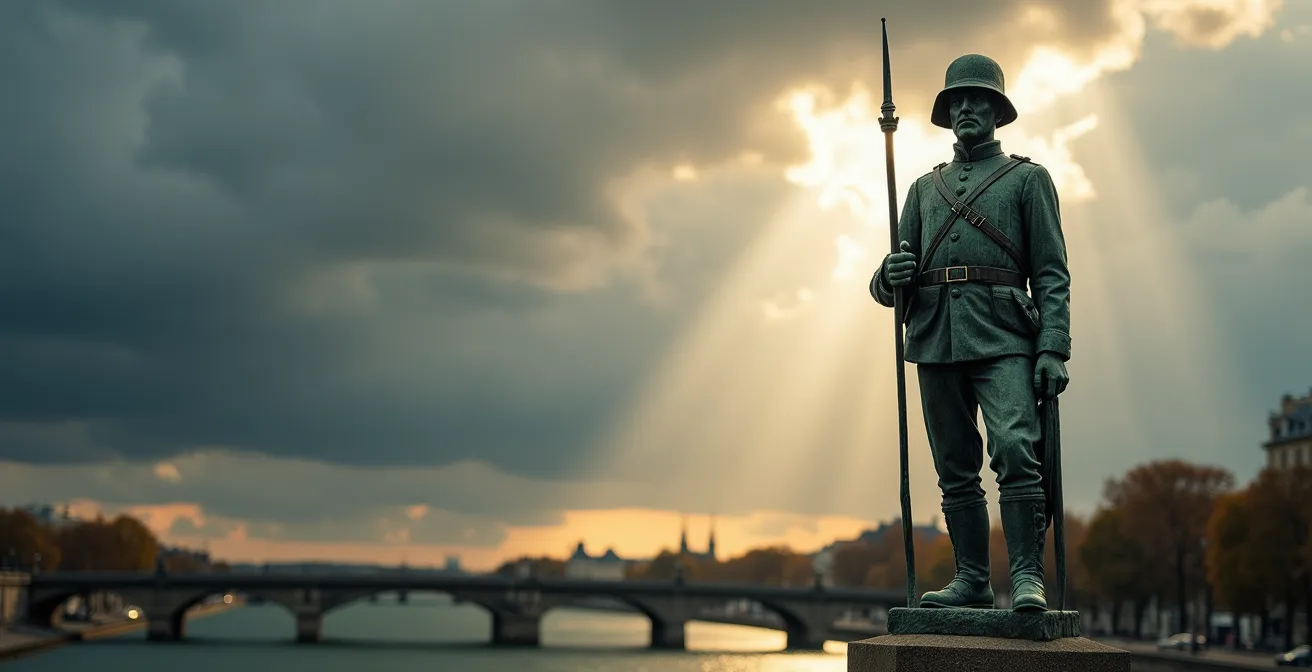
The photographic challenge is to capture this narrative potential. This isn’t a subject for bright, sunny days. The Zouave comes to life under dramatic skies, in the moody light of dawn, or when the river is high and turbulent. A low-angle shot that places his silhouette against a stormy sky emphasizes his role as a sentinel. A telephoto lens can isolate his features, creating an intimate portrait that feels personal and timeless. By focusing on the Zouave, you are consciously turning away from the grand, sweeping vistas and choosing to tell a smaller, more profound story—a key technique for building a portfolio that demonstrates depth and sensitivity.
Why Are All the Buildings on Île Saint-Louis the Same Height?
A photographer’s eye is trained to see patterns, and one of the most striking patterns in central Paris is the uniform roofline of the Île Saint-Louis. As you look from the bridges that connect it to the mainland, like Pont de la Tournelle or Pont Marie, you see a harmonious, unbroken line of facades. This is not a happy accident; it is the result of one of the earliest and most successful examples of urban planning, dating back to the 17th century. Understanding this history provides a powerful narrative for your images.
The island’s development was masterminded under King Louis XIII, who, along with developers, laid out a strict architectural code. The goal was to create an elegant and unified aristocratic enclave. This included regulations on the height of buildings, the materials used, and the style of the facades. The result is a perfectly preserved architectural set piece, a living museum of classical French style. For a photographer, this uniformity is a gift. It allows you to focus on rhythm, shadow, and reflection. The repetition of the windows and the consistent height of the buildings create a canvas for the changing light.
Capturing this architectural harmony requires a specific plan. You are not shooting a single building, but a collective form. Your position on the surrounding bridges and quays is critical to revealing the island’s unique character. A location scout would create a precise checklist to explore the island’s photographic potential.
Your Action Plan: Capturing Île Saint-Louis’s Architectural Unity
- Vantage Point Scouting: Shoot from Pont de la Tournelle for eastern facade views at sunrise, and use Pont Marie for the western perspective in the warm afternoon light.
- Profile Shot: Capture the complete island profile from the wider Pont de Sully to show the full extent of the uniform design.
- Low Angle Drama: Position yourself at quay level (Quai de Bourbon or Quai d’Anjou) for dramatic upward angles that emphasize the unbroken line of the facades against the sky.
- Shadow Play: Plan a shoot in the late afternoon when the low sun creates long, rhythmic shadow patterns across the uniform buildings, adding depth and texture.
- Reflection Study: On a calm day, focus on the reflections of the unified architecture in the Seine from a low vantage point on the quays or a nearby bridge.
Which Bridge Offers the Best Light Show View of the Eiffel Tower in Winter?
Photographing the Eiffel Tower’s nightly sparkle is a rite of passage, but doing it in winter adds a layer of complexity and opportunity. The crowds are thinner, the air is often clearer, and the bare trees create cleaner sightlines. The challenge is finding a location that is not only well-positioned but also offers some shelter from the biting wind. For a location scout, the choice of bridge is a strategic calculation of angle, comfort, and compositional elements.
While many bridges offer a glimpse of the tower, a few stand out for their superior visual grammar and practical advantages in colder months. The Pont de Bir-Hakeim is a perennial favorite for good reason. Its double-decker structure provides not only physical shelter on the lower level but also a wealth of framing opportunities. The industrial steelwork, rivets, and arches create powerful leading lines that guide the viewer’s eye directly to the sparkling tower. As photography blog Discover Over There points out, the bridge has a hidden advantage: “the upper level is a viaduct carrying metro line 6 (which is also another amazing place to record cinematic videos from the metro).” This tip unlocks another layer of creative potential.
The Passerelle Debilly, a pedestrian-only footbridge, offers a more centered, tranquil view without the distraction of traffic. Its graceful arch can be used as a foreground element, and its reduced foot traffic in winter makes it a more peaceful spot for setting up a shot. Pont d’Iéna, being the closest, is all about dramatic, low-angle power shots, but offers little protection from the elements. A scout’s job is to break down these options into a clear, comparative choice for the photographer.
Here is a breakdown of the top contenders for a winter shoot, considering the factors that matter most to a photographer on the ground:
| Bridge | Distance to Tower | Best Feature | Winter Advantage |
|---|---|---|---|
| Pont de Bir-Hakeim | Close | Dramatic metal structure framing | Protected from wind, multiple levels |
| Passerelle Debilly | Medium | Pedestrian-only, centered view | Less crowded in winter |
| Pont d’Iéna | Very close | Low-angle dramatic shots | Quick access from metro |
The Zouave Statue: How Parisians Check the River Level With One Glance?
While the Zouave statue on the Pont de l’Alma is a historical figure, he also serves a deeply practical, modern function. For generations of Parisians, he is the city’s most iconic and easily understood flood gauge. Long before digital readouts and official websites, a simple glance towards the Zouave told residents everything they needed to know about the mood of the Seine. For a photographer, understanding this public secret adds a powerful layer of context to any shot of the statue.
The system is simple, visual, and has been tested by time. The statue’s position relative to the water acts as a natural measuring stick. When the river is at its normal level, the water barely laps at the stone base, leaving the Zouave’s feet dry. This is the baseline, indicating all is well. As the waters rise, the statue begins to “wade.” When the Seine reaches the Zouave’s knees, it’s a sign that the riverbank paths are likely flooded and boat services may be suspended. This is the first level of real alert for the city.
If the water climbs to his thighs, it signifies a major flood event. The lower roads along the Seine (the voies sur berge) would be closed to traffic, and the city would be on high alert. The ultimate, almost mythical measurement, is the level of the great flood of 1910, when the water reached the Zouave’s shoulders. Any image captured with the water at his knees or higher is not just a photograph, but a historical document of a significant river event. While the official Vigicrues system provides scientific measurements, the visual reference of the Zouave remains the people’s gauge. The statue’s role as a silent guardian is further complicated by its proximity to the site of Princess Diana’s fatal crash, adding another layer of somber memory to this specific location on the river.
Key Takeaways
- Scout Without Gear: The most crucial work is done before the camera comes out. Walk the location, observe the light, and understand the flow of people at different times of day.
- Master a Single Bridge: Instead of rushing to ten locations, choose one bridge and shoot it at sunrise, sunset, night, and in different weather. This deep dive will yield a far more compelling portfolio chapter.
- Plan for Elevation: A cinematic story requires both intimate close-ups and grand establishing shots. For every ground-level shot plan, consider where you could get a high-angle perspective to complete the narrative.
Montparnasse Tower vs Eiffel Tower: Which Deck Offers the Best Value for Money?
After mastering the intimate, ground-level perspectives from the Seine’s bridges, the final piece of a cinematic portfolio is often the grand establishing shot. An aerial viewpoint provides context, scale, and a breathtaking panorama of the city’s layout. In Paris, two main options dominate this conversation: the iconic Eiffel Tower and the often-overlooked Montparnasse Tower. For a serious photographer, the choice is not about which is more famous, but which offers the best compositional value and logistical freedom.
The Eiffel Tower offers the thrill of shooting *from* the icon itself. The views are undeniably spectacular, providing a bird’s-eye perspective on the Champ de Mars and the bridges immediately below. However, it has two significant drawbacks for a portfolio-focused photographer. First, the most important element of the Parisian skyline—the Eiffel Tower itself—is absent from your shot. Second, security is tight, and tripod use is highly restrictive, making low-light or long-exposure work nearly impossible. It provides an experience, but not necessarily the best photograph.
The Montparnasse Tower, on the other hand, is the location scout’s strategic choice. Its primary advantage is that it offers the quintessential Parisian skyline shot *including* the Eiffel Tower. As one photographer on a professional forum astutely noted, “The Montparnasse Tower offers the quintessential Parisian skyline shot with the Eiffel Tower, which is often more desirable for a portfolio.” Furthermore, its observation deck is more accommodating to serious photographers, with a more lenient policy on tripods and more space to set up a shot, especially on its open-air top floor.
The decision comes down to a clear trade-off between the experience and the final image. A professional scout, tasked with getting the best possible city-scape for a film or portfolio, will almost always choose the location that provides the most powerful and compositionally complete image.
| Tower | Tripod Policy | Key Advantage | Best for Bridges |
|---|---|---|---|
| Montparnasse Tower | More lenient | Can include Eiffel Tower in skyline shots | Full Seine curve visible |
| Eiffel Tower | Restrictive | Iconic ‘from within’ perspective | Bird’s eye view of nearby bridges |
| Galeries Lafayette (Free) | No tripods | No entry fee, central location | Limited Seine views |
By applying this location scout’s mindset—analyzing light, narrative, and logistics—you can move beyond the expected and create a portfolio of Parisian bridge photography that is truly your own. Start by choosing a single bridge and make it your mission to understand its character from every angle and in every light.