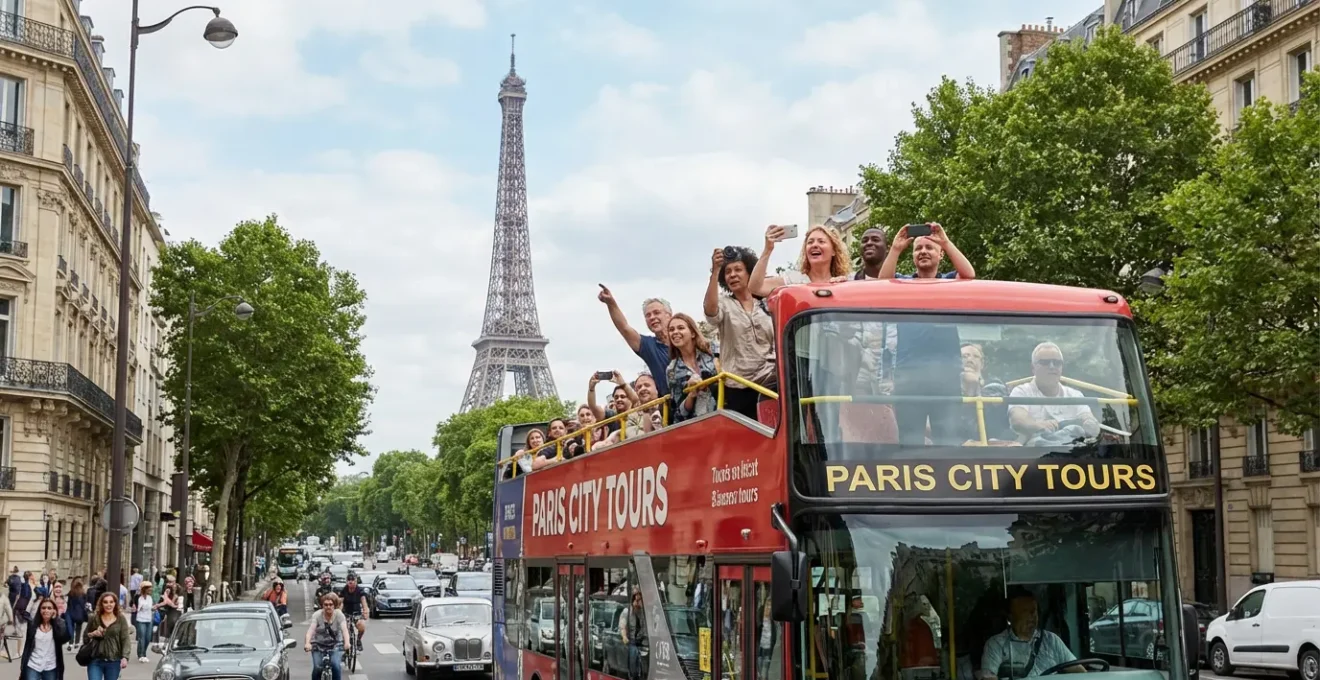
- Hop-on hop-off buses cover 10 major stops in roughly 2 hours 15 minutes
- A 2-day pass works best for first-timers with 3-4 days in Paris
- Start at Opera around 9:30am to avoid the Eiffel Tower crowds
- Audio commentary available in 11 languages, including a kids channel
Why hopping on and off beats walking yourself ragged
I remember advising a family from London last spring—Emily and her partner wanted to see everything: the Eiffel Tower, Notre-Dame, Champs-Élysées, Arc de Triomphe, the Louvre. They had three days. My first question was simple: how much do you actually enjoy walking? Because here’s what nobody tells you. The distance from the Louvre to the Eiffel Tower is about 4 kilometres. That sounds manageable until you factor in museum fatigue, cobblestones, getting slightly lost near the Seine, and the sudden need for a coffee break.
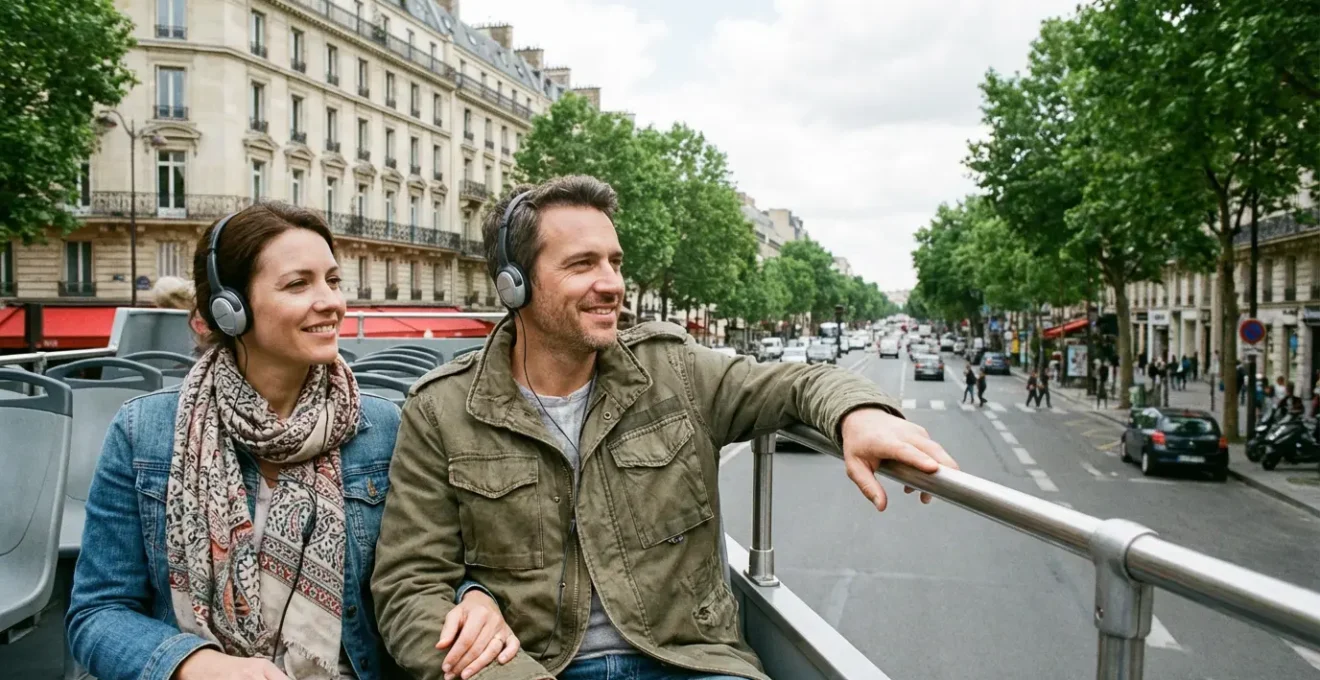
A double-decker sightseeing bus changes the equation entirely. You sit on the open top deck, plug in your headphones, and the city comes to you. When something catches your eye—maybe the Gothic spires of Notre-Dame or a café terrace that looks perfect—you hop off. Spend an hour. Grab lunch. Then catch the next bus and continue. According to route information from Paris Pass, buses run approximately every 15-20 minutes, so you’re never stuck waiting long.
The real advantage isn’t just comfort. It’s seeing how Paris connects. From the upper deck, you notice that the Champs-Élysées really does create a perfect sightline to the Arc de Triomphe. You catch architectural details you’d miss at street level. And frankly, after exploring the Louvre for three hours, collapsing into a bus seat while someone narrates the history of the Opera Garnier feels like a gift. If you’re combining this with walking tours of specific neighbourhoods, you might find my strategic guide to top monuments useful for planning which stops deserve more time on foot.
2h 15min
to complete a full loop without hopping off
The Paris Discovery route: your landmarks at a glance
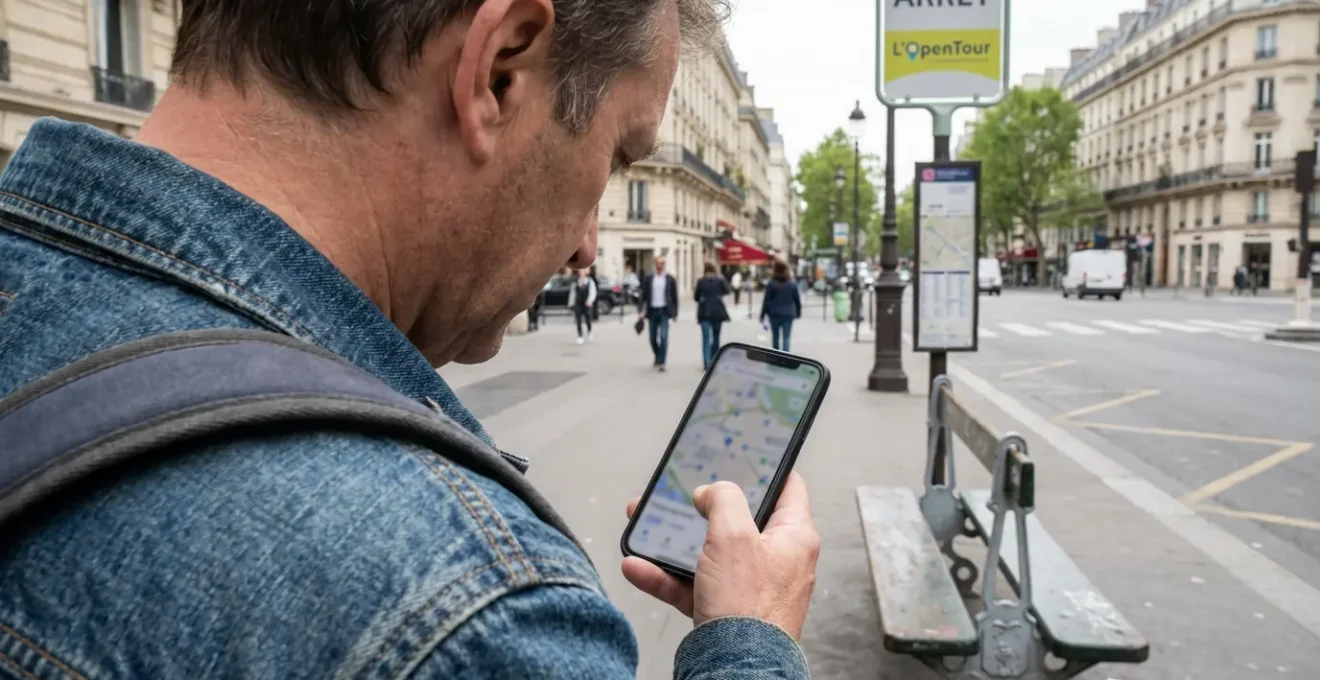
The main sightseeing route covers 10 stops at Paris’s most photographed locations. According to 2025 Paris hop-on hop-off schedules, the first bus departs at 9:30am and the last at 5:00pm. That gives you a solid eight-hour window to work with. If you’re booking through Hop-On Hop-Off Paris Sightseeing, you’ll have access to unlimited boarding throughout your ticket validity, plus the app for tracking where buses are in real time.
-
Start at Opera Garnier – quieter boarding, scenic architecture -
Hop off at Louvre area – photograph the pyramid, browse the courtyard -
Notre-Dame vicinity – see the restoration progress, walk the Île de la Cité -
Champs-Élysées – lunch break, window shopping, people watching -
Arc de Triomphe – climb for panoramic views if energy permits -
Eiffel Tower – arrive for golden hour, smaller crowds
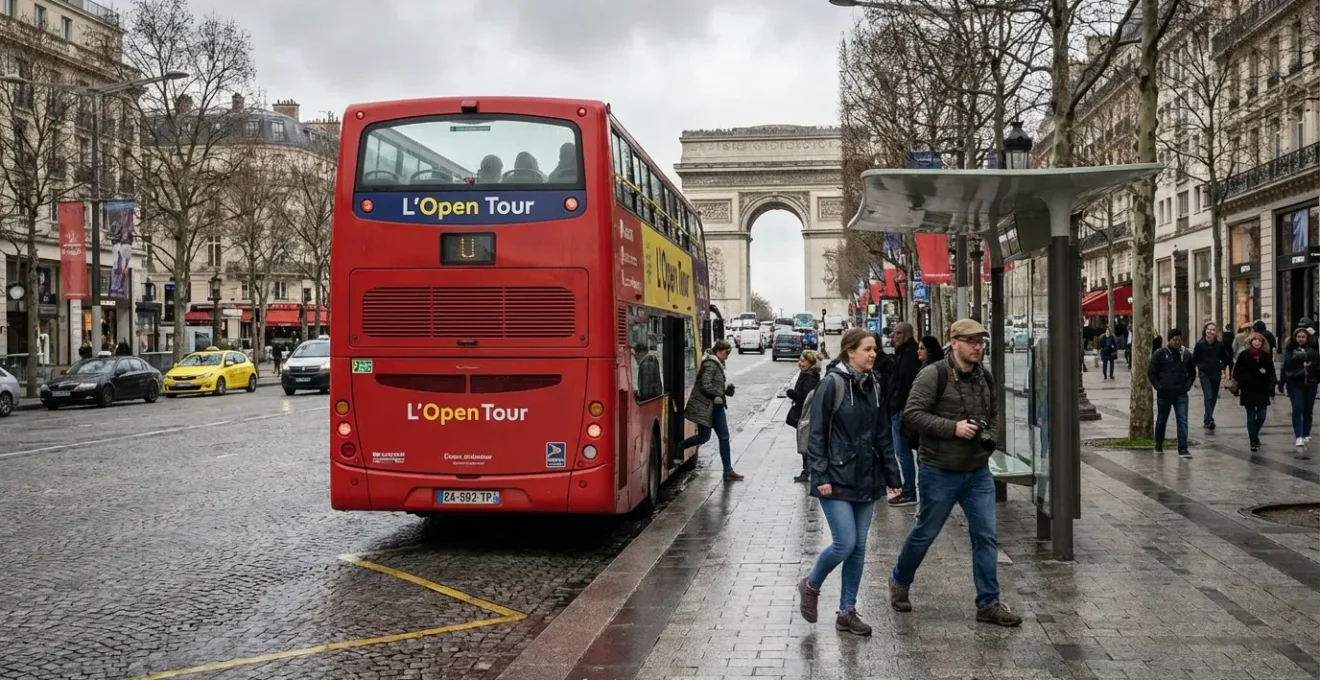
Timing tip from experience: From guiding visitors around Paris, I’ve noticed that starting near the Eiffel Tower during morning rush typically means waiting 30-45 minutes for a seat with a decent view. Start at Opera or Madeleine instead—the buses arrive emptier, and you’ll reach the tower by afternoon when the light is better for photos anyway.
1, 2 or 3 days: which ticket actually makes sense
This is where most people overthink things. According to current price comparisons for Paris bus tours, a full-feature ticket with included Seine river cruise runs around €59-62 depending on the operator. That’s not cheap. So let me be direct about what I recommend to visitors.
| Duration | Best for | Price value | My take |
|---|---|---|---|
| 1-day pass | Weekend visitors, 1-2 days in Paris | Decent if you don’t hop off much | Only if you’re pressed for time |
| 2-day pass | First-timers with 3-4 days in Paris | Best value per hour of use | My usual recommendation |
| 3-day pass | Slow travellers, families with kids | Worth it if you use all three days | Great for rainy-day flexibility |
I accompanied Sarah last year—a teacher from the States travelling with two teenagers. Three days in Paris, first family trip to Europe. They were terrified of exhausting the kids. We went with the 2-day pass, and here’s what happened: day one they did the full loop once just to orient themselves, hopping off only at Notre-Dame. Day two they were strategic—Louvre in the morning, bus to Champs-Élysées for lunch, then the Eiffel Tower for sunset. They covered twelve Paris landmarks comfortably, and the kids stayed engaged with the dedicated children’s audio channel.
Which ticket should you book?
- If you have 1-2 days in Paris:
Go with the 1-day pass. You’ll do one or two loops maximum, so paying for extra days makes no sense.
- If you have 3-4 days in Paris:
The 2-day pass is your sweet spot. Use day one for orientation, day two for deeper exploration.
- If you have 5+ days or travel with young children:
Consider the 3-day pass for flexibility. Kids get tired unpredictably, and having that extra day as backup removes stress.
When hop-on hop-off isn’t the answer: If you’re in Paris for just one specific landmark—say, you only care about the Louvre—don’t buy a bus pass. Take the metro directly. And on genuinely rainy days, the open-top experience loses its charm quickly. Check the forecast before booking.
Your questions about Paris hop-on hop-off buses
After years of advising visitors, certain questions come up again and again. Here’s what people actually want to know before committing to a ticket.
What happens if it rains during my pass validity?
Honestly, a light drizzle with an umbrella is fine—you’re on the move, and Paris looks atmospheric in the rain. Heavy downpours are miserable though. Multi-day passes help here because you can simply wait for better weather and use the bus tomorrow instead.
Will children stay engaged or get bored?
Most operators offer a dedicated kids audio channel with storytelling rather than dry historical facts. The movement helps too—children generally tolerate buses better than walking. That said, plan your hops strategically. Kids need ice cream breaks.
Is the bus worth the price compared to the metro?
The metro gets you places faster but underground. You see nothing. The sightseeing bus is slower but it IS the experience—panoramic views, commentary in 11 languages, and no navigating confusing station transfers. For first-time visitors, I think the difference justifies the cost.
How crowded do the buses get?
Peak times are 10am-12pm at Eiffel Tower and Louvre stops. Start elsewhere in the morning—Opera, Madeleine, or Champs-Élysées—and you’ll find seats easily. Late afternoon also tends to be calmer as day-trippers head back to their hotels.
Can I change my plans after booking?
Policies vary, but most operators allow amendments or cancellations up to 24 hours before your selected date. Always check the specific terms when booking—flexibility policies have improved since the pandemic.
The next step for you: Paris rewards visitors who pace themselves. Whether you choose a 1-day quick overview or a leisurely 2-day exploration, the hop-on hop-off bus removes the mental load of figuring out how to get everywhere. You just show up, climb aboard, and let the city unfold. The only decision left is where to hop off first—and honestly, anywhere along that route will give you something worth photographing.