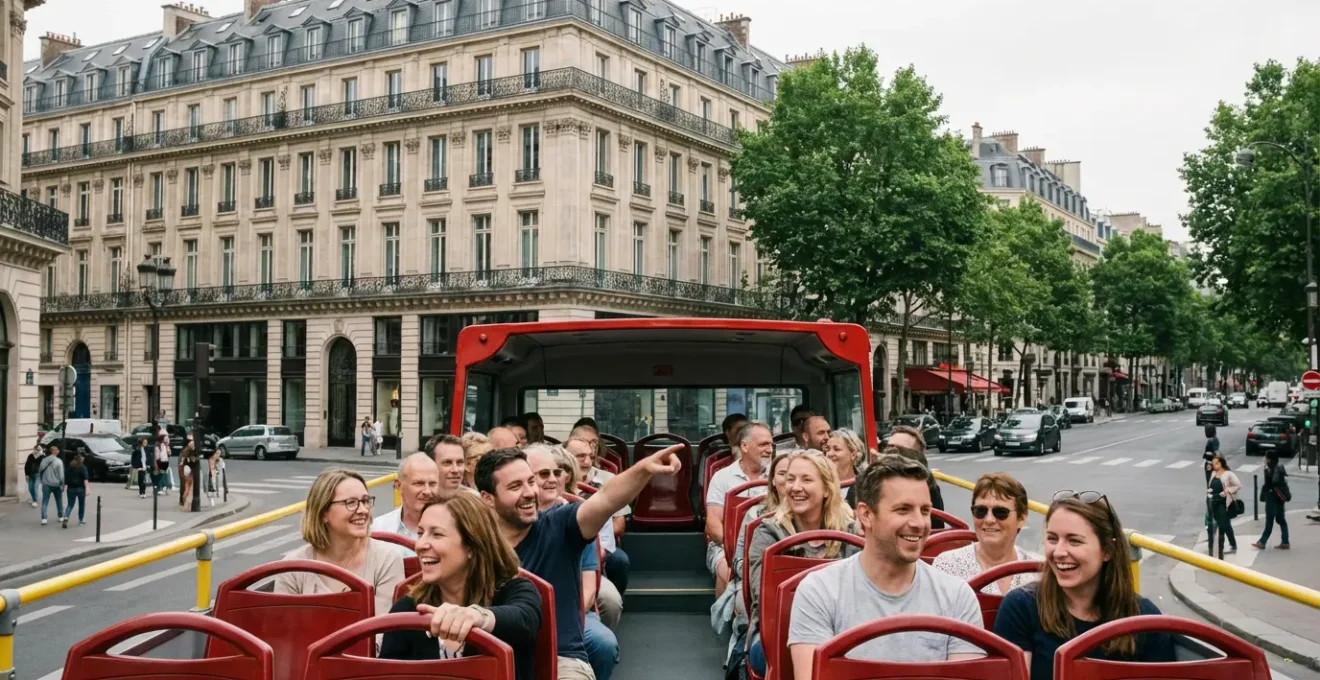
The bus tour advantage in 30 seconds
- Cover 10+ major landmarks in a single day without exhaustion
- Hop off anywhere, explore at your pace, reboard when ready
- Audio commentary in 9+ languages means no guide dependency
- Wheelchair and pushchair accessible on most modern fleets
What you will discover
The real problem with exploring Paris on foot
I met the Hendersons last summer. A British family of four, three days in Paris, ambitious plans. Day one, they attempted the classic tourist march: Eiffel Tower, then walk to the Champs-Élysées, push through to the Louvre, finish at Notre-Dame. By 2pm, the teenagers were mutinous. Mum had blisters. Dad was calculating taxi costs.
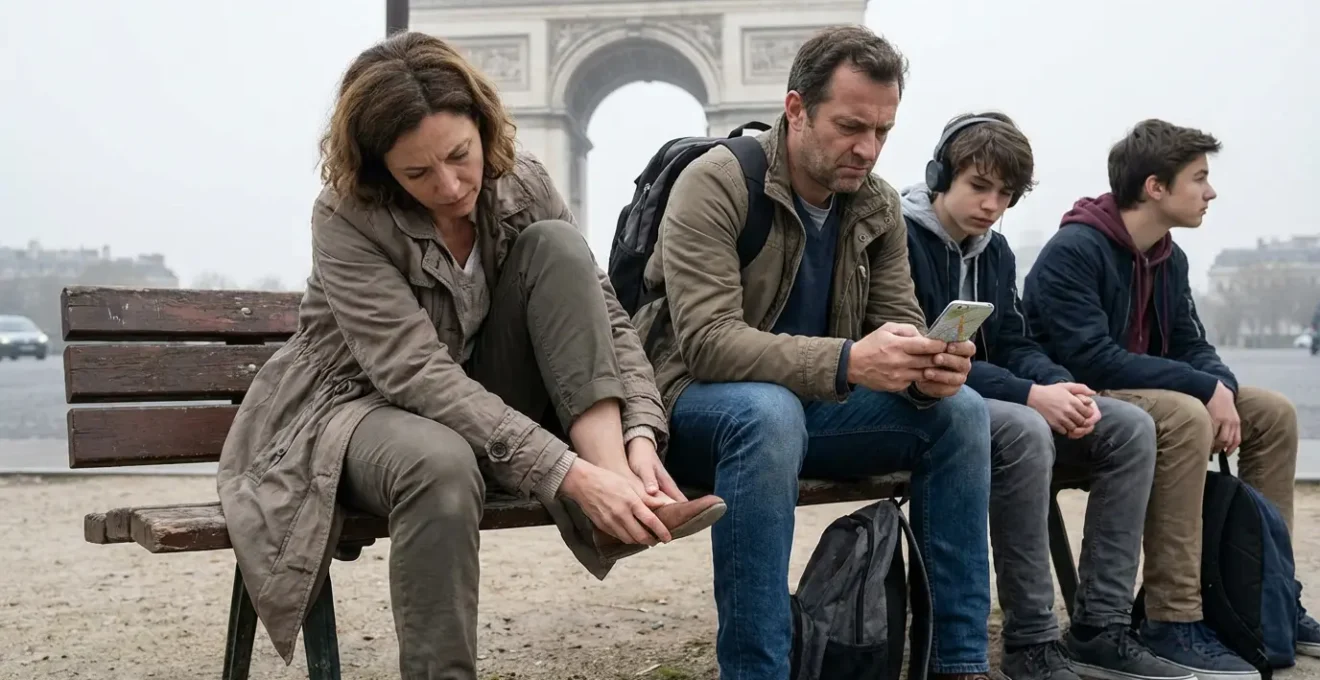
The mistake I encounter most often? Tourists underestimate Paris distances. Major landmarks are scattered across a city that welcomed 48.7 million visitors in 2024. That is not a walkable village. That is a metropolis where the gap between must-see sites can swallow your morning.
Here is what happened next with the Hendersons. Day two, they bought hop-on hop-off passes. Same energy levels at 5pm as at 9am. They covered twice the ground. The grandmother who joined them—limited mobility—actually participated instead of waiting on benches.
The walking tour fantasy versus reality: romantic in theory, punishing in practice. Especially with children. Especially in August heat. Especially when you only have 48 hours.
Five advantages that make bus tours worth every euro
Forget the tourist trap reputation. Modern sightseeing buses have evolved. Operators like Tootbus now run 100% clean energy fleets, according to the Paris Tourist Office. This is not your grandfather’s diesel coach crawling through traffic.
According to the Paris Tourist Office, buses circulate every 10 to 15 minutes on main routes. That frequency changes everything. No rigid schedule. No rushing to meet a group. You control the pace.
9+ languages
Audio commentary options on modern Paris tour buses
The five genuine advantages from what I have seen with visitors:
- Efficiency without exhaustion: Cover the Arc de Triomphe to Montmartre stretch in comfort. Save your energy for actually exploring each stop.
- Elevated photography: Open-top decks offer angles impossible from street level. The Eiffel Tower framed against the skyline. Notre-Dame from across the river. These shots require height.
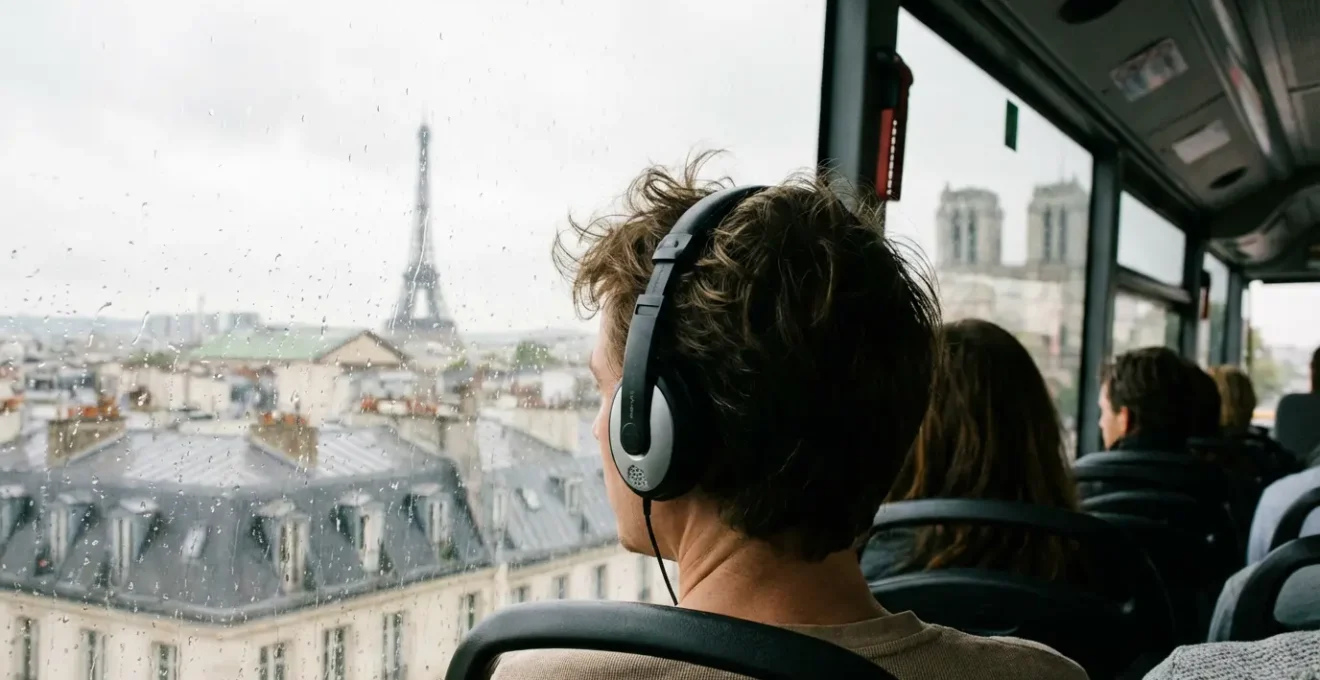
- Real-time orientation: Audio guides contextualise what you see. That building is not just pretty—it is where Coco Chanel lived. That bridge is not random—it is where lovers once locked padlocks before the weight threatened collapse.
- Accessibility that actually works: Wheelchair and pushchair access on most modern buses. Elderly relatives participate fully instead of being parked on benches.
- Weather insurance: Rain forecast? Sit downstairs. Sunshine breaks through? Climb up. Flexibility built into the experience.
The timing trick most tourists miss: Board before 10am at less popular stops. Most visitors start at the Eiffel Tower, creating morning crushes. Begin at Opera or Champs-Élysées instead. You will often have upper deck seats to yourself.
Pricing sits around €39 for adults according to current operator rates. Compare that to taxi costs between landmarks—roughly €15-20 per trip—and the maths favours the pass after just two journeys.
The Plus
-
Maximum landmarks covered with minimum fatigue
-
Perfect for mixed-ability groups including elderly or children
-
Orientation tool for first-time visitors navigating unfamiliar city
-
Flexible scheduling with frequent departures
The Minus
-
Traffic delays unpredictable during rush hours
-
Cannot access narrow neighbourhood streets
-
Upper deck uncomfortable in rain or extreme cold
When a bus tour might not be your best choice
Soyons clairs: bus tours are not for everyone. If you have five days and good knees, walking certain arrondissements delivers experiences buses cannot replicate. The Marais alleyways. Hidden courtyards in Saint-Germain. That perfect café terrace down a cobbled passage.

When to skip the bus: Repeat visitors focusing on single neighbourhoods. Solo travellers seeking local immersion over landmark efficiency. Anyone with a week or more to explore gradually.
For those who prefer walking but worry about mobility or endurance, there are adapted approaches. Our guide to Paris museums with knee pain offers strategies for pacing yourself between sites.
My honest recommendation: use the bus as your first-day orientation tool. Get the lay of the land. Spot the areas that intrigue you. Then spend subsequent days exploring those specific neighbourhoods on foot.
Your questions about Paris sightseeing buses
Are Paris bus tours actually wheelchair accessible?
Most modern sightseeing buses accommodate wheelchairs and pushchairs. That said, I always recommend confirming specific provisions when booking. Accessibility standards vary between operators and individual vehicles.
How often do the buses run?
Expect departures every 10 to 15 minutes on main routes during peak season. Frequency drops slightly in winter or on less popular circuits. Check your specific route schedule before planning tight connections.
Can I complete the full route in one day?
The full circuit without hopping off takes roughly two hours. To complete it while actually exploring stops, most operators suggest boarding before 5:30pm. A two-day pass gives breathing room if you want to linger at each landmark.
What happens if it rains?
Lower decks are enclosed. Less scenic, but dry. Frankly, I have seen tourists stubbornly stay on top with umbrellas—Paris drizzle rarely stops determined sightseers. Your call.
Which pass duration offers best value?
For most first-time visitors with three to four days total in Paris, a 48-hour pass hits the sweet spot. One day feels rushed. Three days often goes unused. But families with young children might prefer the single-day option to avoid meltdown fatigue.
Your next step before boarding
Before you book your Paris bus pass
-
Check your accommodation location against the route map—some hotels sit far from stops
-
Download the operator app before arrival for live bus tracking
-
If travelling with reduced mobility, call ahead to confirm accessibility on your chosen route
The Hendersons sent me a photo last month. Three generations grinning from the upper deck, Notre-Dame rising behind them. Not a blister in sight. Sometimes the tourist approach works precisely because millions of tourists figured it out before you.