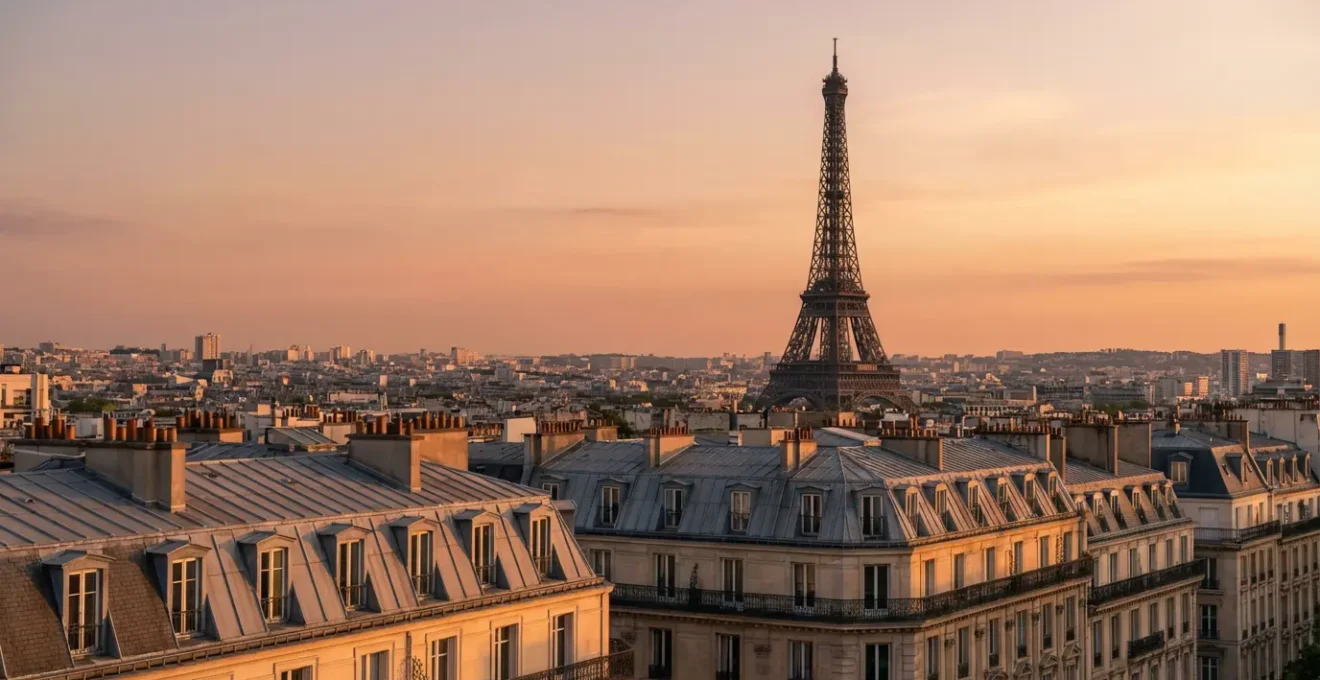
The sky turns pink. Then orange. Then that deep, almost violet shade that makes you catch your breath. I remember the first time I took this tour—sitting on the upper deck somewhere near Place de la Concorde, watching the Eiffel Tower catch the last rays of sunlight. Pure magic. Two hours later, that same tower was sparkling against a midnight-blue sky, and I understood why people call Paris the City of Light. This is what a night bus tour during golden hour offers: the entire transformation, from warm daylight to glittering darkness, unfolding before you as you glide through the city’s most beautiful boulevards.
The night tour in 30 seconds:
- Two-hour non-stop route through illuminated Paris
- Ten major landmarks from Opéra to Moulin Rouge
- Departs Place du Carrousel daily around sunset
- Audio guide included in multiple languages
- Free cancellation up to 24 hours before departure
When the light turns Paris into a film set
Photographers call it golden hour. That window—roughly 30 to 60 minutes before sunset—when natural light takes on a warm, golden colour that makes everything look cinematic. In December, this happens around 4pm. In June, you are looking at 9pm or later. The difference matters enormously for booking your tour.
What surprised me the first time was how quickly the light changes. One moment, the Louvre‘s limestone façades glow honey-gold. Ten minutes later, they have shifted to rose. Then lavender. The bus keeps moving, and so does the light show above you. Unlike a walking tour where you might linger too long at one spot, the bus route is timed to catch this progression perfectly.
Compared to a Seine cruise—which lasts about an hour and keeps you at water level—the open-top bus puts you higher up, closer to the rooftops and the sky itself. The mistake I see visitors make most often? Booking a walking tour that ends before dark. You get either the golden hour or the illuminated monuments, but not both. The bus gives you the full arc.
From the Louvre to Moulin Rouge: the route through illuminated Paris
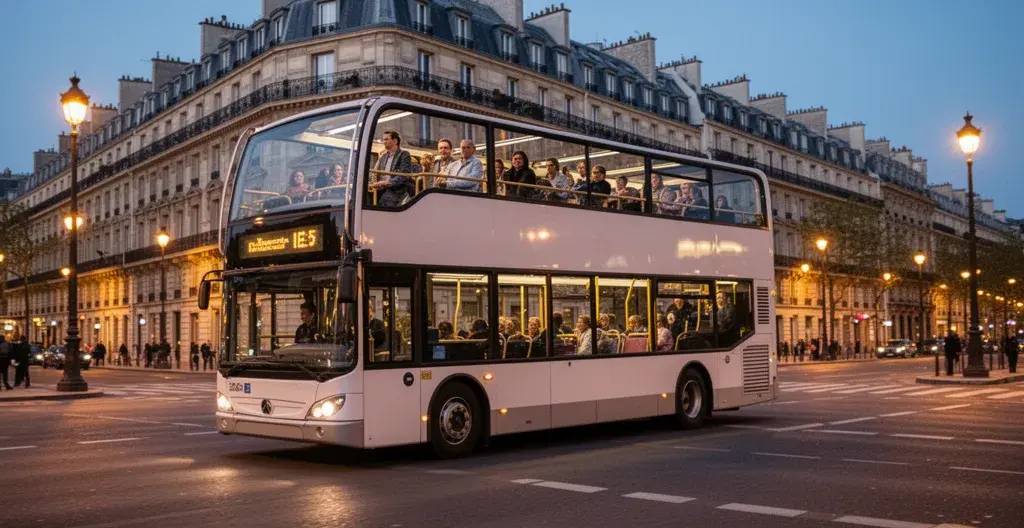
The route begins at Place du Carrousel, steps from the Louvre’s glass pyramid. From my seat on the upper deck, I watched the tour unfold like a carefully choreographed film. You pass through the grand boulevards, swing by Opéra Garnier—its golden statues catching the last sunlight—then cruise down towards Place Vendôme with its glittering jewellery boutiques.
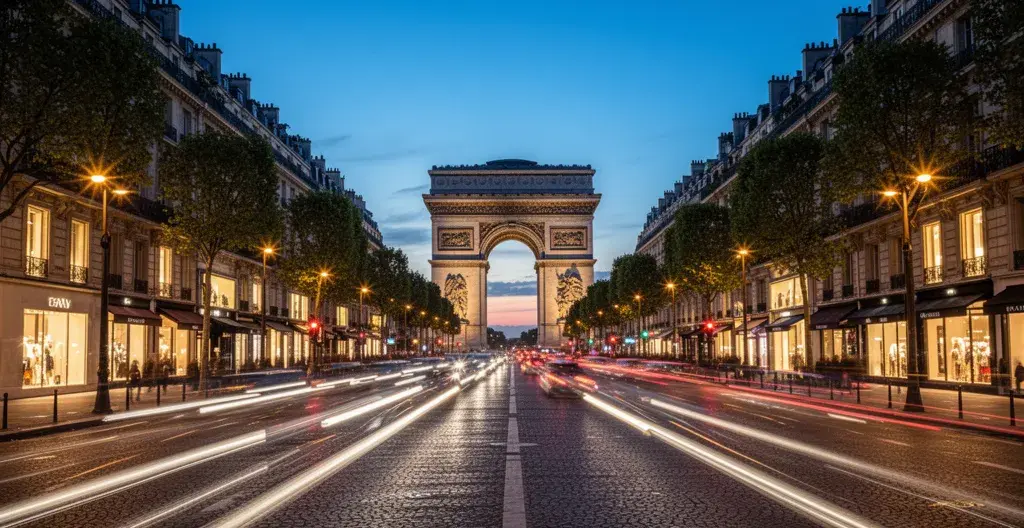
What makes the experience special is how the Paris Night Bus Tour is timed to coincide with the light transition. By the time you reach the Champs-Élysées, the sky has usually shifted from gold to pink. The Arc de Triomphe looms ahead, floodlit and magnificent. Then comes the Trocadéro approach—and that first glimpse of the Eiffel Tower, now fully illuminated.
-
Place du Carrousel – Louvre pyramid glowing in warm afternoon light -
Opéra and Vendôme – golden statues and boutique windows catch the sunset -
Champs-Élysées and Arc de Triomphe – sky turns pink, streetlights flicker on -
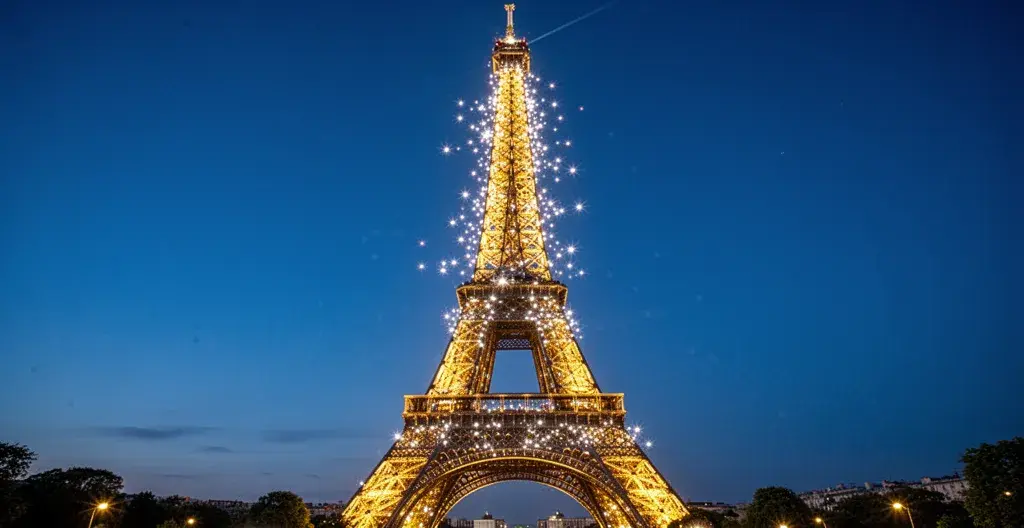
Trocadéro and Eiffel Tower – full illumination and (if timed right) the hourly sparkle -
Moulin Rouge and return – Montmartre’s red windmill glowing against the night
According to the Eiffel Tower’s official website, the tower sparkles every hour for five minutes after nightfall, with the final display at 11pm. Having done this route in every season, I can tell you: catching that sparkle from a moving bus, with the wind in your hair and the city lights all around you, is genuinely unforgettable.
Choosing your seat and timing: what eight tours taught me
Soyons clairs: where you sit matters. A lot. The tours I have taken reveal a pattern. Front right gives you the clearest sightlines for the Eiffel Tower approach. Front left works better for the Champs-Élysées perspective. Back rows offer more shelter from wind but partially blocked views.
My recommendation? Arrive at Place du Carrousel fifteen minutes early. The keen ones get the front seats. Bring a light jacket even in summer—the upper deck gets breezy once you are moving.
Where I always sit (and why it matters): Front right of the upper deck. This position gives unobstructed views of the Eiffel Tower as you approach from Trocadéro, plus clear angles for the Arc de Triomphe drive-by. If you want photos, this is the spot.
On summer tours I have taken, I noticed many visitors who booked the earliest departure missed the golden hour light entirely because sunset occurs much later in June and July. Golden hour timing data for Paris shows the evening window shifting dramatically—around 4pm in December but past 9pm in midsummer. This is not minor; it changes everything about which departure slot you should choose.
Timing your departure by season:
- December–February: Book the earliest evening slot (around 5pm) to catch golden hour
- March–April: Aim for departures around 6:30–7pm
- May–August: Later is better—8pm or 8:30pm captures the sunset transition
- September–November: Early evening slots around 6pm work well
These are approximations. Check exact sunset times for your travel dates.
If you are planning to explore Paris after 10 pm, this tour slots in perfectly—you return around 9:30 or 10pm with the whole evening still ahead of you.
Your questions about the Paris night bus tour
What happens if it rains during an open-top tour?
The tour runs regardless of weather. Bus tour operators equip their vehicles with retractable translucent roofs for rain protection. You stay dry while still getting views. Frankly, Paris in light rain has its own moody beauty—the wet cobblestones reflect the streetlights beautifully.
Is this too touristy or actually worth doing?
Yes, it is touristy. I will not pretend otherwise. But here is the thing: some experiences are popular because they genuinely deliver. Seeing the Eiffel Tower sparkle while cruising past Les Invalides at dusk? That is not a gimmick. It is Paris at its most romantic. The key is choosing the right departure time (see above) and sitting in the right spot.
Can children enjoy the two-hour tour?
Most children handle it well, especially if they have a window seat and the audio guide’s kids channel (available in English and French). That said, two hours is a long time for very young children after a full day of sightseeing. I would suggest this for ages six and up, ideally on a day when you have had a relaxed morning.
Do I need to book in advance or can I turn up?
Booking ahead guarantees your spot and lets you choose your preferred departure time. During peak season (April–September), popular sunset slots can fill up. The 24-hour free cancellation policy means you are not locked in if plans change.
And now?
The Eiffel Tower sparkles. The bus completes its loop. You step off at Place du Carrousel with the Louvre’s pyramid glowing behind you and the whole evening still ahead. What stays with you is not any single monument but the feeling of watching Paris transform—from the golden warmth of late afternoon to the glittering spectacle of nightfall. Two hours. Ten landmarks. One continuous unfolding of light.
If you are visiting Paris soon, check sunset times for your specific dates before booking. Choose your departure slot accordingly. Arrive early to claim a front seat. And keep your phone ready—not for the whole tour, but for those three or four moments when the light does something extraordinary and you want to remember it forever.