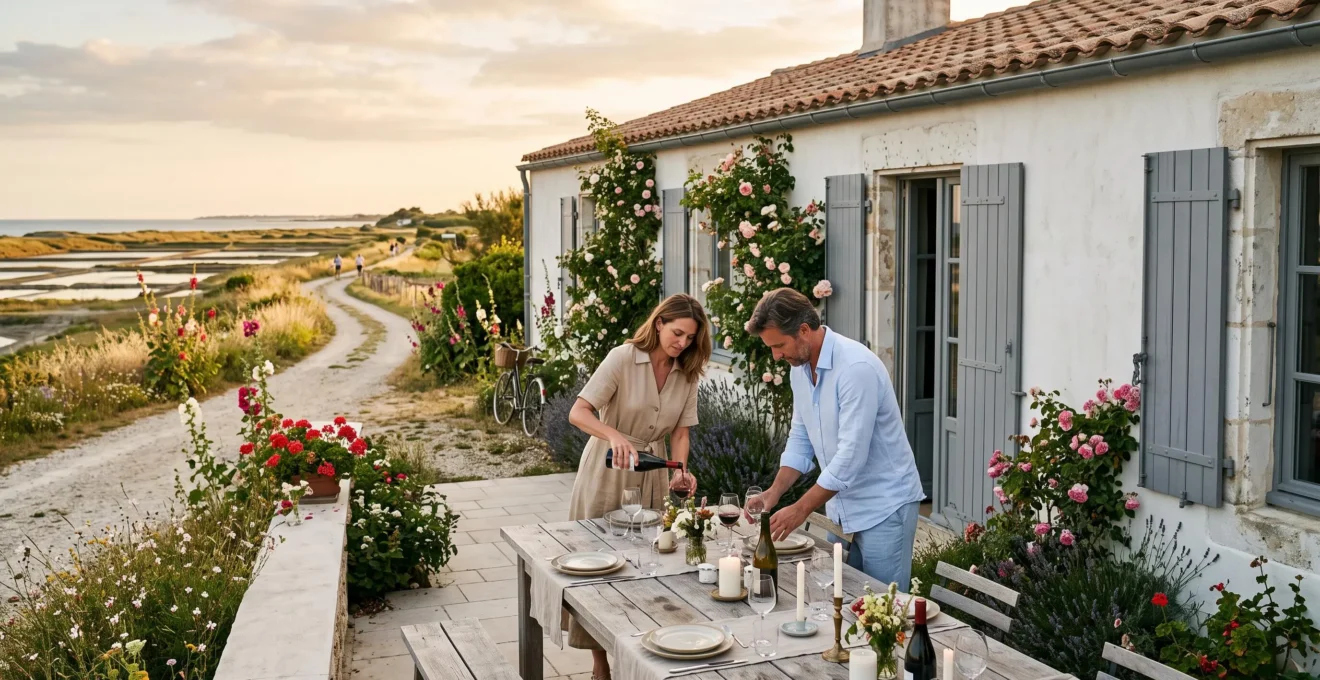
Choosing a luxury villa on Île de Ré is less about ticking amenity boxes than making two decisive calls early: which village suits your style of stay, and which season you can realistically travel in. On this island, demand concentrates sharply in summer, while the atmosphere can change dramatically from one end of the island to the other—sometimes within a short cycle ride.
This guide helps you compare key villages (with concrete “if you’re this type of traveller, choose that area” trade-offs), understand what can be verified before paying a deposit, and plan practicalities such as bridge tolls and getting around once you arrive.
Your decision framework for a villa stay on Île de Ré
- Start with the village: Saint-Martin for harbour life, Les Portes for discreet nature, La Flotte for family-friendly walkability.
- Then pick the season: summer is the tightest for availability; shoulder months can be calmer for the same locations.
- Verify before you pay: who you are contracting with, what is included, cancellation terms, and how local visitor taxes are handled.
- Plan access early: bridge tolls vary by season, and parking can shape your daily routine in peak periods.
Why Île de Ré Is a Prime Destination for Luxury Villa Stays
Direct answer: Île de Ré works particularly well for premium villa holidays if you value village character, easy cycling and a “quietly exclusive” rhythm—but you should expect high-season pressure on availability and a market where comparing like-for-like listings can be challenging.
The island’s appeal is tangible: protected-looking villages, short distances that make cycling genuinely practical, and a lifestyle that often revolves around markets, harbour dinners and long beach days. A high-end villa makes sense here because it can deliver privacy and space while keeping you close to village life—if you choose the right base.
It is also a destination where the rental landscape can feel less transparent than hotels: many properties are marketed through a mix of agencies, platforms and direct owner routes. That makes your “verification reflex” part of the luxury experience: the goal is not simply comfort, but confidence.
For a factual sense of the island’s tourism infrastructure, official accommodation capacity data for the Île de Ré intercommunal area published by INSEE shows the scale of hotels and campsites (2021). It does not, however, provide official price statistics for seasonal villas—so any “typical villa price” you see elsewhere should be treated cautiously unless clearly sourced and comparable.
What does “exclusive” mean on Île de Ré in practice?
On this island, exclusivity is often about location and rhythm rather than obvious displays. A discreet lane near the western beaches can feel worlds away from a lively harbour a few kilometres east, even if the architectural style is similar.
As a practical test: ask yourself whether your ideal day starts with a quiet cycle ride through dunes and pine woods, or with coffee by a port where the village is already moving. Your answer should guide the village choice first, and the villa features second.
Which Village Should You Choose for Your Villa on Île de Ré?
Direct answer: Choose Saint-Martin-de-Ré for restaurants and harbour atmosphere, Les Portes-en-Ré for a more confidential nature-first stay, and La Flotte for an easy family base with walkable day-to-day logistics.
The most expensive mistake in a premium booking is often not the villa itself, but the mismatch between your expected atmosphere and the village you selected. To keep the comparison simple, prioritise three filters: (1) how much animation you want at night, (2) whether you need shops and a market within walking distance, and (3) what you consider “beach access” (a quick bike ride, or a short walk).
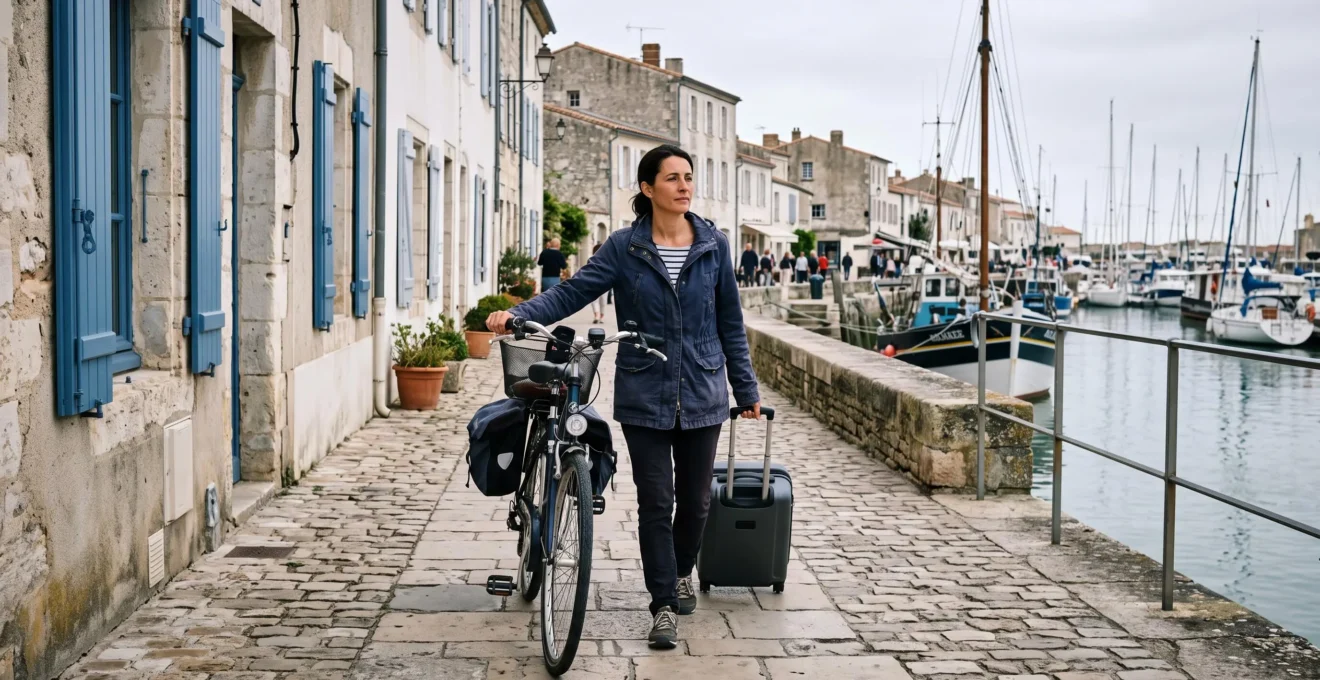
Saint-Martin-de-Ré: who is it best for?
Best fit: travellers who want to step out into a port setting, choose restaurants easily, and accept a more animated feel in peak season.
Saint-Martin-de-Ré is often the “harbour heartbeat” choice: it suits couples or groups who like to be in the centre of things. The trade-off is straightforward: you gain convenience and ambiance, but you may need to think harder about parking and noise sensitivity depending on where the villa sits in relation to the port and busy streets.
Les Portes-en-Ré: what kind of luxury does it offer?
Best fit: travellers seeking discreet calm, nature and a “slow island” feel—often with a stronger focus on beaches, forest and outdoor routines.
Les Portes-en-Ré is a strong candidate if your definition of premium is privacy and space rather than being near the busiest harbour. The concrete trade-off: you may rely more on bikes or a car for certain errands, so check where the nearest essentials are relative to your villa, especially if you plan dinners at home with a chef or frequent grocery runs.
La Flotte: is it the safest choice for families?
Best fit: families who want a practical base—market, harbour walks and everyday amenities—without feeling as central and busy as the main hotspots can be.
La Flotte often works well when you want children-friendly routines: morning market, easy lunches, and short rides without planning each outing like an expedition. If you are travelling with grandparents or young children, prioritise a villa that allows walkable mornings even if you use a car later in the day.
To make the decision actionable, here is a simple “village x stay style” grid you can use when comparing listings.
| Traveller profile | Most natural village fit | Trade-off to accept |
|---|---|---|
| Couple seeking calm, beaches and nature-first days | Les Portes-en-Ré | More planning for shops and evenings out |
| Friends who want restaurants and harbour atmosphere | Saint-Martin-de-Ré | More animation (and logistics) in peak season |
| Family wanting market life and easy routines on foot | La Flotte | Potentially less “remote” feeling than the west |
Cas pratique
Imagine you are travelling in August with two children and one grandparent. You want market mornings, an easy harbour stroll after the beach, and you prefer not to drive daily. In that case, you would typically shortlist La Flotte first, then verify walkability (market/port) on a map and ask whether the villa offers secure bicycle storage and shade for midday breaks.
How to Book a Luxury Villa: Prices, Seasons and Regulations
Direct answer: Because no official public source in this dossier provides island-wide “luxury villa” price ranges, treat any broad pricing claims as indicative only. To book safely, focus on seasonality, contract clarity, who collects taxes, and payment terms—then confirm everything in writing before transferring funds.
Many travellers ask for “high season vs shoulder season” price brackets. That comparison can be useful, but only if the source is solid and the villas are genuinely comparable (same village, capacity, proximity to the sea, pool, services, and week of the year). In the sources available here, no verified report provides recent weekly EUR ranges specifically for luxury villas on Île de Ré, so this guide concentrates on what you can check reliably.

How far in advance should you book for summer?
If your stay must happen in July–August, assume that the best-located villas can become scarce early, especially in the most sought-after villages. Rather than relying on a fixed rule (“book X months ahead”), take a more verifiable approach: once you have chosen your village, ask the host or agency which weeks are already unavailable and whether there are strict arrival/departure days.
For shoulder periods (typically outside the busiest summer window), you may find more flexibility. Your leverage is not only price—it is also choice: better orientation, better outdoor space, or a layout that works for multi-generational travel.
What taxes and booking rules should you verify before paying?
Start with what you can confirm in an official way. On Île de Ré, visitor tax (taxe de séjour) is governed locally: the Communauté de Communes de l’Île de Ré publishes the framework and rates on its platform. According to the tarifs officiels de la taxe de séjour, the taxe de séjour proportional rate is 5% of the nightly cost excluding tax, capped at €4.10, with an additional 10% departmental tax (tariffs applicable from 01/01/2026).
What this changes for you: ask your host or agency how the taxe de séjour is calculated and collected (included upfront, charged separately, or handled by a platform), and request a written breakdown.
Then move to contract-level checks. Whether you book via an agency, platform, or directly with an owner, you should be able to verify who you are contracting with, the total price structure (including cleaning, linen, pool heating if applicable, and any deposit), and the cancellation and payment schedule.
- Identify the contracting party
Confirm the legal name (agency or owner), a physical address, and a contact number, and make sure it matches the contract and invoice.
- Match the villa to the village, not just the photos
Request the exact address or a precise area description, then check walking time to the port/market and cycle time to your preferred beach.
- Demand a written “what’s included” list
Ask for clarity on linen, towels, end-of-stay cleaning, pool maintenance, and any optional services.
- Clarify deposits and payment milestones
Before sending money, confirm amounts, due dates, refund conditions, and how a security deposit is managed.
- Confirm taxe de séjour handling
Ask how it is calculated and when it will be paid, especially if you compare offers that may present totals differently.
Trust signal to insist on: if a listing refuses to provide a clear contract, payment schedule, or the identity of the contracting party, treat it as a material red flag—particularly in high season.
Can you compare “high season vs shoulder season” without reliable price ranges?
Yes—by comparing constraints rather than numbers. In high season, expect stricter stay patterns (often week-based), fewer negotiable terms, and faster booking decisions. In shoulder periods, you can often optimise for what truly elevates your stay: a better location, a more comfortable outdoor set-up, or a layout that gives each generation privacy.
This is where the guiding rule applies: village + season will usually explain your experience more reliably than an amenity checklist.
Getting There and Getting Around the Island
Direct answer: Most travellers arrive via La Rochelle and cross by the bridge; in summer, traffic and parking can shape your arrival day. Once on the island, cycling is often the most efficient way to move between villages and beaches for short distances.
What should you plan for the bridge crossing?
The bridge is not just a physical link; it is also a seasonal cost and timing variable. The Département de la Charente-Maritime publishes the official toll grid. According to the grille tarifaire du péage du pont, since 1 January 2025 the return toll for a light vehicle varies by season: €4 (low season, 15 Nov–1 Mar), €8 (mid season, 2 Mar–14 Jun and 16 Sep–14 Nov), and €16 (high season, 15 Jun–15 Sep, plus Ascension/Pentecost weekends).
In practical terms: if you are arriving on a peak Saturday, build in extra buffer time and decide in advance where you will park and unload luggage. That planning reduces the “first-day friction” that can undermine a premium stay.
Is it easy to get around the island without a car?
For many villa stays, you can cover daily needs by bike if your village base matches your routine. If you prioritise market mornings, harbour evenings and nearby beaches, selecting a villa within a cycle-friendly perimeter can make a car optional rather than essential.
The trade-off is comfort and flexibility: families with very young children, or travellers planning frequent off-island day trips, may still prefer a vehicle. If you do bring one, check with your host what parking is realistically available near the property in summer.
Planning Your Itinerary: What to Do Around Your Villa
Direct answer: Build your week around two anchors—cycling and markets/food—and let your chosen village dictate the pace: harbour evenings if you stay near Saint-Martin or La Flotte, wilder beach time if you base yourself near the west.
A villa holiday can easily become “all villa” or, conversely, over-planned. The sweet spot is alternating half-days: slow mornings at home, a targeted afternoon outing, then an early evening reset back at the house. This rhythm is particularly effective in high season when roads and parking can add friction.

A simple week structure that works well in peak season
Think in “repeatable” days rather than trying to see everything. A practical pattern is: a cycling loop in the morning when temperatures are lower, a market or tasting stop mid-day, then a long late afternoon at the villa (pool, terrace, reading, dinner at home).
If you are staying in a more animated village, reserve your restaurant evenings for the nights when you actually want buzz; for the rest, treat the villa as your best table—especially if outdoor dining is central to your trip.
How should your itinerary change depending on the village?
Based in Saint-Martin-de-Ré: schedule harbour time and dinners as “low-effort wins”, then use bikes for daytime escapes to quieter stretches.
Based in La Flotte: use the market as your daily pivot—stock up early, then keep afternoons flexible for beach time and naps back at the villa.
Based near Les Portes-en-Ré: prioritise nature days and beaches, and plan your shopping rhythm so you are not constantly “running errands” during the calmest hours.
Which village on Île de Ré is best for a luxury villa stay?
The best village depends on the atmosphere you want to buy with your location. Saint-Martin-de-Ré suits travellers who want harbour life and restaurants; Les Portes-en-Ré fits a discreet, nature-first stay; La Flotte tends to be the most practical for families who value walkable routines. Decide on the village first, then compare villas within that perimeter.
How far in advance should I book a villa for summer?
If you are travelling in July–August, assume that availability can tighten quickly for the best locations. Rather than following a fixed “X months” rule, ask immediately which weeks are already unavailable and whether stays are restricted to specific arrival/departure days, then request all terms in writing before paying.
What taxes and rental rules apply to my villa booking?
At minimum, verify how the taxe de séjour is calculated and collected for your stay. The Communauté de Communes de l’Île de Ré publishes official rates and conditions; your host or agency should provide a written breakdown that matches your booking. Also verify who you are contracting with, the payment schedule, and what is included in the total price.
Is it easy to get around the island without a car?
It can be, provided your villa is well-positioned for your routine and you are comfortable cycling. Many daily trips—beaches, villages, markets—are naturally suited to bikes. If you need frequent heavy shopping trips, have very young children, or plan many off-island excursions, a car may remain useful; in that case, confirm parking conditions near the villa for summer weeks.
If you want a confident booking path, keep returning to the same hierarchy: village fit (your atmosphere), season fit (your tolerance for crowds and constraints), then verifications (contract clarity, payments, taxe de séjour handling). With that sequence, the “luxury” of your villa becomes measurable in everyday comfort rather than marketing language.